Wer hat drei Jugendliche am See Bodom ermordet?! T
Wer hat drei Jugendliche am See Bodom ermordet?!
Lake Constance in southern Finland is a place of peace for locals and tourists alike. Its location near the capital Helsinki and the city of Espoo makes it a prime example of Finnish nature. Surrounded by forests and tall grasses, people can relax, fish, swim, or hike there. However, this place is not as peaceful as it appears.
In 1960, the most gruesome murder in Finnish history took place here. Countless stories, myths, and theories surround it. Three young people were brutally murdered on the shores of the lake. But why are the teenagers at Lake Constance so strong? On June 4, 1960, four teenagers arrived at Lake Constance. They came from Wenden, one of the largest cities in Finland, located near Helsinki and about 30 kilometers from the natural area around the lake.
Since January, he had celebrated his eighteenth birthday and was thus the oldest of the group. He had made a bicycle trip to Lake Constance to investigate. He works as an electrician apprentice in a factory and has recently started dating the 15-year-old. Her father is also on the trip; he was against it from the beginning, but after some persuasion, his mother was convinced.
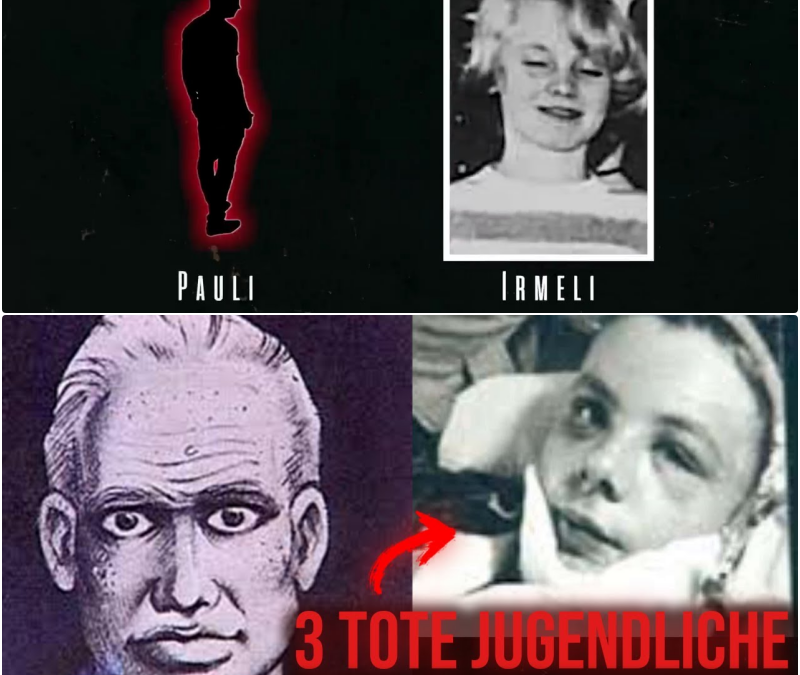
Also along is Kie’s friend Irmel, who is also 15. She actually had a date with her boyfriend Paul II this weekend, but he’s a soldier stationed in another city. Since she doesn’t want to wait for him and would rather have some fun, she joins Sepp and Oli P. Last but not least, their 18-year-old friend Neil Smith, a popular, well- dressed young man, arrives.
They’ve been friends since childhood and work in the same factory where Nils is a foundry worker. In the late afternoon, Uhlig and Emily pick them up on their motorcycles and head off to Lake Constance. The boys have a tent, provisions, and two bottles of alcohol with them. A work colleague got them for the two of them; they also have condoms with them.
Although Nils knows that I have an older boyfriend, he still seems to have a little hope that he might still have a chance with her. Either way, a promising camping trip is in store. The mild Finnish summer is just around the corner, as is the end of the school year, and finally, our sixteenth birthday on June 6th. So, for the four teenagers, it’s the perfect time for a camping trip together at the lake without the strict supervision of adults or other caregivers.
After the teenagers have pitched their tent on the southern shore, they spend the afternoon and early evening swimming and fishing. Time passes quickly, and soon night falls, laying the foundation for one of the most disturbing cases in the history of crime, a case that would soon make Lake Constance world-famous.
In southern Finland, the report from June: Day breaks and the sun rises around 4 a.m. Around 6 a.m., two boys watching birds at the lake They want to see the tent of the four friends from a distance. The tent appears to have collapsed, as if the pegs or ropes had come loose. They see a man with long blond hair seemingly walking away from the tent, but pay no further attention to the scene.
Only hours later do two anglers take a closer look at the strangely damaged tent and immediately alert the police. When the investigators arrive at the scene around 11:45 a.m. on June 5th, even the experienced officers are shocked by the brutality of the scene. Here’s a brief warning: if you are not comfortable with explicit descriptions of violence, turn off now or go to the next chapter about the tent.
The tent, which Nils, Emily, and Politi had set up the evening before, is covered in blood. The sides are open, allowing a view inside. Inside the tent lie two bodies, completely twisted together. Both have ten to fifteen stab wounds on the underside. Some of the stab wounds are so deep that they extend into the The lungs and the trachea reach their faces are almost unrecognizable.
They appear to have been repeatedly struck on the head with a heavy object, half on it, half on the tent. The body is the worst mutilated. Such powerful blows were struck to her skull that her teeth were knocked out of her lower jaw. She has numerous stab wounds in her neck and throat. In addition, both her trousers and her underwear have been pulled down.
Nils lies at the entrance of the tent over the limbs of his dead girlfriend. His upper and lower jaw are broken. There are also stab wounds and blood. Only on second glance does a police officer recognize that it is a foot. Nils moves. He is the only survivor of a brutal attack on the four tents. The young people of politics can no longer be saved.
Due to the injuries of the young people, the officers realize that there must be two weapons: a knife with which the four were stabbed, as well as a blunt object, something like A stone was used to strike the teenagers’ faces, but neither the stone nor the unknown blunt object can ever be found. Some of the pentathletes’ belongings are also missing.
The keys to the boys’ motorcycles have disappeared from the campsite, but the motorcycles themselves are still there. The shoes of Seppo and Nils, the sole survivor of the attack, are also no longer near the tent. Wallets, watches, and other valuables belonging to the four have vanished and will never resurface.
But did a ruthless perpetrator really commit such a brutal triple murder and seriously injure another person just to steal a few wallets? The value of the missing items is completely disproportionate to the scale of the crime. They were murdered on the night of June 4th to 5th, 1960. Their friend Nils was seriously injured.
He was immediately taken to the hospital and actually survived, making a full recovery without any lasting physical damage. Of course, he was apprehended by the police as soon as possible. When questioned about the brutal attack, he unfortunately cannot provide any hoped-for answers because he has no memory whatsoever of the night of June 4th.
This is not necessarily unusual, especially since, given the head injuries and the fact that the night was more than dramatic, it has happened time and again that witnesses to a violent crime completely repress their memories of it and cannot recall them, no matter how hard they try. The brutal attack on the teenagers shocks all of Finland.
The area around Lake Constance suddenly no longer seems peaceful and relaxed, but rather unpredictable and dangerous. The fact that three innocent young people had to die such a death at a resort leaves no one unmoved, and so the police must work as quickly as possible to find an answer to the pressing questions of the population: Who murdered the teenagers at Lake Constance, and above all, why? The investigators can determine two things: None of the three dead people had alcohol in their blood, and neither Emily, who was found with her pants down, nor her boyfriend showed any
traces of sperm, so a sexually motivated murder is not the answer. The crime fades into the background, but unfortunately, the officers make serious errors during the investigation. The area around the southern shore of the lake is not cordoned off, so the police risk intentionally or unintentionally destroying evidence.
Besides the police and medical personnel, numerous citizens from the surrounding area come together to search for clues. While this certainly facilitates the search, one can only guess how many potential footprints or other clues were destroyed by the hundreds of officers. The lake itself is also combed with nets.
Since the murder weapons are missing, no trace of them has yet been found. Only a bloody knife and two pairs of shoes are discovered. The blood at the trade fair booth, however, is not human, leading the police to assume that someone may have wanted to create a false lead. The two pairs of shoes surface about 500 meters from the teenagers’ campsite, hidden by the roadside.
They belong to Nils and Sap. But how the shoes got there and why they were presumably hidden by the perpetrator remains a mystery to the police. The exact time of the crime could not be determined. The teenagers’ remaining clothing was returned to their families only a few days after the incident, meaning the garments could not be re-examined for DNA traces using new technologies in the coming years.
Five knives that the teenagers had with them were also lost during the investigation. The only concrete lead for the police remained the sighting by two young birdwatchers on the morning of June 5, 1960. In witness interviews, they described the man with long blond hair, whom they had observed leaving the tent of the four teenagers.

However, the witnesses’ statements were too vague for a detailed description of the perpetrator. Some friend, Paul II, with whom she had actually planned a weekend trip, was also questioned by the police. He himself had been camping with a friend from the neighborhood after not finding her at her home in July.
It was only on June 15, when he saw a police car parked near Emily’s house in front of the driveway, that he learned of the incident. He has been grieving the death of his girlfriend for some time now; the loss of both of them hits him hard. However, he can’t provide any information about possible suspects or other suspicious circumstances. It seems no one has even the slightest motive for the brutal attack on the four teenagers.
The investigators are so baffled that they are resorting to unconventional methods in their search for answers. Now, they are questioning him under hypnosis. Of course, his statements must be treated with caution; after all, hypnosis is a controversial tool for obtaining concrete information. But Nils actually speaks about the sequence of events, which he had previously repressed.
Did you hear any screams? Only very faint ones. Who did the screams come from? I don’t remember. The girls. What did they write that someone attacked us? Did you open your eyes? I couldn’t. My eyes were full of blood. The officers aren’t satisfied with this; they keep asking questions until Nils actually begins to describe the perpetrator.
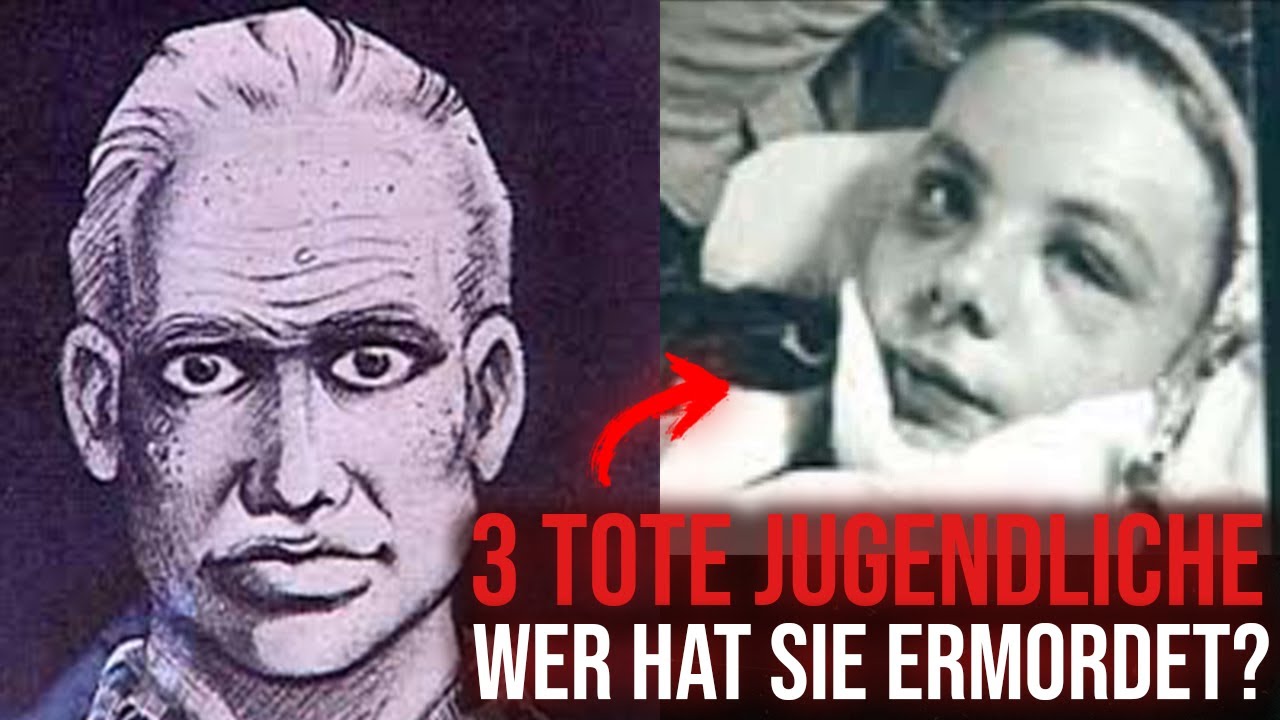
Based on his statements, the police create a composite sketch. After some time, the police present a The kiosk owner, Karl Waldemar Güls, is a suspect. His kiosk is located very close to Lake Constance, which is why many tourists shop there during their excursions. However, Güls is not a big fan of campers and the many young people who spend their time at the lake, and he often behaves grumpily and unfriendly towards them.
He is even said to have thrown stones at visitors and cut up some tents. Someone also reportedly saw Güls near the crime scene on the morning of June 5th. Furthermore, some time after the crime, he was seen pouring water into a well. This could be a way to dispose of the suspected murder weapon. However, he vehemently denies the murders to the police, and the woman from Bülstringen provides him with an alibi.
She tells the police that he slept next to their bed all night. However, a rumor later arises that he seriously threatened his wife. Against all the evidence, the investigators decide to pursue this line of inquiry. to drop the case and is no longer considered a suspect. 1969, now Gül Stream is wrestling in Lake Constance.
He allegedly commits suicide. Just shortly before Karl Waldemar Gül Stream died, he confessed to a friend during a joint sauna visit. He supposedly confessed the crime, but whether he really had anything to do with the murders, we will never know. And he is not the only suspect in this mysterious case. The Finnish criminal Panty Soen confessed to having committed the attack on the four teenagers on the night of June 4th to 5th, 1960.
However, the police hardly attach any importance to this confession, because Soen was only 15 years old at the time of the crime. That he was really capable of injuring four other teenagers with such brutality seems questionable. Moreover, he is known as a psychopath who often makes incoherent statements under the influence of alcohol and drugs.
For the police, he plays no major role in the investigations surrounding the events on the southern shore of Lake Constance. In 2004, a doctor and a Journalists have put forward a new theory: Hans Assmann, a German living in Finland, bears a striking resemblance to the composite sketch that, according to official sources, was created.
Allegedly, he was a former KGB agent. Due to the suspicion that he was working for the Soviet Union, he was shunned by others and repeatedly blamed for crimes that could not be proven. For example, he was linked to the murder of a 17-year-old girl named Kinky in 1953. Based on a woman’s testimony, he was considered a suspect, but he was never prosecuted for this murder.
On the morning of June 6, 1960, exactly one day after the discovery of the bodies in Lake Constance, he appeared in a hospital in Helsinki. Red blood spatter was visible on his clothing, and dirt was found under his fingernails. He appeared aggressive and made incoherent statements without specifying what was wrong with him.
Furthermore, he is said to have told journalists shortly before his death… In 1998, he confessed to the murder of the three teenagers at Lake Constance. At the funeral of the three youths, a man was found who bore a striking resemblance to him and the composite sketch. However, the police strictly ruled Assmann out as a suspect.
Therefore, he had a watertight alibi for the crime. What exactly his alibi was was never revealed to the public. If the police were so certain, one could assume it was credible and verified. However, the accusations against Hans Assmann and the resulting media frenzy spurred the police to conduct new investigations. Numerous witnesses and investigators who had worked on the case were no longer alive almost 45 years after the triple murder, and yet the police managed to identify and arrest a suspected perpetrator.
In 2005, something happened that hardly anyone thought possible: charges were brought against whom? Against the only survivor, Nils, for the murder of his three friends. Until the very end, Nils was not considered a suspect. He was considered a suspect, partly due to the memory loss he suffered as a result of his serious injury, but the police have now changed their minds.
They no longer believe Nils’ memory loss, nor the statements he made under hypnosis. In a complex procedure, the police exhumed the three bodies, took DNA samples, and compared them with the few items left at the crime scene. Remaining in the evidence room were the tent in which the teenagers were attacked, an empty liqueur bottle, and Nils’ shoes.
Tiny traces of blood from the lake and back were indeed found on Nils’ shoes, but not inside the school. From this, investigators deduced that Nils had worn the shoes while killing his friends. They no longer believe that Nils was injured by an unknown assailant, but rather by his own friend Sepp. According to the new version of events, the drunk Nils was allegedly angry that Always those who had no interest in him among the many, a dispute then broke out in the course of which Nils began to hit him, from which the
former is said to have sustained his injuries. Petzold was so aggressive that Sepp, Emily, and so on, hid in the tent in front of him. Thereupon, they now went berserk and brutally killed his friends. In July, she is said to have tried to escape, but Nils caught up with her and sent her back to the tent and killed her there, which would explain why she was lying half over the edge of the tent and half on top of it when she was found.
The particularly severe injuries suffered by Irma could also be attributed to Nils’s rage regarding Emily being thrown off the tent. Finally, Nils pulled down his pants to feign a brutal crime with a sexual motive and inflicted a minor stab wound on himself to cover up his own guilt and hid his friends’ valuables to create the illusion of an additional room.
A medical expert also states that The claim that Nils’ injuries were not as serious as reported in the media was that he had only suffered a concussion, some lacerations, and a fracture of his left jaw and cheekbone. Unfortunately, this cannot be verified. In 1960, the police requested a patient report from the hospital where Nils was treated after July 5th, but never received it.
During the hearing, written statements were presented, including those from several birdwatchers and anglers who had made observations at Lake Constance in 1960 and had already been questioned for the investigation. However, there is also a new perspective. She states that she and her friends were also at Lake Constance on the evening of the 4th.
Both Seppo and Nils appeared at their tent, with the latter behaving very pushy and aggressively and also allegedly being drunk. We recall that Nils and Seppo brought two bottles of high-proof alcohol with them on the outing. They had brought alcohol with them; one of these bottles was found empty and stored in the evidence room.
However, neither Säpo nor Germany had alcohol in their blood. This could mean that it was indeed Nils who drank the alcohol alone. This cannot yet be proven because his blood was not tested for alcohol in 1960. The relief that any of the young people had survived was so great. Another witness testified that Nils, who later worked as a bus driver, had confessed to the murders in the 1980s during a bus trip.
He also admitted to murder to an investigator while in custody. However, during the trial, he now insists on his testimony, which is the same as in 1960: he cannot remember anything at all. In October 2005, the two-month trial ended with an acquittal for Nils Gustafsson. The murder of his companions, Säpo, and millions, is not his fault, just as Karl Waldemar Kills, Trimmen, and Hans Essmann were not.
The evidence is simply not sufficient for a conviction. And so we come to the end of today’s video. Even today, far beyond the borders of Finland, people are still puzzling over who murdered the three teenagers at Lake Constance. Hardly any nation has so many questions, not least because of the police work, which unfortunately left many gaps.
With several alleged confessions and the merger, it’s almost impossible to formulate a truly conclusive theory. Do you think that despite the acquittal, Alonso could really have been capable of such brutal murder because of an argument, or do you believe that one of the three other suspects, Assmann, or someone else, could be responsible for the act? After all, all three are said to have confessed to the murders, and Assmann’s resemblance to the composite sketch and Güls Traum’s resentment towards Kempten are obvious.
There was also the statement from the birdwatchers that a man with long blond hair was indeed at the tent. Nevertheless, none of the suspects seem to have a real motive for such a brutal act. And explaining such a ruthless crime in any way is difficult. On the other hand, there’s never really a true explanation for such a brutal crime.
Even if there had been nothing to it, his motive would n’t fully explain the act. It would still be very far-fetched for a normal person to kill Williams’ rookie for the reasons mentioned. Perhaps someone or something else entirely is behind it. I’m curious about your comments and theories. If you have any additional information about the case that I’ve forgotten, feel free to email me
And if you liked the video, please leave a like, comment, and/or subscribe. With just two clicks and a few keystrokes, you support this channel enormously, because this also tricks the algorithm a bit and suggests the video to people who haven’t subscribed to Solid yet.
Thank you in advance, and thank you for watching. Good night.