Ganz Deutschland war erschüttert! Der Fall Susanne Feldmann T
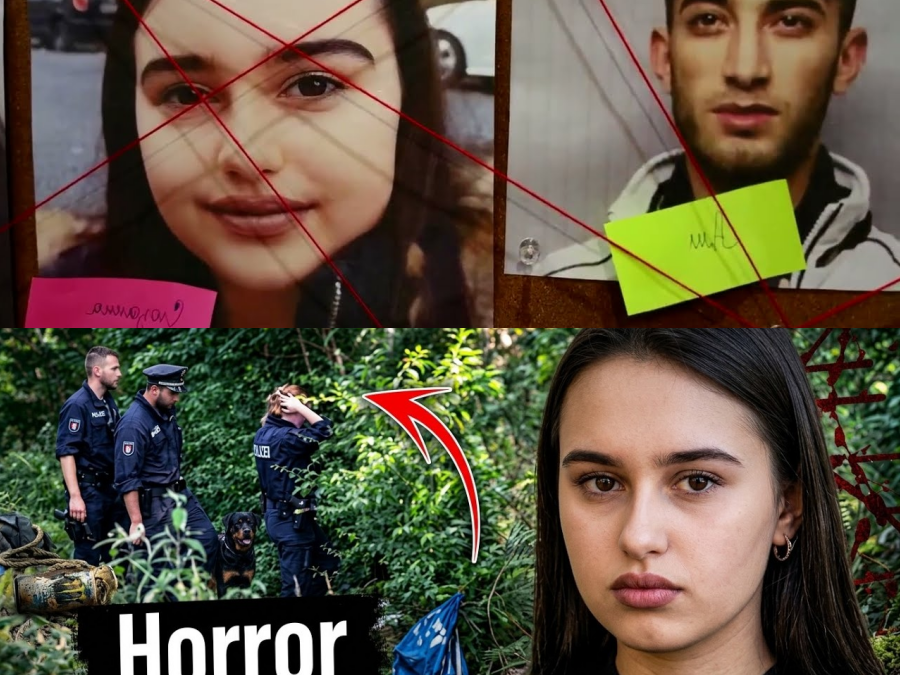
Ganz Deutschland war erschüttert! Der Fall Susanne
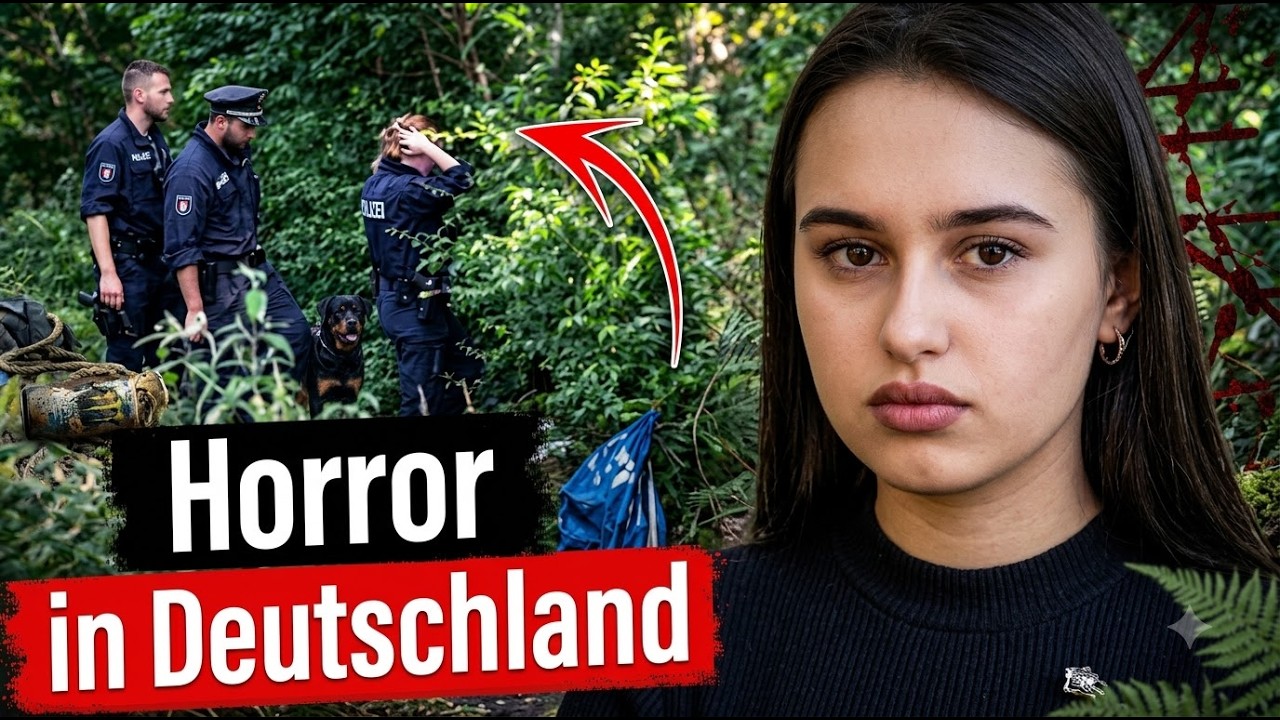
The Maia people in the suburbs of Wiesbaden, Germany, usually exude tranquility . The residents stroll leisurely along the Rehin river, while young people make plans for the upcoming summer holidays. Fourteen-year-old Susanne was part of this familiar, safe world. The night of May 23, 2018 irrevocably split her family’s life into a before and an after.
The girl simply never returned home. In the first hours after her disappearance, her relatives still hoped it was just a case of typical teenage rebellion. But the empty screen of the phone and the oppressive silence in Susan’s room suggested that something irrevocable had happened. What began as an ordinary missing person search for a teenager led investigators step by step into the depths of human cruelty.
A quiet suburb of Wiesbaden that concealed dark secrets, the sudden escape of an entire family to another continent, and a case that would forever change the political landscape of an entire country . An investigation was imminent in which the lines between justice and international diplomacy would become blurred.
Diana Feldmann was born in Moldova in 1974. She came from a Jewish family. The young woman’s life was difficult. Her family lived modestly. Nevertheless, the parents support their daughter to the best of their ability in every respect. My name is Lukas Falkner. You are viewing the channel Focusfall. Thank you for watching my content.
I appreciate your subscription and like. Enjoy watching. She saw no future in her homeland, which is why, as soon as she came of age, she was determined to build her happiness elsewhere. Diana weighed up various options and decided to emigrate to Germany in 1991 . to build a new life there. The young woman immediately threw herself into her work.
Initially to secure their most basic needs, later to improve their living conditions. Diana’s first daughter, Susanne, was born on November 2, 2003. She lived with her mother in Mainz. Outwardly, the girl always appeared calm and reserved, but she could stand up for herself when the situation demanded it.
This helped her when she started school, because not all of her classmates were friendly towards her, not least because of her background. She tried to cope with all the difficulties alone , which is why few suspected that something far more disturbing was hidden behind the facade of calm . Susanne was bullied by her classmates at school .
Two boys constantly showed aggression towards her, and even the teacher sided with these children, making lessons a torment for her. Susanne fought instead of learning. Conflicts with classmates occurred almost daily. Against this background, she had few friends, although she developed a friendly relationship with some of them .
Despite her close relationship with her mother, the girl rarely spoke about the situation at school. Susanne became increasingly withdrawn and skipped class more and more often. Instead, she wandered through the city. She found a group of friends with similar views on life and school. The situation changed noticeably when luck smiled upon Diana.
The single mother met a man. They moved into his house in a neighboring suburb of Wiesbaden. A year and a half passed and Susanne got a younger sister. She continued to spend time with the teenagers with whom she skipped school. There she met a girl of the same age named Cathy Kennon. The two quickly became friends and got along well.
Both were children of immigrants and in the company of others they could be open and relaxed, quite unlike in the classroom. It seemed as if Susanne had found a place where she felt comfortable for the first time. She continued to enjoy spending time with the group of difficult teenagers . The situation at school improved when she moved to middle school, where there were other children with whom getting along was much easier.
Around the same time, her mother learned that her daughter frequently skipped school with her friends . Worried, she tried to counteract this, but her daughter firmly refused to break off contact with these young people. After several arguments, the mother finally gave in. Diana could n’t constantly monitor her daughter.
She worked a lot and was very busy. The relationship with the troubled youths continued. Over the course of several school years, however, Susanne pulled herself together. She no longer suffered from the aggression of her classmates, so her academic performance improved. She skipped class less often. The girl did not break off contact with her friends.
But overall, the situation now looked significantly better than before. Towards the end of 2017, it seemed as if the Feldman family’s life was running smoothly and as if they had overcome all difficulties . On May 22, 2018, 14-year-old Susanne Feldman arranged to meet up with her group of friends.
All the young people lived in Wiesbaden and stayed in the center, where there were various cafes and shops. The plan was for the student to go as usual to the familiar meeting place where friends were hanging out, walking and talking. As usual, Susanne wanted to return home before nightfall. Mother and daughter hugged each other goodbye and wished each other a nice day.
As the door closed, Diana reminded her daughter once again to return before sunset. The hours passed. Evening gradually fell . The mother waited for Susanne’s return, but she did not appear at the agreed time. As darkness fell, the woman realized that the situation had spiraled out of control. Up to that point, the older daughter had never run away, never been late, and had always followed her mother’s instructions, even during her rebellious phase.
Diana called Susan’s mobile phone in concern, but Susan did n’t answer. When the girl ignored several calls in a row, it became even more worrying. It was already approaching midnight. The woman became seriously worried and started calling her daughter’s friends. To their horror, none of them had any idea where Susanne was.
The young people who had been out and about in the center that evening reported that they had indeed met with her that evening and spent time together. However, nobody knew where she had gone afterwards . No one had accompanied her. Diana was about to go to the police when she received a message from her daughter’s number.
At first she relaxed, but then she became even more suspicious. Susanne wrote that she was on her way to Frankfurt with a friend named Amand. The woman was stunned by this news. She called her daughter several times, but all calls went unanswered. She then turned again to his friend, but no one had ever heard of an Amant or a person with a similar name.
There was no one in the group with that name. Even her best friend Cathy had never heard anything from Susanne about a boyfriend or escape plans. The news of the trip to Frankfurt was strange for everyone. Nobody had heard that the girl had planned anything like that, especially since she had never previously traveled spontaneously or run away from home .
All of this seemed dubious. Diana was unable to find out anything again and, in despair, went to the local police station on the night of May 23, 2018 . The concerned mother filed a police report regarding her daughter’s disappearance. But their request was received coldly, even indifferently. They tried to convince her that her daughter was probably just late with friends or had fled to acquaintances , as often happens with difficult teenagers.
The police officers were convinced that Susanne would soon return on her own, as was usually the case. But Diana refused to give up and didn’t want to simply leave the station . The mother was convinced that the messages she had received from her daughter’s number had not actually been written by her .
The woman described the situation in detail, which was indeed disturbing. But even after that, the officers tried to convince them that Susanne’s age was precisely that rebellious phase in which teenagers might spontaneously rebel against their parents and stay away from home . Despite all her efforts, she was unable to achieve anything.
The police did not take up the search . She was merely promised that they would look into the matter if Susanne continued to fail to return. Only then would the search begin. The woman spent the entire night on the sofa in the living room of her house, waiting for her daughter to return. She held her mobile phone tightly in her hands, constantly expecting that Susanne might call or write at any moment .
The next morning, the mother received a message from her daughter, in which the daughter explained that she did not want to return home, as she was now in Paris with her boyfriend Amant. As Diana read this message, a cold shiver ran down her spine. She noticed spelling mistakes that were atypical for Susanne. Now she was 100% certain that this message did not come from her daughter.
Their fears that something bad had happened to the student were thus only confirmed. Diana drove to the police station with the first rays of morning light . This time she wanted to demand decisive action from the officials . She immediately showed the new message to the police officer who had turned her away the night before .
This time everything sounded much more convincing, so Susan was officially reported missing and a search and rescue operation began. While the patrol officers battled their way through the city and gathered information, the girl’s mother was not sitting idly by either. She also walked through the city center, spoke with residents, and met up with the group of young people her daughter had been with the previous evening .
Deana tried in every way possible to find out what had happened and in which direction the search should go. Thanks to the active efforts of the Feldmann family, news of the teenagers’ disappearance spread quickly. Some city residents stated that they had seen Susanne on the evening of the 22nd in the company of a suspicious young man who was driving a black car.
According to these witnesses, the girl got into the passenger seat, whereupon both drove off in an unknown direction. All leads were carefully checked, but proved to be dead ends. No evidence could be found to support the existence of the young man with the black car, and the investigation took a lot of time .
For several days, dedicated citizens and police officers searched for the girl. During this time, the Feldmann family distributed hundreds of leaflets throughout the city. They spoke to numerous local residents, but could not find out in whose company Susanne had been or where she might be found. At the same time, a 13-year-old boy from Afghanistan was living in a refugee shelter on the outskirts of Wiesbaden.
One of the Afghan family’s neighbors was a 21-year-old Iraqi, known as a gloomy and withdrawn young man who showed an unhealthy interest in seeking contact with teenagers. The Afghan boy always noticed something strange and frightening about his behavior. Just a few days after meeting him, he began to feel genuine fear of him.
All his relatives shared these same feelings. They let time pass before contacting the authorities because they were afraid of him. When the student arrived at the police station with his parents to tell the frightening story, he was still filled with fear. He even looked around anxiously as he entered the room for the interview with the officers, as if he feared being attacked at any moment .
He immediately explained that he was afraid of him and would only speak if his safety was guaranteed. The young man was already known for aggressive behavior. In the area around the refugee accommodation, where he spent most of his time, he had a reputation as an unpredictable person who could become violent for no particular reason. However, the Afghan boy possessed information that went beyond what was typically found in a dispute.
According to him, his neighbor had confessed to him the day after Susanne’s disappearance that he had killed the girl. It was only with great difficulty that the boy was made to speak. He was terrified. The officers were only able to calm him down after they assured him of their protection . In June of the same year, following a tip from the student, the search began in a remote area of Wiesbaden, located near a railway line through wooded terrain.
The Afghan boy had named this prayer . Even on foot, the location was difficult for the search team to reach. It took more than a day to search the area. Finally, disturbed earth was discovered. When the search team dug up the spot, they found the body of the missing girl at a shallow depth.
Two weeks had passed since Susanne Feldmann’s disappearance at that point . When Susanne’s friend Key learned of these events, she came to the police station again. Although the officers and members of the Feldmann family had already spoken to her several times , this time the girl confessed that she had initially lied because she was very afraid for her own life.
She knew that the suspect might be connected to her friend’s disappearance and even showed the officers a message she had received from Susanne’s mobile phone the night she could no longer be reached . Susanne had pleaded with them for help. She wrote that he forced her to get into his black car, was holding her by force, and was now taking her to an unknown location.
Unfortunately, Casey was asleep when the message arrived, so she did n’t register it. Later, she didn’t have the courage to tell adults or the police about it. The reason was the same. She was convinced that he would take revenge on her . He was considered life-threatening. At that time, the identity of the main suspect in the Susanne murder case was already known.
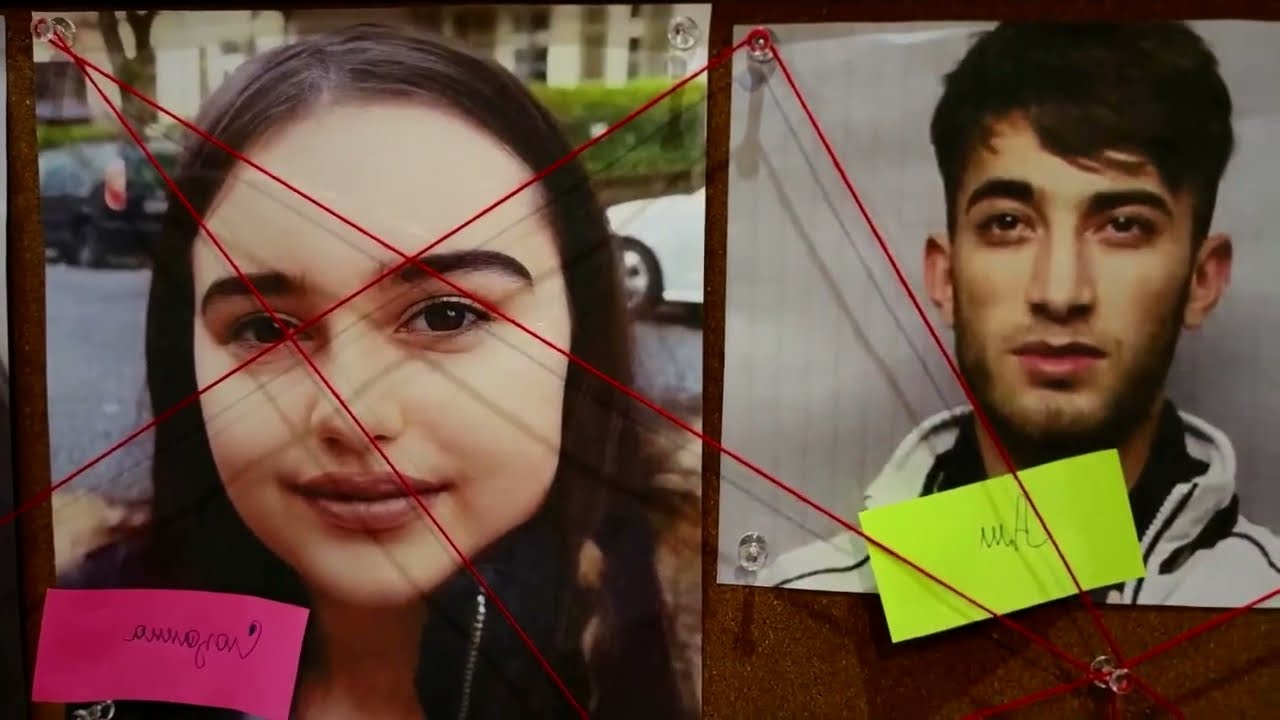
He was well known to the police in his district and had been repeatedly involved in various incidents . He had committed dozens of minor offenses, but had never been imprisoned for them. This impunity has now led to a violent crime that has shaken all of Germany . The public reacted with emotion when rumors surfaced about a migrant’s involvement in the murder of a schoolgirl.
Susanne was not wearing underwear, which suggested a sexual assault. Furthermore, it was obvious that she had not died a natural death. Despite the advanced state of decomposition, traces of strangulation were visible on her neck . When the body was taken to the laboratory for forensic examination, all these suspicions were confirmed.
The girl had indeed been sexually abused and had been obtained. Biological traces were found in her body whose DNA matched that of the suspect . When it became clear that all the evidence pointed to a single person , the investigators went to his home. However, it turned out that the entire family had already left the country.
It was possible to trace them, and it turned out that they had used forged documents. The suspect was now in Iraq with his family. He flew there shortly after the search for the missing girl began. All of this sparked deep outrage among the population. The German public once again raised pressing questions about security and the crimes that migrants were able to commit with impunity before fleeing the country or hiding within it.
While activists sharply criticized the Wiesbaden law enforcement authorities and accused the country’s security system of inaction, the German authorities continued working behind the scenes. The law was not changed. The central task now was to bring the suspect to justice and retrieve him. While negotiations were underway and the perpetrator’s whereabouts were being determined , new details about his past behavior came to light.
As it turned out , he had a rather long history of violent offenses, including charges of harassing various young women. He had been involved in several fights . Furthermore, his asylum application had already been rejected long before Susanne’s murder. He was staying in Germany illegally, and all these facts only added fuel to the fire of public sentiment.
Nevertheless, this ultimately played into the hands of the victim’s family. Thanks to combined efforts, the analysis of telephone connections and travel routes, and international cooperation, it was finally possible to locate the suspect . The perpetrator was in the Dohuk region of Iraqi Kurdistan .
He lived there with relatives who had connections to obtain protection and refuge. While German authorities searched for a way to bring back the perpetrator, investigators reconstructed the timeline of events that led to the death of the 14-year-old schoolgirl. On the day of her disappearance, Susanne had spent a quiet evening in the company of friends.
But before the teenagers headed home, the suspect joined them. Susanne had previously told friends and acquaintances that this young man made her uncomfortable. Even when he was in the group and tried to make contact with her , she ignored him and kept a clear distance. According to several female friends , who were just as afraid of this man as Susanne, he forced her to go with him that evening by offering to take her with him in his car.
The other members of the group had already gone home by this time, and the few who remained did not contact either the police or Susanne’s family. This left her unprotected. It appears that Ali raped the victim and then obtained her. However, exactly where and under what circumstances this happened remained a mystery.
The only thing she could do before the attack began was to write to a friend that she was in danger . Unfortunately, no one came to her aid, because the immigrant held the entire neighborhood and everyone who even remotely knew him in fear and terror. When it became known that Ali Bashar had fled with his family, other people from the refugee shelter contacted the police.
They all told the same story. The night before the perpetrator left for Iraq, he confessed to the crime to five people. He even asked her to help him hide the body that was still in his car . None of them immediately contacted the police. Since everyone was convinced they would suffer the same fate as Susanne, the perpetrator was to learn that they had betrayed him.
With such a large amount of irrefutable evidence against him having accumulated, international cooperation remained the only way to arrest the perpetrator and hold him accountable for his crime . The German authorities held extremely sensitive talks with the Iraqi region of Kurdistan, especially since relations with Europe were traditionally strained.
Surprisingly, the Kurdish authorities proved to be very cooperative. The threat posed by Ali Basha was taken very seriously . Shortly after the negotiations began, the German side got the opportunity to approach him. The murder of Susanne Feldmann became news that reached all of Europe . The European public began to discuss the event intensely.
The weaknesses of the German security system that led to this act were also discussed. Naturally, the most heated arguments took place in Wiesbaden, to which the family of the deceased also contributed significantly. Everyone called for a reform of the existing system. In less than a month, an operation was planned that enabled local forces to arrest the suspect without resistance .
Discussions about Germany’s security situation and immigration policy continued even after the suspect was already in custody. Ali’s extradition to Germany proved difficult, as there were no extradition treaties between the countries . Bureaucratic hurdles further complicated and delayed the process, but political pressure and public sentiment played a crucial role.
Soon an operation was organized that included a direct flight to the Iraqi region of Kurdistan and the escort of Ali Bashar to Wiesbaden by German police officers . The arrest of Ali Bashar has now also sparked major discussions among the Iraqi public . People perceived the event in two different ways. Some viewed the handover of the perpetrator to the German side as outright betrayal.
The German public, however, asked different questions. People could not understand how it was possible that such a conspicuous man as Ali Basha, with a history of violence, repeated violations of the law and even a rejected asylum application, could continue to remain in the country and ultimately commit such a crime.
When Ali was transferred to Germany, he was met at the airport by demonstrating citizens. Some even demanded that the perpetrator be punished without a trial. Others criticized the system for having allowed him to stay in Germany in the first place. When Ali was taken to a German police station for questioning, he initially tried to remain silent.
Later his tongue loosened, but he simply denied his guilt. However, the evidence against him was irrefutable, including DNA samples which, upon re-examination, matched him. When investigators increased the pressure, the suspect gave up, but did not confess; instead, he described his own version of events.
The encounter with Susanne was something ordinary. She often spent time with the same youth group , which he also frequently attended . Ali claimed that the girl had been interested in him and had not felt any fear of him, unlike other members of the group, including her best friend. According to him, they had been together secretly, as the Feldmann family would not have tolerated this relationship .
The intimacy occurred with mutual consent, after which the girl went home . He insisted that someone else had attacked her on her way home . Of course, this was an obvious lie, because the autopsy showed signs of resistance and a brutal rape. The girl even had an injury that, while not immediately fatal, indicated extreme violence.
All traces, fingerprints and DNA evidence led to Ali. No other traces were found on her body. The court proceedings in the Susanne Feldmann case began in January 2019 at the Wiesbaden Regional Court. This crime sparked such widespread public interest that not only the courthouse, but also all the surrounding streets were full of journalists and demonstrators.
The defendant himself wore simple clothing during the trial and showed no emotion. He seemed completely uninterested in what was happening. The prosecution presented its version of events, supporting every word with numerous witness statements and pieces of evidence. This included irrefutable evidence such as biological traces on the victim’s body, as well as clothing and objects found at the crime scene .
The perpetrator had left his fingerprints on some of them. Given this evidence, the defense had little room to maneuver. She tried to reduce the degree of guilt to manslaughter, but the prosecution was convinced that he had committed the act deliberately and planned it in advance. The jury was greatly impressed by the girlfriend Susanne, as well as an Afghan boy who, despite being in mortal fear of Ali, had gone to the police and reported everything.
Perhaps the most striking statement was that of the victim’s mother, Diana Feldman, whose voice trembled at times , but who remained unwavering in her will to bring the perpetrator to justice and did not give in . New evidence came to light through the analysis of Ali’s mobile phone . In particular, the deliberate planning was proven by the news reports.
That evening he had sent Susanne numerous messages and urged her to meet him. The tone of their exchange in no way resembled that of a romantic relationship. According to the news reports, Susanne was clearly afraid of him. One of the witnesses, a former neighbor of Alice, reported that he treated the German legal system with contempt .
Ali often boasted that he could manipulate everything so that he could escape punishment and even stay in the country permanently because no one could harm him anyway. All of this showed him to be a person who was prone to manipulation, aggression, and a desire for control. He offered the girl intimacy, and when Susanne refused, he lost control, beat her, injured her, abused her, and finally obtained [his consent].
To avoid punishment, he hid the body and left the country . Numerous witnesses described the defendant’s propensity for violence. He was completely unpredictable. According to the statements, Ali Bashar didn’t even need a reason to behave defiantly. He himself provoked conflicts and disputes. He obviously enjoyed it and it gave him a morbid satisfaction.
The conclusion of the court proceedings was awaited with bated breath. not only in Germany, but worldwide. People hoped for just punishment for the perpetrator, that the system would finally protect them and not give Ali freedom to kill again. Weeks passed during which the jury was presented with all the evidence before they retired to deliberate on their verdict .
It took only a short time for Ali Bashar to be found guilty of murder for sexual motives under aggravating circumstances . In July 2019, the court in Wiesbaden sentenced him to life imprisonment. Since the particular gravity of the offense was determined, this meant that the perpetrator had virtually no chance of early release.
According to the law, he receives this right after 15 years of imprisonment, but it is unlikely that he will be able to implement it . Ali’s lawyers immediately campaigned for a reduction in the sentence and filed an appeal. In 2020, the Federal Court of Justice rejected the defense’s application. and the judgment became legally binding.
Even after this success, the members of the Feldmann family did not stop fighting. In numerous interviews, Diana repeatedly asked whether the system could have saved her daughter if it had worked differently . Susanne Feldmann’s story left a deep scar across the entire country. The system that allowed this tragedy to happen underwent a long and painful restructuring.
But no reforms, no matter how strict the court rulings or life sentences, can fill the void left by the Feldmann family home, where the 14-year-old girl’s room remained forever untouched. Diana Feldmann fought for justice for her daughter. Susanne’s murderer will never see the light without bars again. In her letter to him, the mother wrote harrowing words that will remain in the memory .
You have taken away my future . My sentence is also for life. This invisible punishment is borne today by thousands of families worldwide whose children have been taken from them by the cruelty of strangers . This story serves as a reminder of the importance of listening to those who matter to us before it is too late.
Susanne’s last message, asking for help, was sent to a friend who was simply asleep at the time and only saw her in the morning, but even then she did not contact the police. In criminology, there is the concept of the golden hour, the time in which a victim can still be saved if the warning signs are recognized in time.
Where in this story is the actual point at which there was no turning back ? Was it the blindness of the authorities, or is Susanne’s tragedy a terrifying proof that even in a safe European city one cannot protect oneself from completely baseless evil? You have watched the channel Focusfall. Thanks for watching and have a nice day. Yeah.