The established architectural order of German parliamentary politics is undergoing a profound and highly visible transformation. For decades, the legislative chambers of the Bundestag have been dominated by an entrenched political elite, accustomed to managing debates through heavily structured procedures and maintaining an ideological status quo. However, the arrival of a dynamic new generation of lawmakers is completely rewriting the rules of engagement. Foremost among these fresh voices is Diana Zimmer, a rising political figure whose explosive debut performances have sent shockwaves through the highest corridors of power, leaving seasoned politicians stunned, traditional parties defensive, and digital platforms erupting in fierce, viral debate.
Zimmer’s emergence signifies a critical juncture in the nation’s contemporary political narrative. Rather than adhering to the quiet, accommodating traditions often expected of newly elected representatives, she has stepped directly into the ideological line of fire. Her addresses are characterised by an uncompromising, intellectually rigorous rejection of state overreach, systemic over-taxation, and the culture of institutional dependency championed by the old guard. By combining a natural rhetorical precision with an absolute refusal to be intimidated by veteran lawmakers, Zimmer has rapidly established herself as a formidable intellectual force, capable of dismantling complex policy frameworks and exposing the structural contradictions of her political opponents on live television.
A primary flashpoint of her legislative campaign has been a direct, unyielding challenge to the political concept of the ‘Brandmauer’—the institutional firewall erected by traditional parties to isolate alternative political movements. Stepping to the podium before a visibly tense plenary session, Zimmer addressed this strategy with absolute clarity, framing it not as a measure of democratic defense, but as a mechanism of political cowardice used by an endangered establishment to avoid substantive ideological debate. As a young woman operating within the ranks of the Alternative for Germany (AfD), she utilised her own position to directly challenge the narrative advanced by organisations like the Association of German Women Entrepreneurs, who have claimed that alternative political platforms are fundamentally incompatible with female empowerment and self-determination.
Zimmer completely inverted this criticism, asserting that her platform offers the ultimate framework for female self-determination by prioritizing individual freedom, personal merit, and genuine independence over state-mandated engineering and artificial quotas. In a highly memorable rhetorical challenge that reverberated across the chamber, she demanded that her opponents point to a single legislative clause within her party’s platform that fails to respect or validate the dignity of women. When met with silence from the government benches, Zimmer delivered a powerful defense of her identity, declaring her profound pride as a young woman standing on the frontlines of the opposition. She expressed an absolute willingness to engage in open, transparent dialogue with any political actor, while simultaneously mocking the established parties for retreating behind artificial institutional barriers because they lack the ideological fortitude to debate her face-to-face.
The depth of the structural panic within the traditional establishment became even more apparent when Zimmer turned her analytical focus toward the shifting tactical alliances occurring behind the scenes of the Bundestag. She launched a fierce critique against the leadership of the Christian Democratic Union (CDU), accusing the party of executing a total and historic betrayal of its traditional conservative electorate. Zimmer detailed a complex legislative maneuver regarding a highly contentious pension reform package, revealing that after the CDU leadership failed to coerce its own younger, economically literate representatives into supporting the controversial bill, they actively relied on the tacit cooperation of the Left Party (Die Linke) to secure the numbers necessary for passage.
According to Zimmer’s meticulous breakdown, the sudden public announcement by Left Party representatives to abstain from the critical pension vote was a calculated, backroom arrangement designed explicitly to insulate the leadership from a domestic backbench rebellion. She argued that the political survival and future ambitions of traditional leadership figures are now structurally dependent on the compliance of radical left-wing factions. Zimmer pointed out the profound irony of a political establishment that routinely accuses the opposition of attempting to subvert democratic institutions, while those same traditional parties are actively degrading their own democratic credibility through unprincipled, survival-driven alliances. She noted that the traditional conservative establishment no longer requires external opponents to dismantle its standing, as its own cynical actions are achieving that result with remarkable efficiency.
Zimmer’s critique extended far beyond tactical parliamentary maneuvers, targeting the foundational economic philosophy that has guided Germany’s recent fiscal policy. Operating across her digital platforms and within legislative debates, she has systematically exposed what she characterizes as an overreach of the state apparatus at the expense of the productive middle class. Zimmer launched a devastating critique against the rhetoric of traditional left-wing policymakers who frequently lament that the state is “losing revenue” due to tax exemptions or private wealth accumulation. She corrected this terminology, stating that the state cannot “lose” what it never owned in the first place, and asserting that all public funds belong fundamentally to the citizens who earn them through hard, physical, and intellectual labor.
In her view, the state is not an independent entity with an inherent right to infinite self-expansion; rather, its sole legitimate purpose is to protect the framework of personal liberty, secure private property, and foster the prosperity of its citizens. Zimmer argued that the current administration has inverted this relationship, treating the taxpayer as a secondary asset to be continuously harvested to fund an bloated bureaucratic apparatus and an ever-expanding network of state-subsidised non-governmental organisations (NGOs). She contrasted the rising financial anxieties of ordinary, middle-class families with the luxurious lifestyles of the political class, pointing out the absurdity of public broadcasters and high-level moderators transitioning directly from state-aligned media roles into active political positions within left-wing parties, further blurring the line between objective journalism and state propaganda.
This economic philosophy formed the core of Zimmer’s confrontational address regarding a highly controversial wealth tax proposal introduced by the Left Party, which sought to impose an annual tax of up to twelve percent on large fortunes. With clinical precision, Zimmer dismantled the practical mathematics of the bill, asking the assembly whether any of its sponsors had bothered to calculate the real-world economic consequences of such a policy. She noted that during periods of economic stagnation or recession, a productive enterprise might only achieve a modest profit margin of two to three percent, or even endure a net loss. To demand a twelve percent annual tax on the underlying corporate substance under such conditions would inevitably drive mid-sized family businesses and manufacturing firms into immediate insolvency or force them to relocate their production assets and corporate headquarters to more competitive international jurisdictions.
She argued that while such primitive redistribution schemes are highly effective at mobilizing an envious voter base, they represent an absolute disaster for national economic stability. Zimmer noted that even the scientific study commissioned by the Left Party to justify the legislation explicitly warned of “substantial economic risks,” including severe investment hesitation, capital flight, and the relocation of affluent citizens to foreign nations. She highlighted the profound absurdity of a political faction introducing a bill whose own scientific baseline advises against its implementation, proving that the legislation was driven purely by ideological dogma rather than empirical economic reality.
The intensity of Zimmer’s performance predictably triggered a fierce counter-reaction from veteran lawmakers, leading to an extraordinary live confrontation on the parliament floor that highlighted the growing friction between the old guard and the rising opposition. Following her speech, a senior representative from the governing coalition, member Beck, initiated a hostile intervention, accusing Zimmer of harboring a profound double standard regarding corporate tax enforcement and financial justice. Beck alleged that alternative political factions had previously introduced legislative motions designed to reduce the mandatory retention period for financial records related to complex tax avoidance schemes, such as the infamous ‘Cum-Cum’ transactions, from ten years down to five, thereby effectively undermining ongoing judicial investigations and protecting ultra-wealthy individuals at the expense of the common taxpayer.
Rather than being unnerved by this aggressive, unprovoked intervention during her debut period, Zimmer responded with absolute composure and tactical skill. She began by addressing the breach of parliamentary etiquette, noting that the culture of continuously shouting down and interrupting the initial addresses of newly elected representatives reflects a profound lack of institutional decorum and democratic respect from the governing parties. Zimmer then effortlessly neutralized the policy critique by stating that the structural failures, systemic oversights, and selective memory lapses characterizing the grand-scale tax scandals occurred entirely under the watch of the traditional parties and their senior leadership figures. She argued that the public is fully aware of which political actors orchestrated the regulatory loopholes that permitted such massive capital extraction, and she accused the establishment of attempting to project its own historical financial scandals onto a new generation of opposition lawmakers who had no involvement in those legacy decisions.
Ultimately, Diana Zimmer’s parliamentary performances represent a definitive turning point in contemporary German politics. By demonstrating that a young, articulate, and completely unapologetic opposition leader can systematically dismantle the narrative of the traditional parties, she has shattered the establishment’s monopoly on political discourse. Her ability to seamlessly connect complex fiscal data, such as ETF investments and corporate asset protection, with fundamental philosophical arguments regarding individual liberty and limited government has provided the middle class with a powerful rhetorical shield. As her legislative interventions continue to achieve massive viral reach across the nation, it is becoming increasingly obvious that the old methods of political isolation and institutional barriers are completely failing. The future of the nation’s democratic debate is no longer being dictated by the entrenched elite—it is being forged by fearless new voices who refuse to be silenced.
News
Parlament unter Schock: Merz verliert die Fassung bei Drohnen-Debatte
Die Atmosphäre im Deutschen Bundestag war an diesem Tag so aufgeladen, dass man die Spannung im Plenarsaal beinahe physisch spüren konnte. Es war kein gewöhnlicher Arbeitstag in Berlin; es war der Tag, an dem der politische Diskurs über die Sicherheitspolitik Deutschlands eine beängstigende Eskalationsstufe erreichte. Im Zentrum des Geschehens: Bundeskanzler Friedrich Merz und die Fraktionsvorsitzende […]
Frontalangriff auf die Ampel: Friedrich Merz rechnet knallhart ab
Die politische Atmosphäre im Deutschen Bundestag erreichte jüngst einen Siedepunkt, der weit über die üblichen hitzigen Debatten hinausging. Als Friedrich Merz, der Vorsitzende der größten Oppositionsfraktion, das Rednerpult betrat, änderte sich die Stimmung im Plenarsaal schlagartig. Was folgte, war keine gewöhnliche parlamentarische Anfrage, sondern eine vernichtende Abrechnung mit der amtierenden Bundesregierung, die in ihrer Deutlichkeit […]
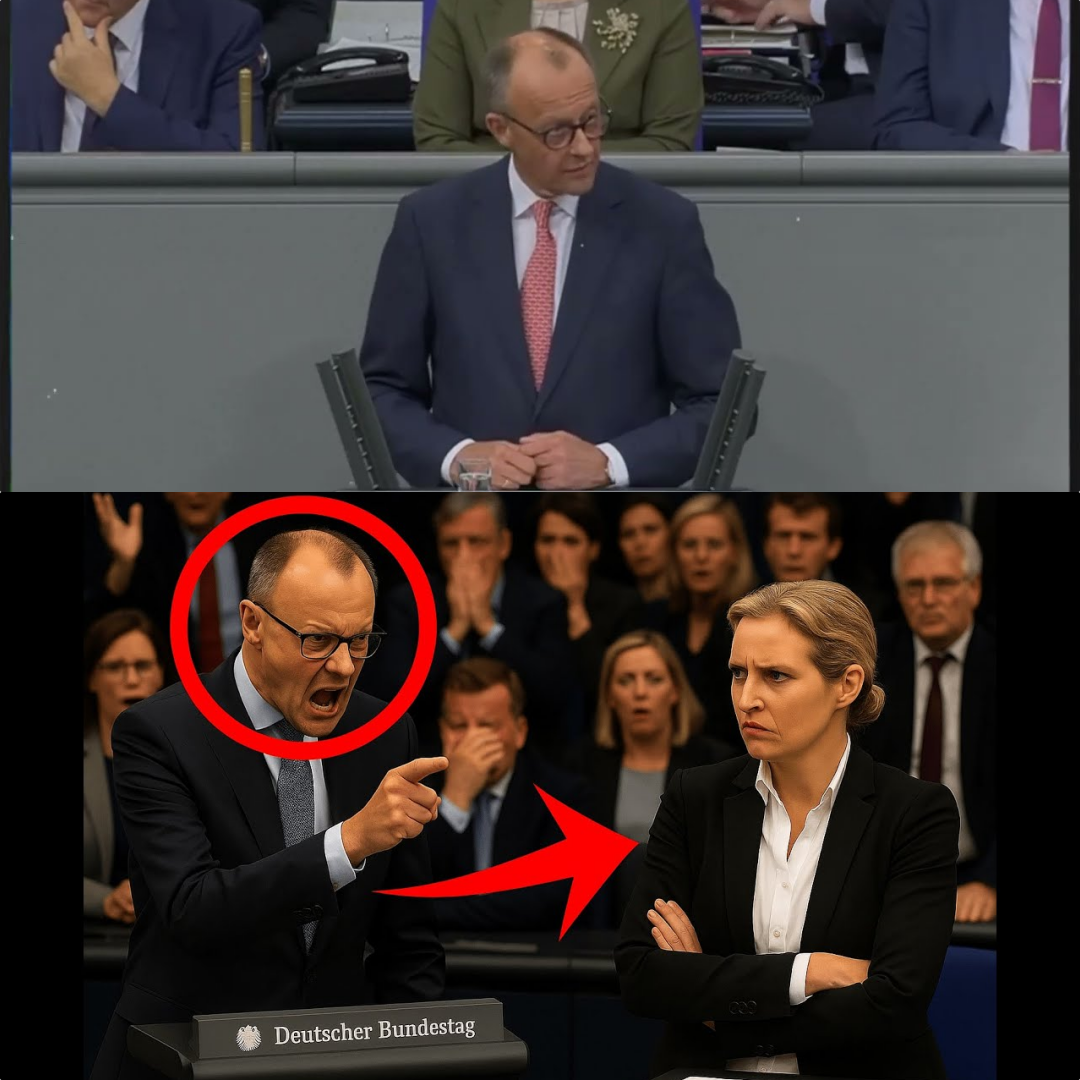
Machtkampf in Berlin: Enteignungs-Eklat erschüttert Bundestag
Die Atmosphäre im Deutschen Bundestag war in diesen Tagen so aufgeladen, dass man die Spannung fast hätte greifen können. Es ist kein Geheimnis, dass der Ukraine-Konflikt die deutsche Politik tief spaltet, doch die jüngste Debatte im Plenarsaal markierte einen neuen, besorgniserregenden Höhepunkt. Im Zentrum der Auseinandersetzung standen der Bundeskanzler Friedrich Merz und die Fraktionsvorsitzende der […]
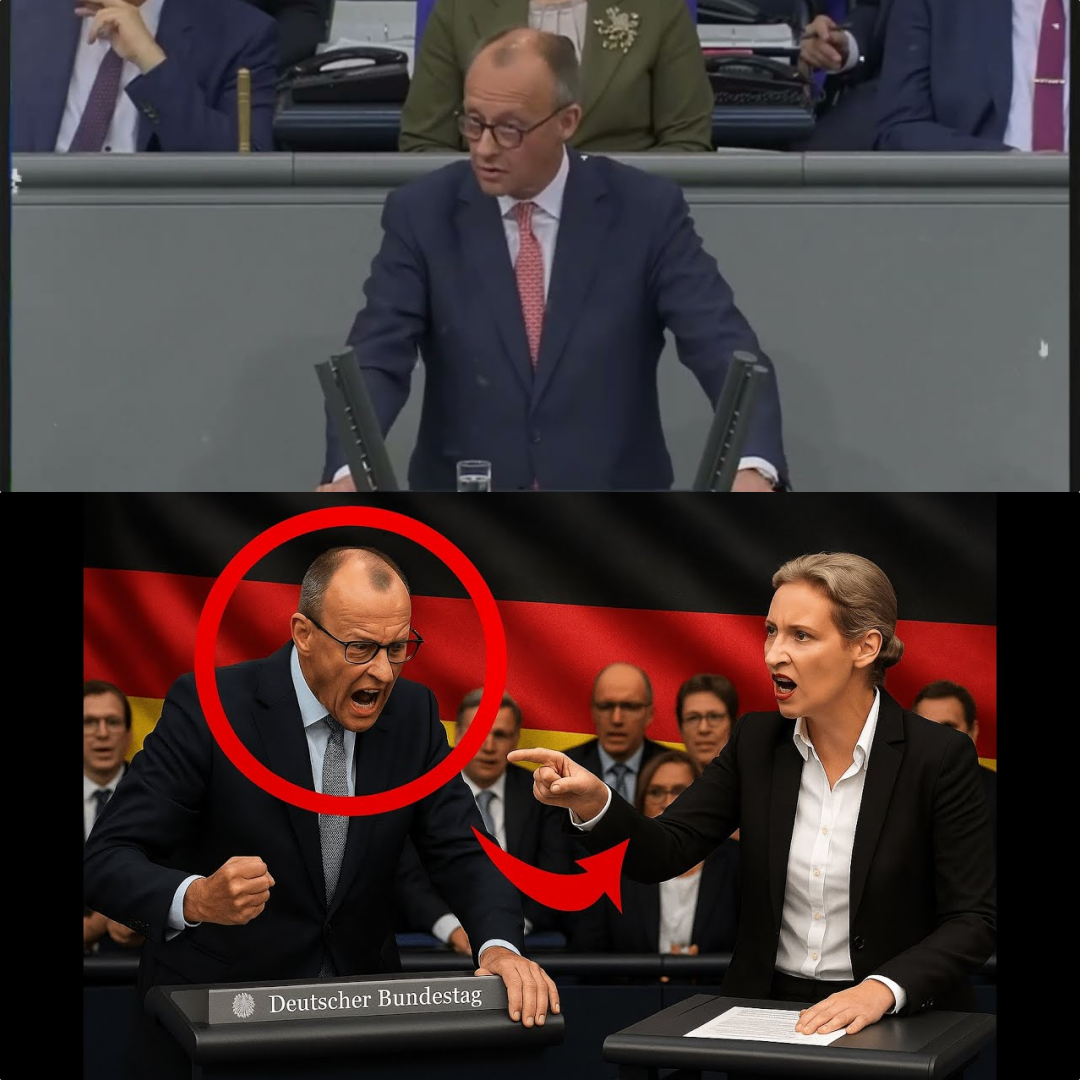
Parlament am Abgrund: Eklat am Tag der Deutschen Einheit
Der Tag der Deutschen Einheit, eigentlich als Symbol für Zusammenhalt, Versöhnung und das gemeinsame Fundament unseres Landes gedacht, verwandelte sich in diesem Jahr im Deutschen Bundestag zu einem Schauplatz hitziger Konfrontationen und eines Machtkampfes, der die politische Atmosphäre in Berlin nachhaltig erschüttert hat. Statt der üblichen, versöhnlichen Töne, die an einem solchen Feiertag zu erwarten […]
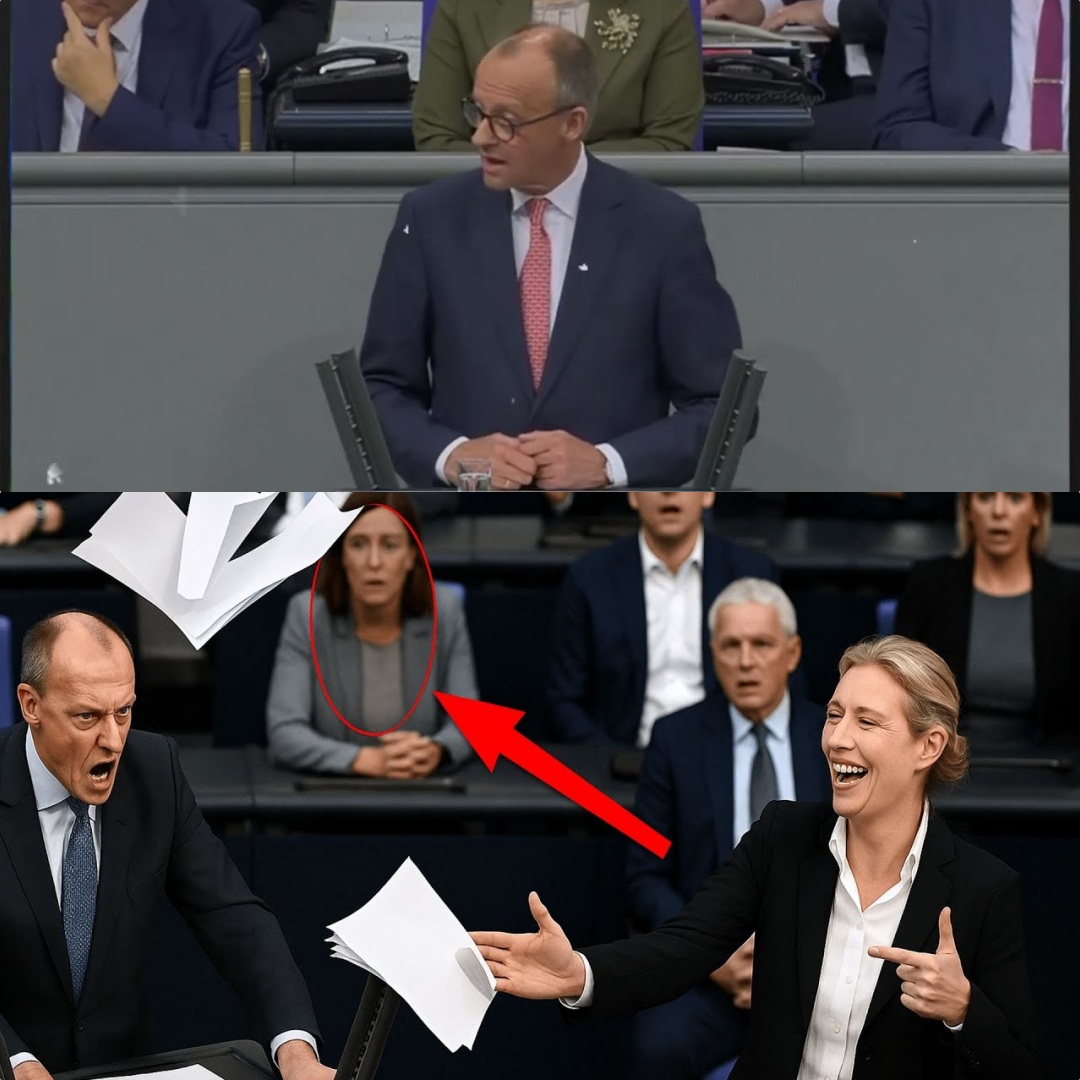
Politische Erschütterung in Berlin: Weidel stellt Merz wegen geheimen Steuerplänen bloß
Die politische Bühne in Berlin, genauer gesagt der deutsche Bundestag, wurde kürzlich Schauplatz einer Konfrontation, die weit über das übliche parteipolitische Geplänkel hinausgeht. In einem Moment von hoher symbolischer und inhaltlicher Brisanz lieferten sich der CDU-Vorsitzende Friedrich Merz und die AfD-Fraktionsvorsitzende Alice Weidel einen Schlagabtausch, der das Potenzial hat, die öffentliche Wahrnehmung über die Transparenz […]
Energiekontrolle im Anmarsch: Bundesnetzagentur geht gegen Smart-Meter-Verweigerer vor
Die deutsche Energiewende, ein Projekt, das die Grundfesten unserer Infrastruktur und unseres Alltagslebens erschüttert, erreicht ein neues, hochsensibles Stadium. Was für viele Bürger lange Zeit als eine bloße Empfehlung oder eine ferne Zukunftsmusik galt, entwickelt sich nun zu einer handfesten regulatorischen Konfrontation: Die Bundesnetzagentur hat die Jagd auf diejenigen eröffnet, die sich dem Einbau moderner […]
End of content
No more pages to load