The halls of the German Bundestag, historically regarded as a bastion of highly structured and disciplined democratic deliberation, have been transformed into a theatre of profound political hostility and institutional breakdown. A routine legislative session deteriorated into a chaotic spectacle that has left seasoned politicians visibly shaken, political commentators scrambling for answers, and social media platforms erupting in fierce debate. What was intended to be a standard parliamentary debate regarding the state’s fiscal trajectory instead turned into an unprecedented verbal confrontation, laying bare the deep ideological fractures that are currently destabilising the nation’s political core.
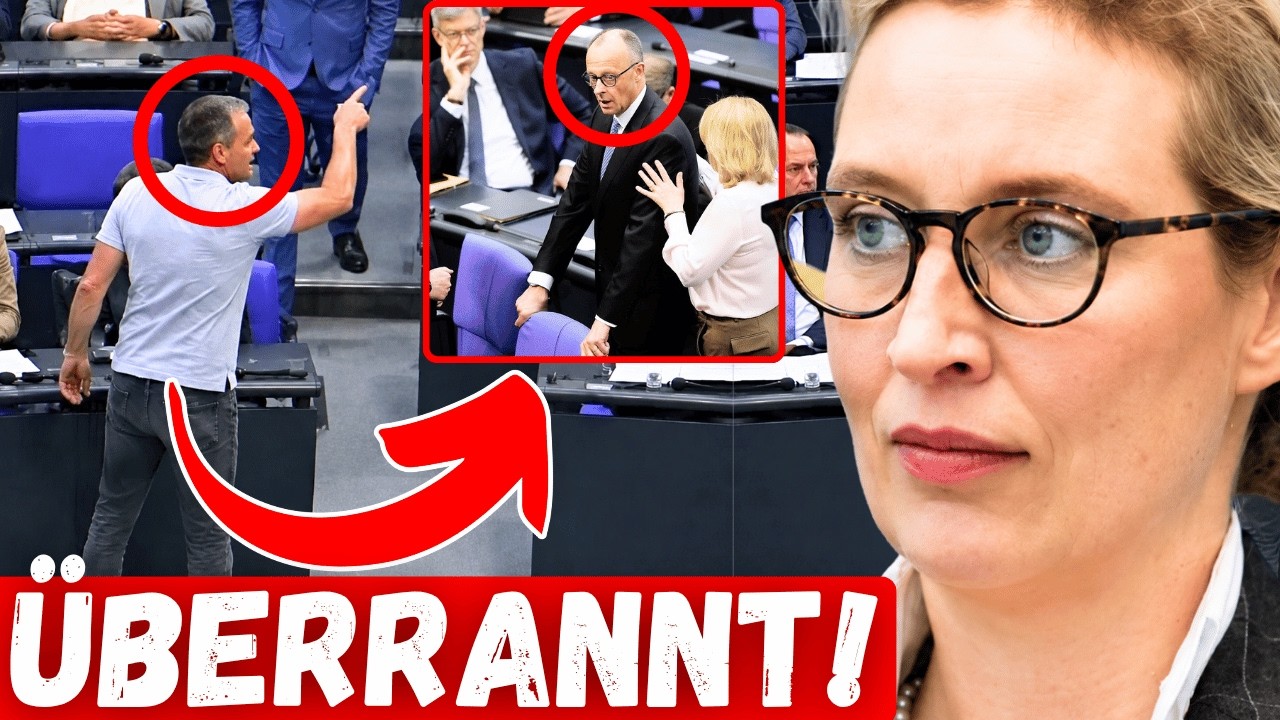
The catalyst for this extraordinary escalation occurred during a highly charged debate, when the delicate thin veneer of parliamentary decorum completely dissolved. According to eyewitness accounts and legislative broadcasts, an elected representative, seemingly consumed by mounting political frustration, launched a direct and exceptionally aggressive verbal assault against the sitting presidium and individual members of the chamber. The confrontation escalated with alarming speed, transforming the stately assembly hall into a chaotic arena of shouting matches, mutual recriminations, and highly personal insults. The atmosphere reached an absolute boiling point, creating a level of palpable tension that observers describe as entirely unprecedented in recent political memory.
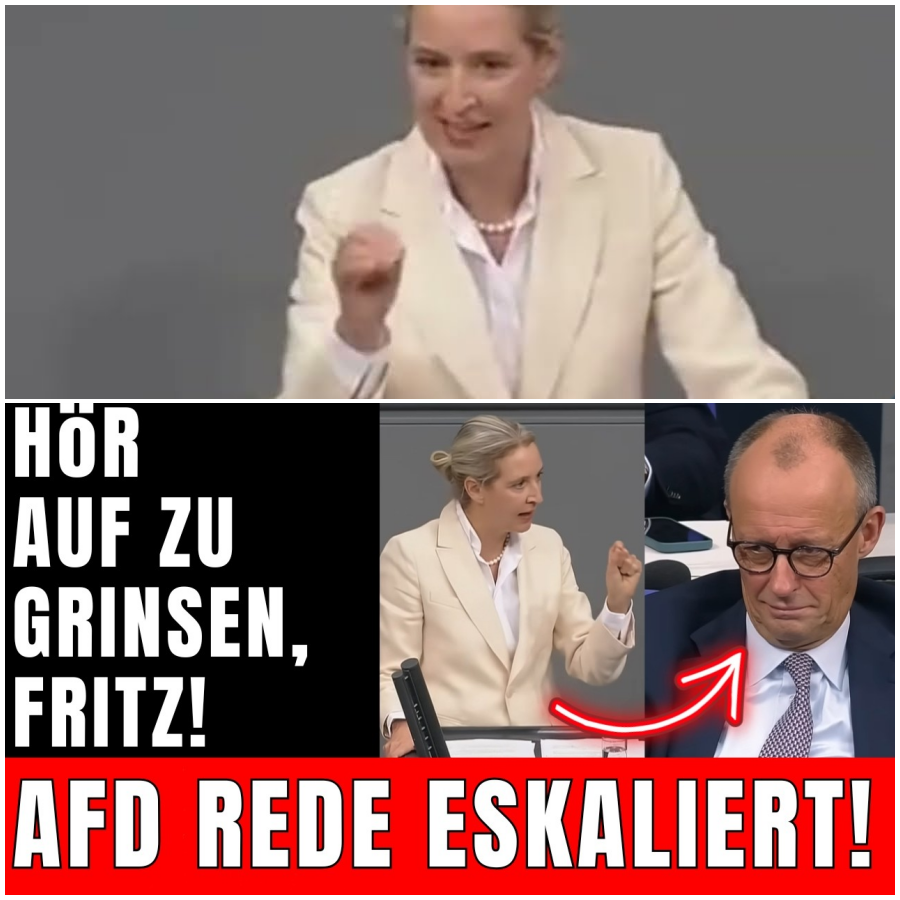
Amidst this unfolding legislative breakdown, prominent political figures were caught directly in the line of fire. Opposition leader Friedrich Merz was observed on camera during the peak of the escalation, his facial expressions reflecting a mixture of profound shock and intense discomfort as the traditional boundaries of parliamentary order collapsed around him. The sheer intensity of the shouting matches and the unfiltered nature of the insults being hurled across the floor effectively paralysed the regular legislative process, forcing those in attendance to confront an uncomfortable reality: the traditional consensus that has governed German political discourse for decades is rapidly disintegrating.
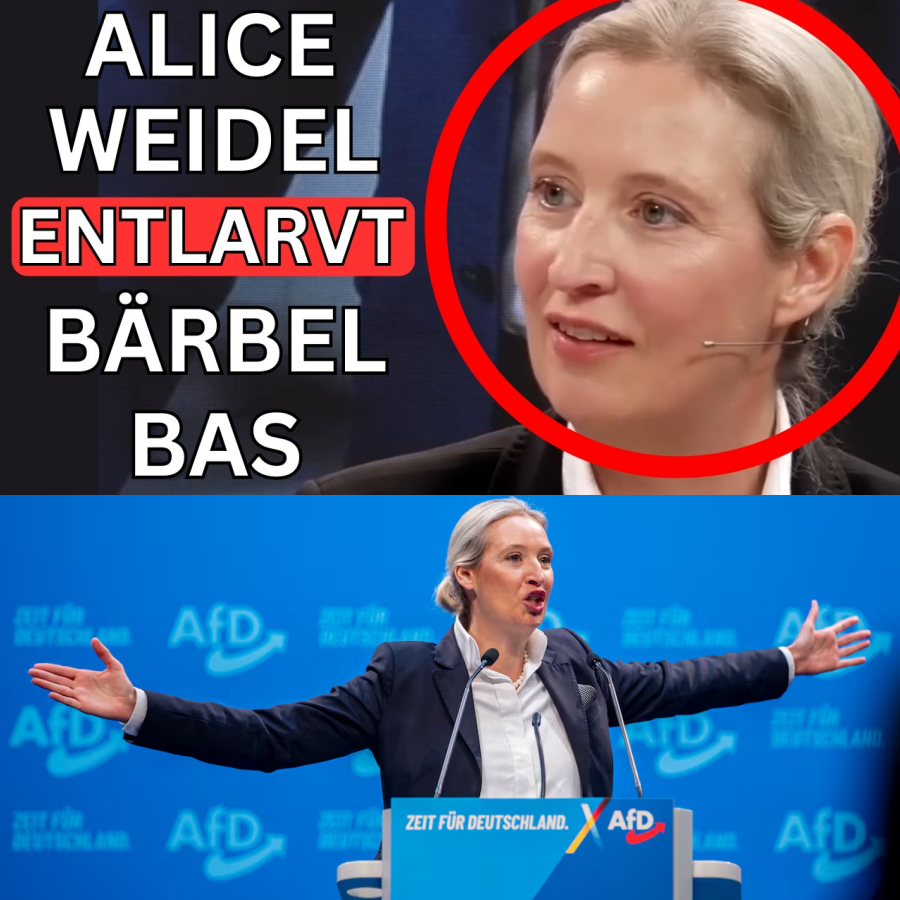
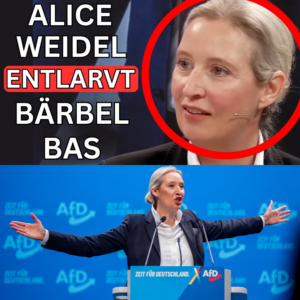
The ideological foundation for this explosive confrontation was firmly established during a savage, uncompromising speech delivered by AfD parliamentary leader Alice Weidel. Stepping to the podium before a visibly tense plenary session, Weidel delivered a sweeping, multi-faceted indictment of the federal government, characterizing the current administration as a collection of incompetent, dogmatic ideologues who are actively driving the nation toward systemic ruin. Her rhetoric, designed to maximize emotional impact and channel growing public discontent, targeted every major facet of the government’s domestic and economic policies, setting a tone of absolute confrontation that would later trigger the session’s ultimate breakdown.
Weidel began her address by targeting the political elite directly, asserting that the prior speakers had demonstrated a complete and total lack of seriousness regarding the genuine economic hardships being endured by ordinary citizens. She used highly inflammatory metaphors to describe the state of the nation, declaring that “it is burning in Germany” and positioning the current coalition government not as a leadership body capable of solving problems, but as the actual “arsonists” responsible for the conflagration. She argued that the nation’s true economic foundation—the hardworking medium-sized business owners, farmers, tradespeople, artisans, and transport operators—had been systematically betrayed and forced onto the streets in historic protests because they can no longer sustain the financial burdens imposed upon them by Berlin.
A major portion of her speech was dedicated to exposing what she described as a coordinated, state-financed campaign of defamation and character assassination designed to suppress legitimate domestic political dissent. Weidel launched a fierce attack against the investigative media organisation ‘Correctiv’, labeling it as a state-funded tool used by the ruling coalition to manufacture “incredible lies, defamation, and the worst kind of character assassination” against the political opposition. She alleged that the government, through its financial support of various non-governmental organisations, has perverted the fundamental constitutional right to demonstrate, turning a civic freedom intended to protect citizens from state overreach into a state-sponsored weapon directed against a competing political party.
The AfD leader further accused the political establishment of displaying a grotesque double standard regarding political violence and public rhetoric. She alleged that while the government routinely labels ordinary, worried citizens as right-wing extremists for participating in protests, it simultaneously tolerates and applauds demonstrations where explicit calls for violence against opposition politicians are openly displayed. In a series of highly provocative assertions, Weidel claimed that high-ranking state officials had degraded the dignity of their offices by using dehumanising language to describe millions of eligible voters, thereby intentionally deepening the social and cultural polarization that is splitting the country apart.
Turning her attention to economic matters, Weidel delivered a devastating critique of the government’s fiscal management, characterizing the revised federal budget as an absolute document of institutional arrogance and economic illiteracy. She argued that while the ruling coalition continues to lecture the public on the necessity of financial austerity, the actual burden of these adjustments is being placed exclusively onto the shoulders of ordinary taxpayers, families, and retirees. According to her analysis, the government’s highly controversial energy policies—which she dismissed as a “planned economic and subsidy monster”—have resulted in artificial energy scarcity and hyper-inflationary costs, rendering Germany the economic “wrong-way driver of the world” and plunging the nation into a severe, structural recession.
To illustrate her point regarding fiscal irresponsibility, Weidel contrasted the severe economic sacrifices demanded of domestic industries and agricultural workers with the government’s continued, lavish expenditure on international development projects. She cited several highly controversial examples of foreign aid, including hundreds of millions of euros allegedly spent on agricultural initiatives abroad, ecological refrigeration projects in South America, and infrastructural development in nations capable of executing space exploration. She argued that billions of euros of German tax revenue are being systematically “squandered without any return” to benefit non-governmental organisation networks, while Germany’s own domestic infrastructure collapses, schools deteriorate, and fundamental educational standards plummet.
The speech also addressed the highly sensitive and contentious issue of immigration policy, with Weidel asserting that the government’s approach to border control represents a direct threat to the nation’s social security and cultural identity. She argued that the current legal framework has effectively transformed the welfare system into a massive migration magnet, driving local municipalities into absolute despair, overwhelming social infrastructure, and severely undermining internal public safety. She accused the political and media elite of enforcing a strict code of silence regarding the profound social costs and rising crime statistics associated with unregulated immigration, claiming that the current policy trajectory is actively stripping the German people of their homeland.
In her concluding remarks, Weidel synthesized her various critiques into a singular, highly incendiary conclusion, accusing the members of the government of harbouring a deep-seated animosity toward their own nation. She stated that the administration’s destructive policies could only be explained by a fundamental hatred of Germany, and she called upon the ruling coalition to accept the necessity of a democratic transition of power by dissolving the parliament and clearing the way for immediate national elections.
The immediate aftermath of this uncompromising rhetorical assault provided the exact spark that ignited the physical and verbal chaos near the parliamentary presidium. The video evidence records that immediately following the conclusion of Weidel’s address, the structural discipline of the chamber completely fractured, culminating in the shocking scenes of confrontation and shouting that have stunned the nation. As the political establishment struggles to regain control of the narrative, this unprecedented breakdown serves as a stark warning sign of a deepening institutional crisis, proving that the battles defining the future of the nation are no longer just ideological—they are threatening to dismantle the very democratic structures designed to contain them.
News
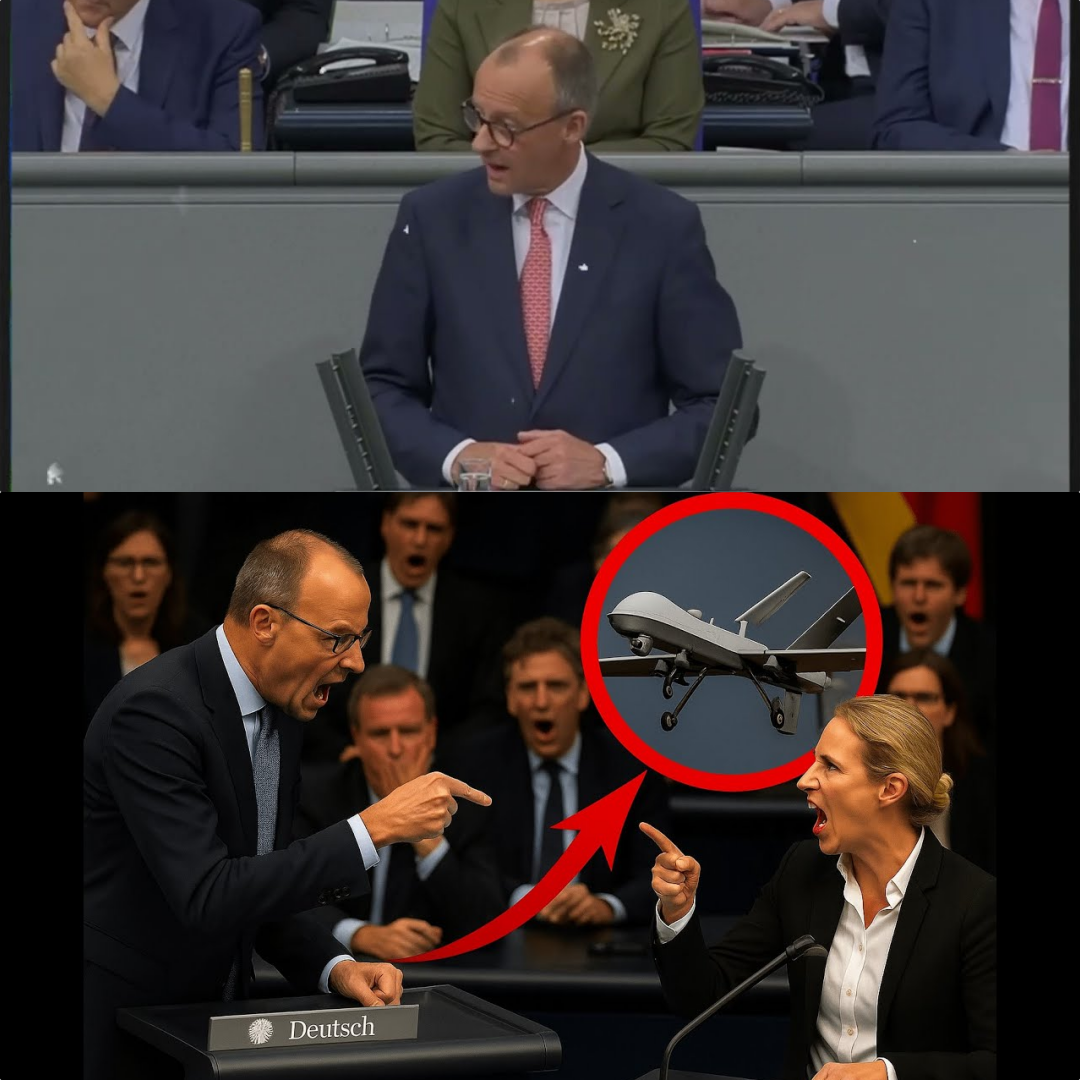
Parlament unter Schock: Merz verliert die Fassung bei Drohnen-Debatte
Die Atmosphäre im Deutschen Bundestag war an diesem Tag so aufgeladen, dass man die Spannung im Plenarsaal beinahe physisch spüren konnte. Es war kein gewöhnlicher Arbeitstag in Berlin; es war der Tag, an dem der politische Diskurs über die Sicherheitspolitik Deutschlands eine beängstigende Eskalationsstufe erreichte. Im Zentrum des Geschehens: Bundeskanzler Friedrich Merz und die Fraktionsvorsitzende […]
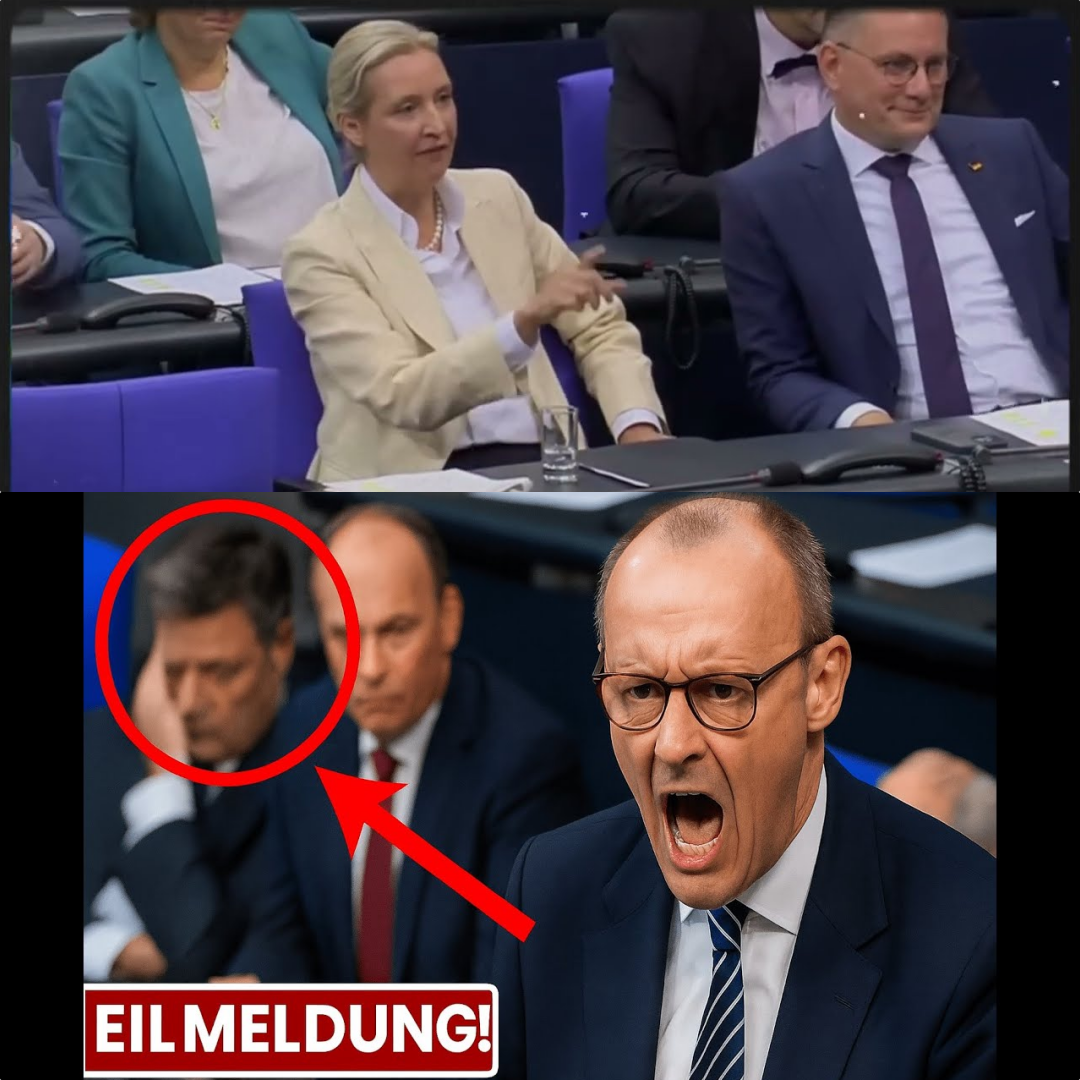
Frontalangriff auf die Ampel: Friedrich Merz rechnet knallhart ab
Die politische Atmosphäre im Deutschen Bundestag erreichte jüngst einen Siedepunkt, der weit über die üblichen hitzigen Debatten hinausging. Als Friedrich Merz, der Vorsitzende der größten Oppositionsfraktion, das Rednerpult betrat, änderte sich die Stimmung im Plenarsaal schlagartig. Was folgte, war keine gewöhnliche parlamentarische Anfrage, sondern eine vernichtende Abrechnung mit der amtierenden Bundesregierung, die in ihrer Deutlichkeit […]
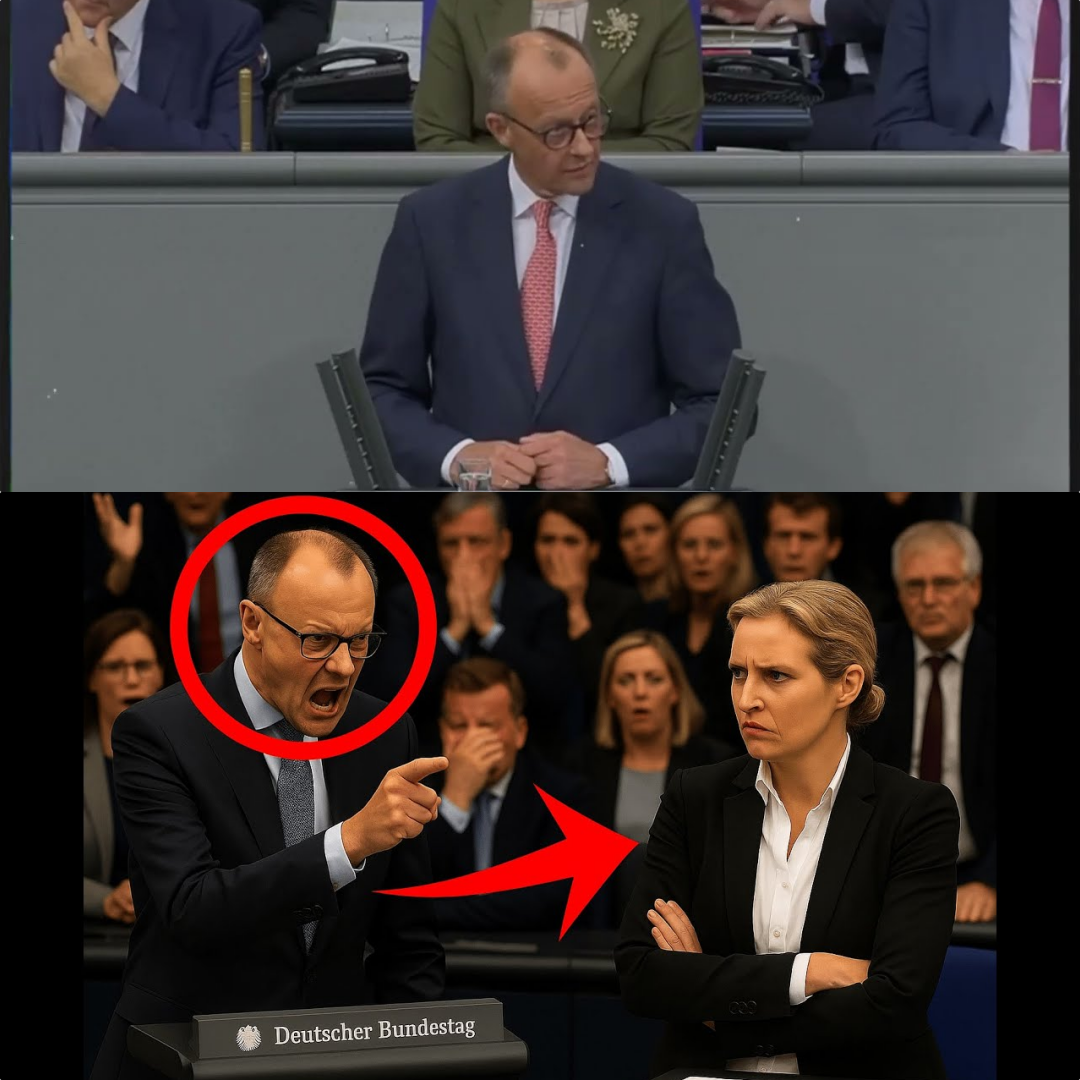
Machtkampf in Berlin: Enteignungs-Eklat erschüttert Bundestag
Die Atmosphäre im Deutschen Bundestag war in diesen Tagen so aufgeladen, dass man die Spannung fast hätte greifen können. Es ist kein Geheimnis, dass der Ukraine-Konflikt die deutsche Politik tief spaltet, doch die jüngste Debatte im Plenarsaal markierte einen neuen, besorgniserregenden Höhepunkt. Im Zentrum der Auseinandersetzung standen der Bundeskanzler Friedrich Merz und die Fraktionsvorsitzende der […]
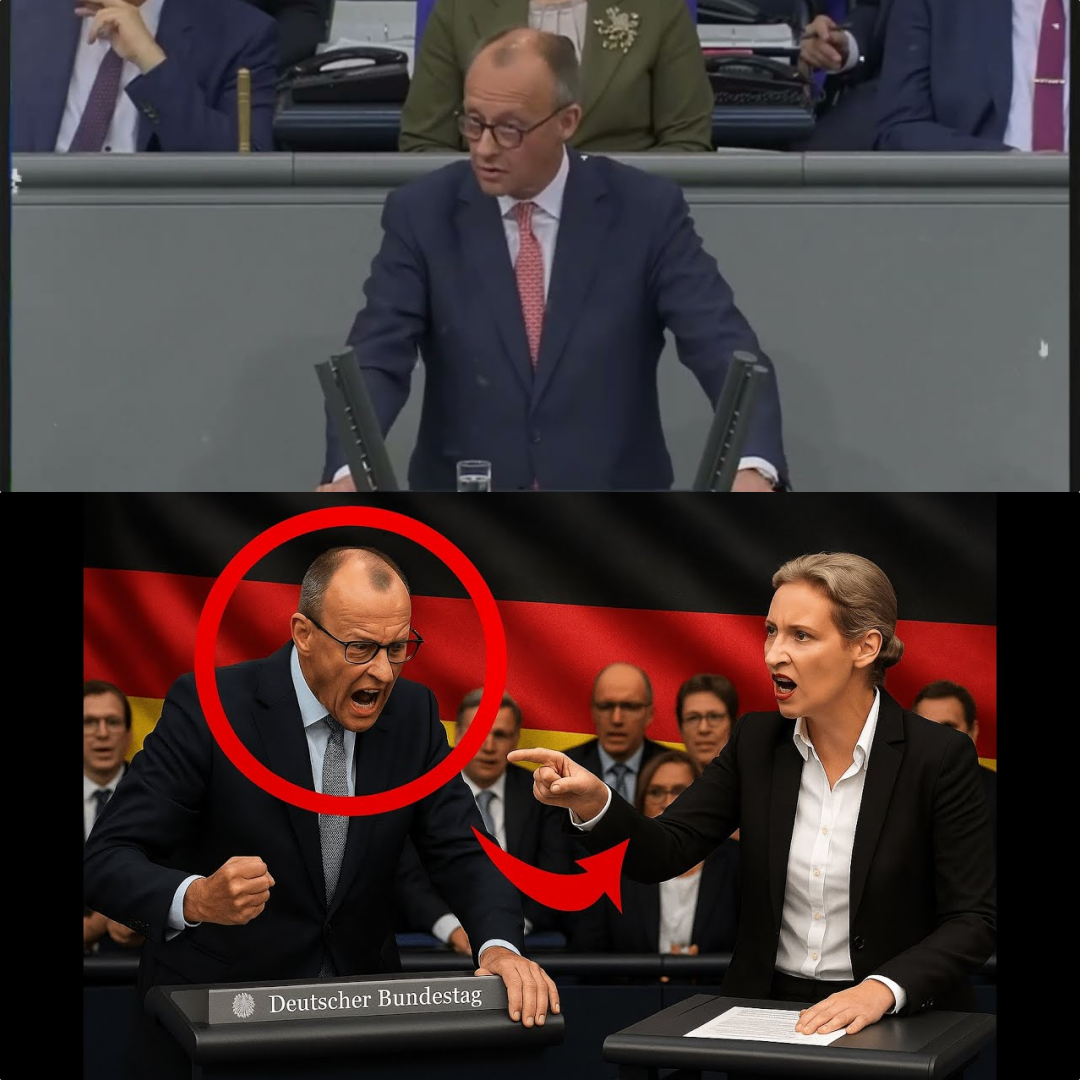
Parlament am Abgrund: Eklat am Tag der Deutschen Einheit
Der Tag der Deutschen Einheit, eigentlich als Symbol für Zusammenhalt, Versöhnung und das gemeinsame Fundament unseres Landes gedacht, verwandelte sich in diesem Jahr im Deutschen Bundestag zu einem Schauplatz hitziger Konfrontationen und eines Machtkampfes, der die politische Atmosphäre in Berlin nachhaltig erschüttert hat. Statt der üblichen, versöhnlichen Töne, die an einem solchen Feiertag zu erwarten […]
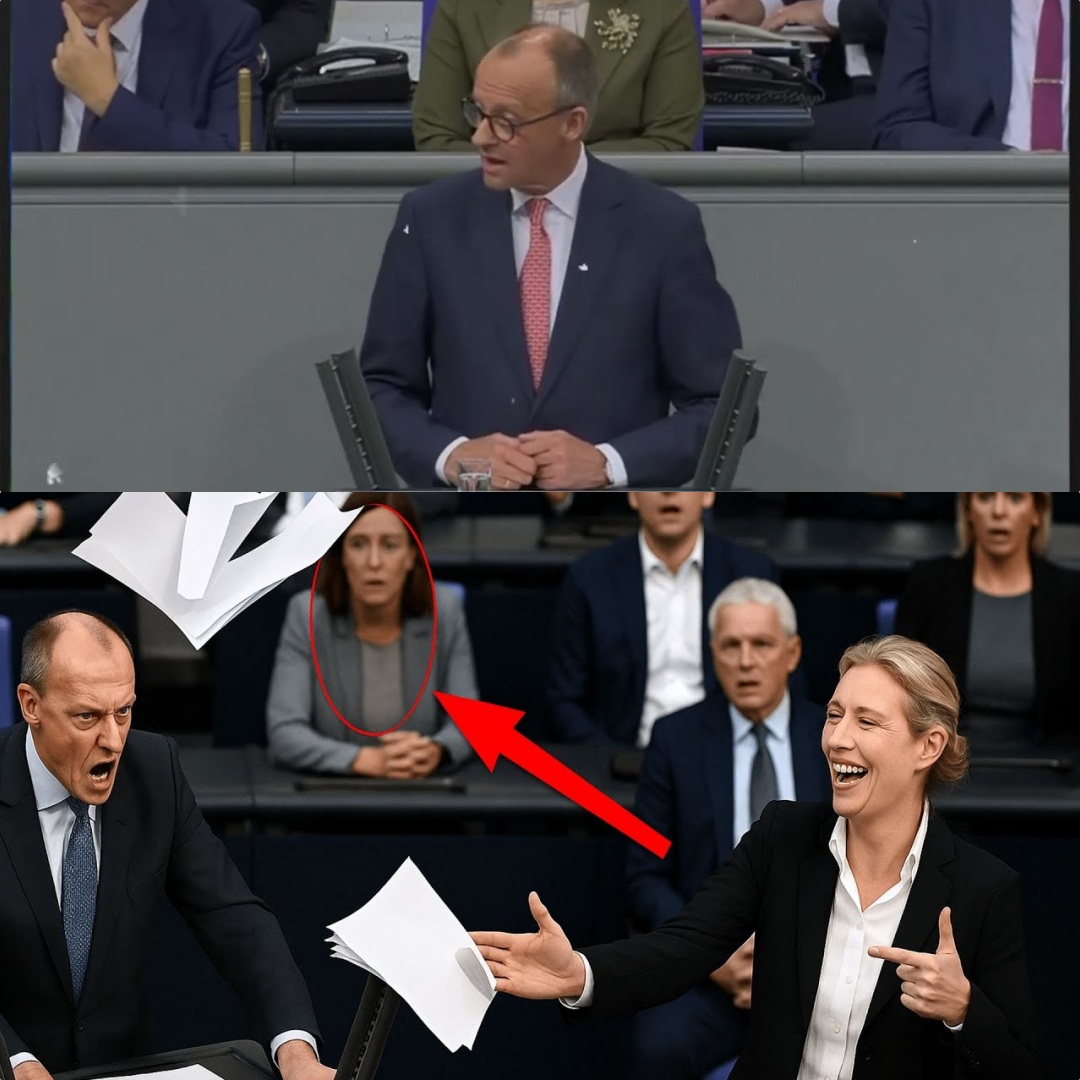
Politische Erschütterung in Berlin: Weidel stellt Merz wegen geheimen Steuerplänen bloß
Die politische Bühne in Berlin, genauer gesagt der deutsche Bundestag, wurde kürzlich Schauplatz einer Konfrontation, die weit über das übliche parteipolitische Geplänkel hinausgeht. In einem Moment von hoher symbolischer und inhaltlicher Brisanz lieferten sich der CDU-Vorsitzende Friedrich Merz und die AfD-Fraktionsvorsitzende Alice Weidel einen Schlagabtausch, der das Potenzial hat, die öffentliche Wahrnehmung über die Transparenz […]
Energiekontrolle im Anmarsch: Bundesnetzagentur geht gegen Smart-Meter-Verweigerer vor
Die deutsche Energiewende, ein Projekt, das die Grundfesten unserer Infrastruktur und unseres Alltagslebens erschüttert, erreicht ein neues, hochsensibles Stadium. Was für viele Bürger lange Zeit als eine bloße Empfehlung oder eine ferne Zukunftsmusik galt, entwickelt sich nun zu einer handfesten regulatorischen Konfrontation: Die Bundesnetzagentur hat die Jagd auf diejenigen eröffnet, die sich dem Einbau moderner […]
End of content
No more pages to load