John Lennon Said “More Popular Than Jesus” — Johnny Cash’s Response Left Him Speechless
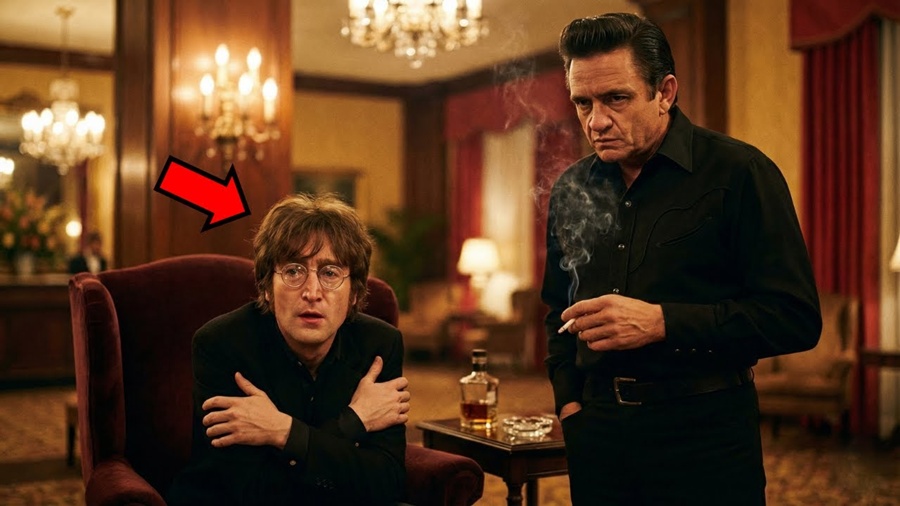
John Lennon Said “More Popular Than Jesus” — Johnny Cash’s Response Left Him Speechless
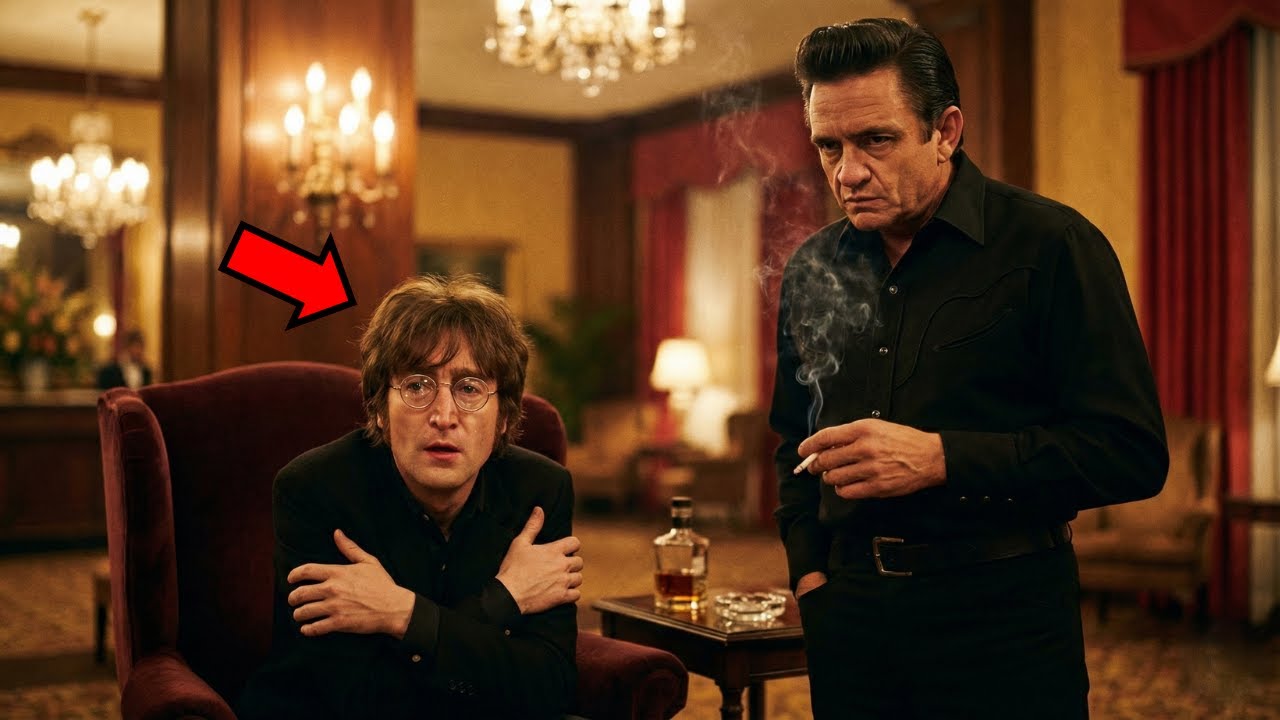
[music] August 11th, 1966. The Peabody Hotel, Memphis, Tennessee. John Lennon was hiding in a broom closet on the 14th floor, and the man who found him there was the last person on Earth he expected to see. Outside, America was burning his records. Radio stations from Texas to Alabama had organized bonfires.
The Ku Klux Clan had nailed Beatles albums to wooden crosses. Death threats arrived by the hundreds. And John Winston Lennon, the smartest beetle, the one who always had a clever answer for everything, was sitting on an overturned mop bucket in the dark, smoking his third cigarette in 10 minutes, wondering if he was going to die tomorrow night in Memphis.
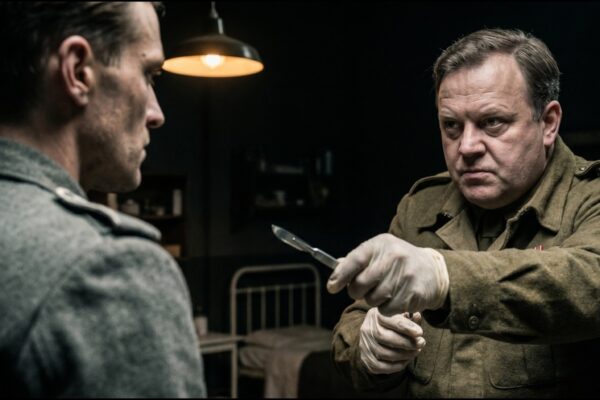
The closet door opened without warning. A tall figure stood silhouetted against the hallway light. And for one terrifying moment, Lennon thought this was it. This was how it ended. Some Bible belt lunatic with a gun who’d somehow gotten past security. But the voice that came out of that silhouette was slow, deep, and carried the unmistakable draw of Arkansas.
Well, now,” Johnny Cash said, “I found musicians in some strange places over the years, but this might be a first.” Lennon didn’t move. His hands were shaking, and he hated himself for it. “How did you find me?” Cash stepped inside and closed the door behind him, plunging them both into darkness, except for the orange glow of Lennon’s cigarette.
“Your manager told me you disappeared. I figured you’d want somewhere nobody would think to look.” There was the scratch of a match, and suddenly Cash’s face appeared in the small flame as he lit his own cigarette. Those deep set eyes studied Lennon with an expression that was impossible to read. “Mind if I sit down?” Lennon gestured vaguely at a stack of towels.
“Be my guest.” Though I have to say, Mr. Cash, you’re the last person I expected to come looking for me. I would have thought you’d be out there with the rest of them, throwing my records on the fire. Cash settled onto the towels with the easy grace of a man who’d spent his life making himself comfortable in uncomfortable places.
I’ve done a lot of stupid things in my life, son. Burning good music ain’t one of them. The word son hit Lennon wrong. He was 25 years old, the leader of the biggest band in the world, and he didn’t need some hillbilly kuner treating him like a child. I’m not your son, he said, his voice sharper than he intended. and I don’t need your pity.
Cash took a long drag on his cigarette. The silence stretched between them, filled only with the distant sound of sirens somewhere in Memphis. When Cash finally spoke, his voice was calm, almost amused. Pity? That’s not why I’m here. I’m here because I think you said something true. And now you’re too scared to stand behind it.
The words hit Lennon like a slap. He’d spent the last week being attacked from every direction. But somehow this felt different. This wasn’t condemnation. It was something worse. It was disappointment. “What the hell is that supposed to mean?” Lennon asked. Cash leaned forward, and in the dim light, his face looked ancient, carved from the same stone as the mountains of his homeland.
“You said the Beatles are more popular than Jesus in England in March. I read the interview. You were making an observation about the state of Christianity, about how young people don’t go to church anymore. You weren’t bragging. You were worried. Lennon felt something twist in his chest. Nobody had understood that.
Not the press, not the preachers, not even his own bandmates. They’d all treated it like a gaff, a mistake to be apologized for and forgotten. But this stranger, this country singer with his black clothes and his prison concerts and his reputation for pills and trouble, had read those words and actually understood what they meant.
“So why are you here?” Lennon asked, his voice smaller now. “If you understood, why aren’t you out there defending me?” Cash’s laugh was dry and humorless. “Because I’m not here to defend you, son. I’m here to tell you that you need to apologize.” The words hung in the air like smoke. Lennon felt his face flush with anger.
Apologize for telling the truth for pointing out that Christianity is dying while everyone pretends everything’s fine. I thought you were different, Cash. I thought you might actually have a brain in that cowboy head of yours. Cash didn’t flinch. He just sat there smoking, watching Lennon with those ancient eyes. I do have a brain.
That’s how I know the difference between being right and being wise. He paused, letting the words sink in. You were right about what you said. Christianity is in trouble. Churches are emptying out. Young people don’t believe the way their parents did. All of that is true. But here’s what you don’t understand, Lenon.
You’re not standing in a lecture hall at Oxford. You’re standing in America in the South in 1966. And words have consequences. Lennon opened his mouth to argue, but Cash cut him off. Tomorrow night, you’re playing the Midsouth Coliseum. 12,000 people. And right now, there are men in this city. Angry men, scared men, men who’ve never read a book in their lives, but who believe with all their hearts that Jesus Christ is their personal savior.
And they think you just spit on everything they hold sacred. Cash’s voice dropped lower, and something in it made Lennon’s blood run cold. I know these men. I grew up with them. I’ve played for them in prisons and churches and honky tons from here to California. And I’m telling you, John, some of them would consider it an honor to die for their faith, to take a bullet for Jesus, to become a martyr.
He leaned closer, his cigarette casting strange shadows across his face. Now ask yourself this. If they’re willing to die for their beliefs, what do you think they’re willing to do to the man who mocked them? The closet suddenly felt very small. Lennon could hear his own heartbeat, could feel the sweat on his palms.
He’d received death threats before, but they’d always seemed abstract, unreal, just words on paper from faceless strangers. But sitting here in the dark with Johnny Cash, those threats suddenly became terrifyingly concrete. “I didn’t mock them,” Lennon said, but his voice had lost its edge. “I was trying to start a conversation.” Cash nodded slowly.
“I believe you, but that doesn’t matter anymore. What matters is what those 12,000 people believe. And right now, they believe you think you’re better than their god.” He stubbed out his cigarette on the concrete floor. So, you’ve got a choice to make. You can walk out on that stage tomorrow night with your head held high, refusing to apologize, and maybe nothing happens.
Maybe you play your songs and everyone goes home happy. Or maybe someone in that crowd decides tonight’s the night they meet their maker, and they’re taking you with them. Lennon felt sick. He’d always prided himself on his courage, on his willingness to say what others wouldn’t. But this wasn’t courage. This was stupidity. This was gambling with his life and Paul’s life and George’s and Ringo’s for the sake of pride.
“What would you do?” he asked quietly. “If you were me?” Cash was silent for a long moment. When he spoke, his voice was different, softer, more personal. “I’ve been where you are. Not exactly the same, but close enough. I’ve said things I believed, things I knew were true, and I’ve watched the world turn against me for saying them.
I’ve had preachers tell me I was going to hell. I’ve had record labels drop me. I’ve had my own family turn their backs. He reached into his jacket pocket and pulled out a small worn Bible. Even in the dim light, Lennon could see how battered it was, how many times it had been opened and closed. But here’s what I’ve learned.
There’s a difference between truth and wisdom. Truth is knowing what’s real. Wisdom is knowing when to speak it and how and to whom. Cash opened the Bible to a page marked with a faded ribbon. There’s a verse in Ecclesiastes. To everything there is a season and a time to every purpose under heaven. You know what that means? Lennon shook his head.
It means sometimes the bravest thing you can do isn’t to stand your ground. Sometimes the bravest thing is to bend, to admit that you hurt people, even if you didn’t mean to. To say you’re sorry, not because you were wrong, but because you care more about those people than you care about being right. He closed the Bible and looked at Lenon with an intensity that was almost physical.
Tomorrow you’re going to stand in front of 12,000 people who think you hate them. You can prove them right by refusing to apologize. Or you can prove them wrong by showing them that John Lennon, the smartest beetle, is also smart enough to know when he’s made a mistake. Lennon sat in that closet for what felt like hours, turning Cash’s words over in his mind.
The cigarette had burned down to his fingers, but he barely noticed. Everything he believed about himself, about truth, about courage, was being dismantled by a man who sang songs about trains and prisons. “You make it sound so simple,” he finally said. “Just apologize. Just bend. But you don’t understand what that means for someone like me.
I built my entire identity on not bending, on saying what everyone else is afraid to say.” Cash laughed. A genuine sound this time, warm and unexpected in the darkness. Son, I’ve been arrested seven times. I’ve set fire to a national forest. I’ve nearly killed myself with pills more times than I can count. You think I don’t [clears throat] know something about identity, about pride? He shifted on the towels and Lennon heard his joints crack.
Let me tell you a story. Three years ago, I was playing a show in Dallas. This was right after Kennedy got shot. The whole country was grieving, angry, looking for someone to blame. And I got it in my head that I was going to say something profound, something that would heal the nation. Cash’s voice took on a bitter edge.
So, I walked out on that stage in front of 15,000 people, and I started talking about forgiveness, about how we needed to love our enemies, even the man who pulled the trigger. You know what happened? Lennon shook his head. They booed me. 15,000 people booing so loud I couldn’t hear myself think. Someone threw a bottle, hit me right here.
He touched his forehead. I still have the scar. And you know what I learned that night? He leaned forward, his voice dropping to almost a whisper. I learned that being right doesn’t mean a damn thing if you can’t make people listen. I had the truth, John. I had the righteous message.
But I delivered it wrong at the wrong time to the wrong crowd. And instead of healing anyone, I just made them hate me more. Lennon felt something shift inside him. He’d always seen cash as a relic, a country dinosaur clinging to a dying genre. But sitting here in the dark, he realized he’d been wrong. This man had walked through fires that Lennon couldn’t even imagine.
“So what did you do?” Lennon asked. “After Dallas?” Cash was quiet for a moment. I apologized, not for what I believed, but for how I said it. I told them I was sorry for causing pain, even though I didn’t mean to. And you know what? It didn’t make me weaker. It made them listen because once they knew I cared about their feelings, they were willing to hear what I had to say.
He stood up slowly, his knees popping in the silence. Tomorrow morning, there’s going to be a press conference. The whole world is going to be watching, waiting to see what John Lennon does. You can stand up there and defend yourself. Explain what you really meant. Argue about context and interpretation, [clears throat] and maybe you’ll win the argument, but you’ll lose those people forever.
” Cash opened the closet door, letting in a sliver of light from the hallway. His silhouette filled the frame, tall and dark and somehow ancient. Or you can do what I did. You can say you’re sorry. Not for the truth, but for the pain. And maybe, just maybe, you’ll plant a seed. Maybe some of those people will go home and actually think about what you said, about why Christianity is struggling, about what they can do to fix it.
He paused, one hand on the doorframe. That’s the thing about apologies, John. They’re not about admitting you were wrong. They’re about admitting that other people matter more than your pride. And then Johnny Cash walked away, his boots echoing down the hallway, leaving John Lennon alone in the dark with a decision that would define the rest of his life.
The press conference was held the next morning at the Aster Tower Hotel in Chicago. Every major network was there, cameras and microphones pointed at the small stage where John Lennon sat alone, looking smaller than anyone had ever seen him. The questions came fast and angry. Reporters demanded explanations, justifications, retractions.
Lenon could feel the hostility in the room, could see the contempt in their eyes, and for a moment he almost gave in to his instincts. almost stood up and told them all to go to hell, that he’d meant every word and he wasn’t going to apologize for telling the truth. But then he remembered the closet, the darkness, the sound of Cash’s voice saying words have consequences.
And he remembered something else. Something Cash had said that he’d almost missed. “Being right doesn’t mean a damn thing if you can’t make people listen.” Lennon leaned into the microphone. His voice was quiet, almost humble. “I’m sorry,” he said. “I’m sorry for the hurt I’ve caused. I never meant to say anything offensive to Christianity or anyone’s faith.
I was trying to make a point about how the church needs to work harder to reach young people, and it came out wrong.” The room went silent. Reporters looked at each other, confused. This wasn’t the John Lennon they knew, the sharp tonged rebel who never backed down from a fight. This was something else, something they didn’t have a name for.
I believe in God, Lennon continued. And I believe in the teachings of Jesus. I just expressed myself badly. And I’m sorry. He looked directly into the nearest camera, knowing that millions of people were watching. I hope you can forgive me. The tour continued. Memphis happened and nothing went wrong. No assassins, no martyrs, no bullets in the night.
The Beatles played their songs and 12,000 people screamed and cried and forgot at least for a few hours that they were supposed to hate the man on stage. But something had changed in John Lennon. Something that wouldn’t fully reveal itself for years. Not until the bed ends for peace. Not until imagine. Not until he learned that sometimes the most revolutionary act isn’t screaming at the world, but whispering to it.
He never saw Johnny Cash again after that night in Memphis. Their paths diverged. One toward psychedelia and Yoko and A bullet in New York. The other toward June Carter and prison concerts and a resurrection in a small studio with a producer named Rick Rubin. But in 1968, when Cash recorded his landmark album at Folsam Prison, he included a song that nobody expected, a cover of In My Life, the Lennon McCartney ballot about memory and loss.
And when reporters asked him why he’d chosen that song, Cash just smiled that crooked smile of his and said, “Because sometimes the bravest thing a man can do is admit he was wrong.” And the man who wrote that song taught me that truth. Years later, after Lennon was gone, after the world had mourned and moved on, Yokoono received a letter.
It was written on plain paper in a shaky hand, and it came from a cabin in Tennessee. The letter was short, just a few lines. I met your husband once in a broom closet in Memphis. He was scared and angry and too proud to admit it. I told him that apologizing didn’t make him weak. I hope I was right. He changed the world.
But that night in that closet, he changed me, too. JC, she never replied, but she kept the letter in a box with John’s most precious possessions right next to the notebook where he’d written the first draft of imagine because she understood perhaps better than anyone that some conversations don’t need answers. They just need to be remembered.
And in the end, that’s what Johnny Cash and John Lennon gave each other in that Memphis Broom closet. Not agreement, not friendship, just the simple gift of being understood by someone who had no reason to understand. Two rebels, two believers, two men who spent their lives searching for truth in a world that preferred comfortable lies.
They met once in the dark, and they never forgot each other. And maybe that’s the only kind of miracle that really matters.