Frank Sinatra Laughed at Johnny Cash’s Music — Until He Heard This Song
Frank Sinatra Laughed at Johnny Cash’s Music — Until He Heard This Song
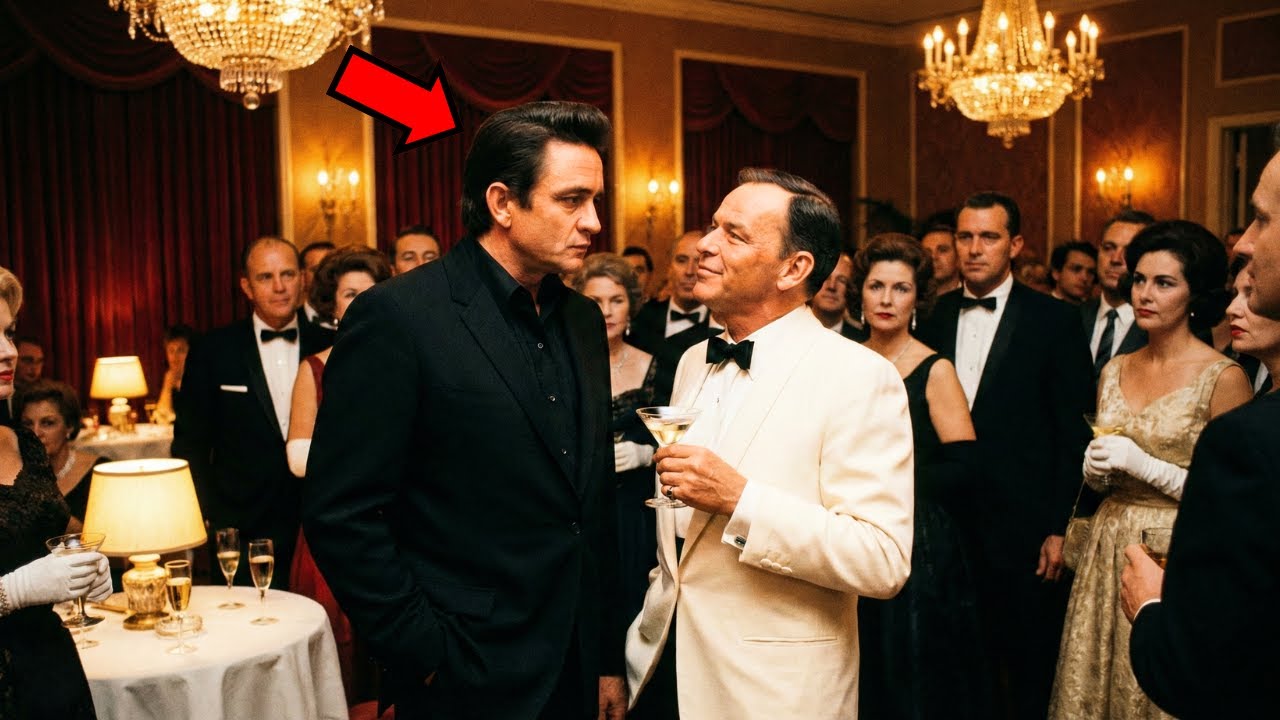
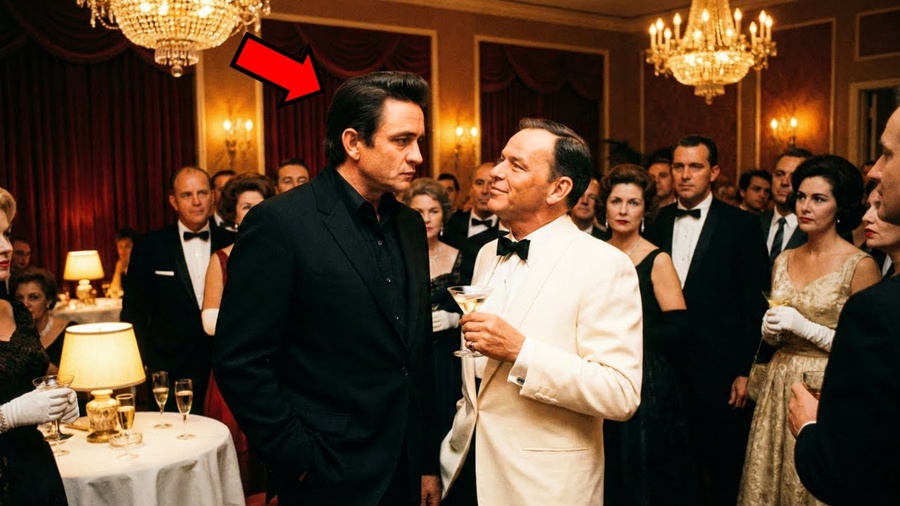
[music] Frank Sinatra was laughing when he said it. That was the part Johnny Cash would remember for the rest of his life. Not the words themselves, but the way Sinatra threw his head back. Martini Glass catching the chandelier light surrounded by men in tuxedos who laughed along.
Because that’s what you did when the chairman of the board made a joke. November 14th, 1965. The Beverly Hilton Ballroom. a charity gala for St. Jude Children’s Hospital, where tickets cost more than most Americans made in a month, and the guest list read like a Hollywood directory. Cash stood near the back of the room in his black suit.
June Carter at his side, watching the most powerful man in entertainment dismiss everything he’d ever created with five words that cut deeper than any knife. But what Sinatra didn’t know, what nobody in that glittering room could have possibly known, was that in exactly 47 minutes, Johnny Cash would make Frank Sinatra cry in front of 300 people.
And the song that would break him wasn’t about love or heartache or any of the things Sinatra sang about every night. It was about something far more personal, something both men had buried so deep they thought no one would ever find it. The evening had started normally enough, which in Hollywood meant champagne that cost more than a car payment and conversations that meant absolutely nothing.
Cash had been invited because Colombia Records wanted him there, because his name on the guest list meant publicity, because someone in marketing had decided that country music was becoming respectable enough to mingle with the real stars. He had worn his black suit, the same one he wore everywhere, and June had chosen a simple green dress that made her look like she’d stepped out of a painting.
They didn’t belong here. Cash knew it the moment they walked through those gilded doors and felt the temperature of the room shift. Felt the subtle repositioning of bodies as people noticed them and decided almost unconsciously that they weren’t worth approaching. The ballroom was designed to intimidate, and it succeeded.
Crystal chandeliers hung from ceilings that seemed impossibly high. White-clooved waiters moved through the crowd like ghosts, carrying silver trays of things Cash couldn’t identify and didn’t want to eat. The women wore diamonds that could feed a small town for a year. And the men wore confidence that came from never having to worry about where their next meal would come from.
Cash had grown up picking cotton in Das, Arkansas, his fingers bleeding in the summer heat while his mother sang hymns to keep the family spirits alive. He’d earned every callous on his hands, every line on his face, every ounce of success he’d achieved. But in this room, none of that mattered.
In this room, he was just a country singer who’d somehow wandered into the wrong party. Frank Sinatra held court near the center of the ballroom, surrounded by the kind of people who existed in his orbit like planets around the sun. Dean Martin was there, drinking hand, telling a story that made everyone laugh. Sammy Davis Jr.
stood nearby, his energy electric even in conversation. And Sinatra himself, 50 years old, sharp as a razor, dressed in a tuxedo that probably cost more than Cash’s first car, commanded attention without seeming to try. His voice carried across the room even when he wasn’t singing. That distinctive New Jersey accent cutting through the ambient noise like a blade through silk.
Cash had admired Sinatra’s voice for years. The man could take a simple lyric and make it feel like a confession. Could bend a note in ways that seemed to defy the laws of physics. But admiration didn’t mean they existed in the same world. Sinatra was champagne and pen houses and Las Vegas stages. Cash was whiskey in back roads and prison yards where men who’d made mistakes still deserved to hear music.
They’d never spoken, never been formally introduced, and Cash had assumed that’s how the evening would remain. Two ships passing in a sea of wealth, acknowledging each other’s existence without ever actually connecting. [clears throat] He was wrong because at exactly 8:47 p.m. someone in Sinatra’s circle mentioned country music and the chairman of the board decided to share his opinion.
Cash didn’t hear the beginning of the conversation. He only caught Sinatra’s voice rising above the crowd the way it always did when he wanted to make a point, carrying that particular tone of amused contempt that powerful men use when discussing things they consider beneath them. Country music, Sinatra was saying, his words slightly slurred from the martinis, but no less cutting, is what happens when people who can’t really sing decide to make records anyway.
It’s farmboy nonsense. Three cords and a truck. Anyone with a guitar and a broken heart thinks they’re an artist. The men around him laughed. Cash felt June’s hand tighten on his arm. Felt her body tense beside him. She wanted to leave. He could sense it without looking at her, but something kept his feet rooted to the marble floor. Maybe it was pride.
Maybe it was stubbornness. Or maybe it was something darker, something that had been building inside him for years. Every time someone dismissed his music, his people, his entire world, as if it didn’t matter, Sinatra continued, warming to his subject now, playing to his audience the way he played to every audience.
I mean, have you heard this Johnny Cash fellow? It sounds like he’s gargling gravel and calling it a melody. The man wears the same black suit to every event like he can’t afford a second one. That’s not artistry, gentlemen. That’s poverty, pretending to be a statement. The laughter that followed was louder this time, more confident now that Sinatra had named his target.
Cash stood completely still, his face betraying nothing. That old Arkansas trick of swallowing your emotions until they hardened into something useful. Jun’s grip on his arm had become almost painful. Her nails digging through the fabric of his jacket. He could feel other eyes turning toward them now. Could sense the ripple of awareness spreading through the room as people realized the man Sinatra was mocking was standing 30 ft away, hearing every word.
The smart thing would have been to leave. Cash knew that. Walk out with dignity intact. Let Sinatra have his moment. Write it off as the careless cruelty of a man who’d never known real struggle. But Johnny Cash had never been particularly good at doing the smart thing. He’d built his entire career on doing the honest thing instead, even when it cost him, even when it hurt.
So instead of leaving, he did something that would change both their lives forever. He started walking toward the stage. Not fast, not slow, just that steady, deliberate pace that came from years of walking onto stages where people weren’t sure if they wanted to hear him. The crowd parted without being asked, sensing something was about to happen.
June called his name softly, but he didn’t turn around. The band had been playing background jazz all evening, pleasant and forgettable. They stopped when they saw Cash approaching, their instruments falling silent one by one until the only sound in that massive ballroom was the click of his boots on marble. The stage was elevated about 2 ft, just enough to separate the performers from the guests while maintaining the illusion of intimacy.
Cash climbed the three steps slowly, feeling every eye in the room following him, feeling Sinatra’s gaze burning into his back like a physical weight. He didn’t ask permission. He didn’t explain himself. He simply walked to the grand piano at the center of the stage, sat down on the bench, and began to play.
The first notes were quiet, almost tentative. A melody that most people in that room wouldn’t recognize because it had never been recorded, had never been performed anywhere except in small churches and living rooms, where grieving people gathered to remember someone they’d lost. Cash had written it three years earlier in a hotel room in Nashville, the night after he’d received word that his brother Jack had been gone for exactly 10 years.
Jack, who had died at 14 from a table saw accident while Johnny was out fishing. Jack, whose last words had been about seeing angels, about a river of life, about how beautiful heaven looked from where he was standing. For 10 years, Cash had carried that loss like a stone in his chest, had felt it pressing against his ribs every time he took a breath, and he’d never found a way to express it.
Not in his hits, not in his famous songs about trains and prisons and heartbreak. The pain of losing Jack was different, deeper, the kind of wound that never fully heals, just scabs over until something tears it open again. The song was called The River and the Child, and Cash had never played it for anyone except June and his mother.
It was about a boy who dies too young, about a brother who can’t save him, about standing beside a casket that’s too small and wondering why God would take someone so good while leaving the broken ones behind. The lyrics were simple. Cash had never been one for complexity, but they carried a weight that no amount of sophistication could replicate.
He sang about watching his brother’s chest stop moving. About the sound his mother made when the doctor said the words no parent should ever hear. He sang about guilt that lasted decades. About dreams where Jack was still alive and the waking that felt like losing him all over again. His voice filled that ballroom rough and unpolished and absolutely devastating.
And the 300 people who had gathered to drink champagne and make business connections found themselves standing in absolute silence, watching a man in a black suit tear his heart out and lay it on a grand piano. But what happened next was something nobody expected. Because his cash sang the second verse, the verse about his mother, about how she’d aged 10 years in a single afternoon, about the way grief had carved lines into her face that no amount of time would erase.
Frank Sinatra’s expression began to change. The smirk disappeared first, then the casual posture, the martini glass lowering slowly to his side. Sinatra’s eyes, which had been sharp with amusement just minutes before, went distant and dark, fixed on some point far beyond the stage, far beyond this room, somewhere in a past that no amount of money or fame could protect him from.
Because Frank Sinatra had a secret, a secret he’d buried so deep that even his closest friends rarely spoke of it. His father, Anthony Martin Sinatra, had lost a baby boy before Frank was born. A stillborn child who had never taken a breath, who had been buried in an unmarked grave in Hoboken, while Dolly Sinatra wept and swore she’d never try again.
Frank had grown up in the shadow of that lost brother. Had spent his entire childhood trying to be enough for parents who were still mourning someone he’d never known. And now standing in this glittering ballroom surrounded by people who thought they knew him, Frank Sinatra was listening to a country singer describe exactly what that kind of loss felt like.
And for the first time in his life, he understood that he wasn’t alone. Cash finished the song with his eyes closed, the final notes hanging in the air like smoke after a fire. The silence that followed was the kind that has weight. 300 people holding their breath, afraid to break whatever spell had settled over that ballroom.
When Cash finally opened his eyes and looked out at the crowd, he saw something he hadn’t expected. Frank Sinatra was crying, not sobbing, not making a scene. Sinatra was too controlled for that, but tears were running down his face, catching the chandelier light, and he wasn’t bothering to hide them.
The martini glass had slipped from his fingers at some point during the song, shattering on the marble floor, but Sinatra hadn’t noticed. He was staring at Cash with an expression that held no contempt, no amusement, no superiority, just recognition. The recognition of one broken man, seeing his own wounds reflected in another.
Cash rose from the piano bench slowly, his knees aching from the position, his heart still raw from singing words he’d kept private for so long. He didn’t know what to do next. Hadn’t planned anything beyond getting on that stage and responding the only way he knew how. But before he could step down, Sinatra was moving. The chairman of the board walked through the silent crowd, past Dean Martin’s shocked face and Sammy Davis Jr.
‘s ‘s knowing nod past the socialites and executives and everyone who had laughed at his joke just minutes before. He climbed those three steps to the stage, stood directly in front of Johnny Cash, and extended his hand. “I had a brother,” Sinatra said quietly, his voice thick. “Before me, he didn’t make it.
” Cash took his hand. “I know loss when I hear it. That song isn’t about technique. It’s about truth.” Sinatra nodded slowly, something shifting behind his eyes. I was wrong about all of it. What happened next became legend in certain circles, the kind of story that gets passed between musicians in late night bars and backstage rooms.
Sinatra turned to the crowd, still holding Cash’s hand, and spoke loud enough for everyone to hear. I owe this man an apology, and I owe his music more respect than I’ve given it. He paused. that famous Sinatra timing working even now. Country music isn’t noise. It’s just pain set to different chords than I’m used to.
The applause started slowly, then built until it filled the ballroom like thunder. But Cash barely heard it. He was watching Sinatra’s face, watching the walls come down brick by brick, watching a man who had everything realized that none of it protected him from the one thing that touched everyone equally.
loss, grief, the universal language that no amount of success could translate away. They talked for 3 hours that night, long after the gayla ended and the guests went home. Sinatra ordered a bottle of whiskey sent to a private room, and two men who had nothing in common except music and grief sat across from each other and shared stories they’d never told anyone.
Sinatra talked about growing up in the shadow of a dead brother he’d never met. Cash talked about Jack, about the guilt that never faded, about how every success felt hollow because the person he most wanted to impress had been gone since 1944. By 2 a.m. they’d found something neither expected, friendship. Not the Hollywood kind, built on favors and networking, but the real kind, forged in shared wounds and mutual respect.
Before they parted, Sinatra made Cash a promise. I’m going to tell everyone who will listen, he said, his voice rough from whiskey and emotion. About what country music really is, about what you really are. Cash smiled, that crooked smile of his. And what’s that? Honest. The most honest damn thing I’ve ever heard.
Years later, when journalists asked about their unlikely friendship, neither man would explain how it started. They just share a look, the kind that holds entire conversations. and changed the subject. But people who knew them both said the same thing. After that night in 1965, Frank Sinatra never mocked country music again.
And Johnny Cash never played The River and the Child in public a second time. Some songs are only meant to be sung once. Some truths only need to be spoken one time to change everything.