Dean Martin’s Final Words to Johnny Carson Made 18 Million People Cry—Here’s Why
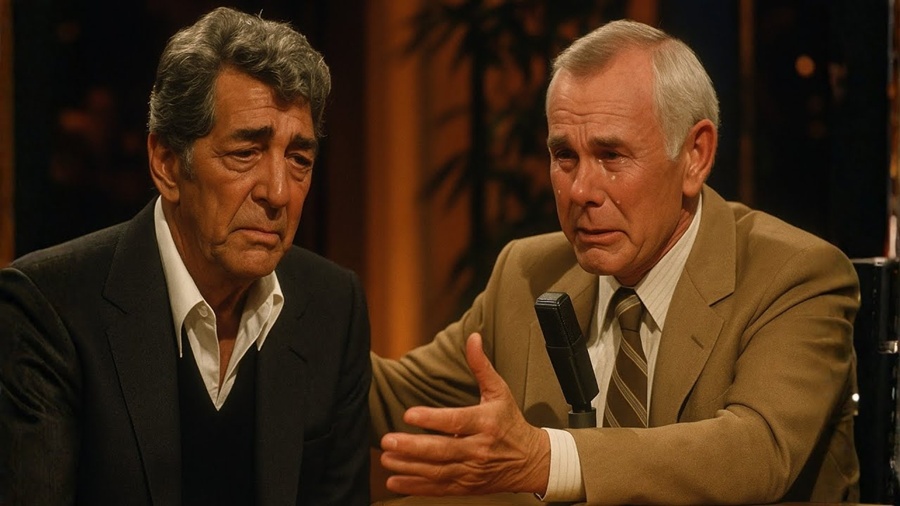
Dean Martin’s Final Words to Johnny Carson Made 18 Million People Cry—Here’s Why
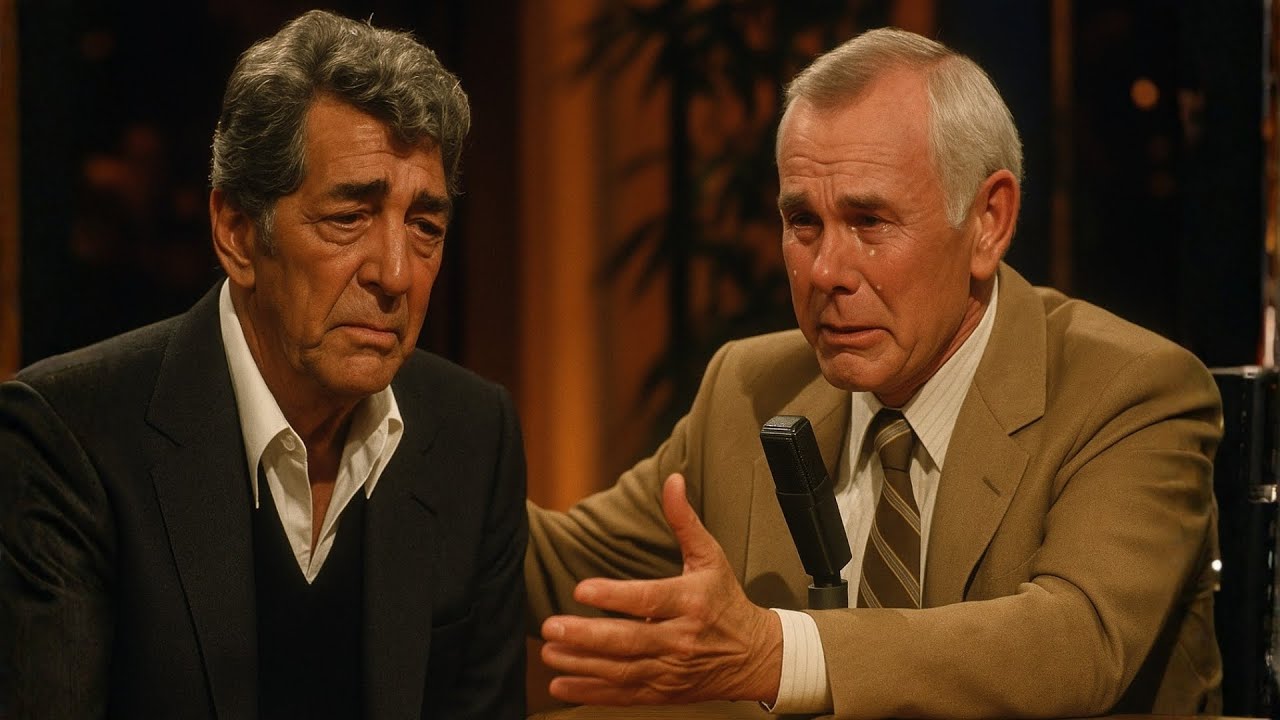
Step four, full script selected hook. Option two, the whispered warning. This hook creates immediate mystery, establishes stakes, and sets up the emotional farewell perfectly. 2 hours before Dean Martin’s final Tonight Show appearance, Johnny Carson received a phone call in his dressing room.
It was Dean’s manager, and his voice was shaking. Johnny, Dean insisted on doing this, but I need you to know he’s not well. This might be the last time he performs anywhere. He has something he needs to say, and he wanted to say it on your show. What Dean Martin revealed that night in front of 18 million viewers would become the most heartbreaking farewell in television history.
May 24th, 1988, NBC Studios, Burbank, California. The Tonight Show was preparing for what seemed like a routine Friday night taping. Dean Martin was scheduled to appear, promoting nothing. No movie, no album, no tour, just Dean coming to sit with his friend Johnny Carson and talk. The production staff thought it was a casual visit, the kind Dean had made dozens of times over the years.
They had no idea they were about to witness something profound. Johnny Carson hung up the phone in his dressing room and sat there for a long moment, staring at nothing. His assistant noticed immediately, “Johnny, you okay? You look like you’ve seen a ghost. Johnny looked up, his eyes already red. Get Fred. Tell him we need to be ready for anything tonight.
And tell the crew, “No matter what happens out there, we keep rolling.” Dean Martin arrived at the studio at 6:15 p.m. 45 minutes before taping. He didn’t come through the main entrance like he usually did. He came through the back, avoiding the audience gathering outside, avoiding the small talk, avoiding everything except the reason he was there.
Johnny met him backstage and the two men stood looking at each other for what felt like an eternity. Dean spoke first. Thanks for letting me do this, Pi. His voice was different, thinner, missing that smooth confidence that had defined him for four decades. Johnny’s throat was tight. Dean, you know you’re always welcome here, but are you sure you want to do this? We can wait.
We can do it another time when you’re feeling better. Dean shook his head slowly. There isn’t going to be another time, Johnny. That’s kind of the point. The studio audience filed in at 700 p.m. excited to see Dean Martin, the legendary entertainer, the king of cool, one half of Martin and Lewis, the man who’d made drunk look charming and loneliness look like a choice.
They settled into their seats, expecting laughs, expecting stories about the Rat Pack, expecting the Dean Martin they’d watched for years. They had no idea they were about to see something completely different. Johnny Carson walked onto the stage at 7:30 p.m. to his usual thunderous applause. He delivered his monologue about President Reagan and the upcoming summer movie season.
The audience laughed at all the right moments. Everything seemed normal. Then Johnny did something unusual. He sat down at his desk, looked directly at the camera, and his entire demeanor changed. Ladies and gentlemen, before we bring out our first guest tonight, I want to say something. Dean Martin is here. You’re going to see him in just a moment, and I want you to know that this appearance is very special to both of us.
So, I’m asking you to just listen, really listen to what Dean has to say tonight. The audience grew quiet, sensing something important was happening. The band played Dean’s entrance music, Everybody Loves Somebody, but it felt different tonight, slower, more melancholy. The curtain parted, and Dean Martin walked onto the Tonight Show stage for the last time.
He looked smaller somehow. The 70-year-old man moving across that stage wasn’t the Dean Martin of 1965. wasn’t the effortless performer who’d commanded stages and screens with easy charm. This was a man carrying weight, visible weight, that had nothing to do with age and everything to do with loss. He wore a dark suit, perfectly tailored as always, but it seemed to hang on him differently now.
His famous smile was there, but it didn’t quite reach his eyes. Johnny stood up, something he rarely did, and the two men embraced. Not the quick showbiz hug, but a real embrace between friends who’d known each other for 26 years. The audience applauded, but it was subdued, respectful, as if they could feel that something significant was unfolding.
Dean sat down in the guest chair, the same chair he’d occupied so many times before, and for a moment, he just looked around the stage, taking it all in like he was memorizing every detail. Dean, Johnny began, his voice already carrying emotion. It’s good to see you. Dean looked at Johnny with those sad knowing eyes. It’s good to be seen, Pi.
Although, I got to tell you, I’m not sure how much longer people are going to want to look at this old face. The audience laughed softly, uncertain because Dean’s tone wasn’t quite joking. Johnny leaned forward. Dean, you called me two weeks ago and said you needed to come on the show. You said you had something important to say. Dean nodded slowly, his hands folded in his lap. Yeah, I did. I do.
He took a breath and Johnny waited, giving his friend time. The studio was absolutely silent. Johnny, I’ve been doing this for 50 years, singing, performing, making people laugh. And for most of that time, I played a character. You know, the one, the drunk, the guy who doesn’t care, the cool cat who’s above it all.
And people loved that character. Hell, I loved that character. It was easier than being me. Dean’s voice was steady, but there was something raw in it, something the audience had never heard before. But here’s what nobody tells you about playing a character your whole life. Eventually, you forget where the character ends, and you begin.
Eventually, the character starts living your life for you, making your choices, hiding your pain, and by the time you realize what’s happened, you’ve lost years, relationships, moments you can never get back. Johnny’s eyes were glistening. Dean, you don’t have to. Dean held up a hand gently. No, Pali, I do.
I need to because I spent so much of my life pretending not to care, and I need people to know that I cared about everything. I cared too much. That was the problem. The audience was completely transfixed. This wasn’t entertainment anymore. This was a man bearing his soul on national television, and they could feel the weight of every word. I lost my son, Dean continued, his voice breaking slightly.
Dean Paul, four years ago, his plane went down and they never even found his body. And when that happened, the character I’d been playing my whole life, that cool detached guy, he couldn’t handle it because you can’t pretend your way through losing a child. You can’t joke about it. You can’t sing your way out of it.
You just have to feel it. And feeling it breaks you. Johnny reached across and put his hand on Dean’s arm. The camera caught it. That simple gesture of friendship and support. Dean looked at Johnny’s hand, then continued. I stopped performing after that. Stopped singing, stopped doing the TV show, stopped everything because I didn’t know how to do any of it without the character and the character was gone.
Dean Martin, the performer, died with my son. What was left was just me, Dean, and I didn’t know if that was enough. It’s more than enough, Johnny said quietly, and his voice was thick with emotion. Dean smiled then, a real smile, sad, but genuine. Maybe I’m still figuring that out. But that’s why I’m here tonight, Johnny.
I needed to come back one more time. Not as the character, but as me. I needed to say thank you. Thank you for what? Johnny asked. For letting me be myself on your show. You know, over all these years, every time I came here, you never asked me to be anyone but who I was. You never pushed me to talk about things I didn’t want to talk about.
You gave me space to be real, even when I was hiding behind the jokes in the bit. And I need you to know that mattered. It mattered more than you’ll ever know. The audience was crying now. Not just a few people, but dozens of them openly weeping at this exchange between two men who’d shared a stage and a friendship for more than two decades.
Johnny Carson, who’d interviewed presidents and movie stars who’d seen everything television had to offer, was struggling to maintain his composure. “Dean, this show wouldn’t be what it is without you,” Johnny managed to say. “You’ve been here from almost the beginning. You’ve been a friend, not just a guest.” Dean nodded.
And that’s why I wanted to come back one last time to tell you that and to tell everyone watching that it’s okay to drop the character. It’s okay to admit you’re hurting. It’s okay to let people see the real you. Even when the real you is broken and scared and grieving. I spent so much of my life making people think I didn’t care about anything when the truth is I cared about everything.
I cared about my kids, my friends, my work. I cared about making people happy. I cared about being worthy of the love people gave me, and I want people to know that now before it’s too late to say it. Johnny’s voice was barely above a whisper. It’s not too late, Dean. Dean looked at him with those sad eyes.
Maybe not, but I’m 70 years old, Johnny. I’m tired. I’m tired of pretending. Tired of performing. Tired of being anyone other than who I am. And who I am is a father who lost his son. a performer who gave everything to the stage and now has nothing left to give and a man who’s trying to figure out what comes next when the music stops.
The silence in that studio was profound. You could hear people in the audience sniffling, trying to quietly compose themselves. The camera operators were struggling to keep their shots steady. Ed McMahon, sitting at his desk, had tears streaming down his face. This was television history unfolding in real time, completely unscripted, completely raw.
I don’t think I’m going to perform anymore, Dean said finally. I don’t have it in me. The voice is still there mostly, but the heart for it is gone. And you can’t perform without heart. The audience knows. They always know. Johnny nodded, understanding. So, what will you do? Dean shrugged slightly. I’m going to go home.
I’m going to spend time with my family, the ones still talking to me. I’m going to sit in my backyard and look at the mountains. I’m going to try to figure out who Dean Crochet is, because I’ve been Dean Martin for so long, I honestly don’t remember. Then Dean did something unexpected. He looked directly at the camera, addressing the audience at home.
If you’re watching this and you’re hiding behind some version of yourself that isn’t real, stop. Life’s too short. If you love someone, tell them. If you’re hurting, admit it. If you need help, ask for it. Don’t wait until you’re 70 years old and sitting on Johnny Carson’s couch wishing you’d done it all differently.
The audience erupted in applause, but it wasn’t the usual enthusiastic Tonight Show applause. It was something deeper, more respectful, the kind of applause you give when someone has just told you a difficult truth that you needed to hear. Dean looked surprised by the response, as if he’d expected judgment or pity, not understanding and appreciation.
Johnny let the applause continue for a moment, then spoke. “Dean, would you sing something for us? Just one song?” Dean looked uncertain. “Johnny, I don’t think I can. I haven’t sung in public in years.” “Just one song?” Johnny pressed gently. “For all of us who’ve loved listening to you all these years.” Not Dean Martin the performer, just Dean singing because he wants to.
Dean was quiet for a long moment and you could see him wrestling with something internal. Finally, he nodded. Okay, pal. One song, but I’m not promising it’ll be any good. It’ll be perfect, Johnny said with certainty. Doc Severson and the band were ready, but Dean waved them off. No band, just me. He stood up slowly, walked over to the part of the stage where guests usually performed, and stood there under the lights.
This 70-year-old man who’d entertained millions, about to sing without any accompaniment, without any protection, completely vulnerable. He closed his eyes, took a breath, and began singing, “Everybody loves somebody.” But it wasn’t the upbeat version America knew. This was slower, sadder. Each word weighted with years of experience and loss.
His voice, that legendary voice, cracked slightly on some notes, wavered on others, but it was more beautiful for the imperfection. Because this wasn’t a performance. This was a man saying goodbye to the thing he’d loved most in his life. When he reached the chorus, everybody loves somebody. Sometime everybody falls in love somehow, his voice broke completely on the word love, and he had to stop for a moment to compose himself.
The audience sat in complete silence, giving him that space. Johnny Carson sat at his desk with tears streaming down his face, not even trying to hide them anymore. Dean finished the song, the last note hanging in the air like a prayer. And then it was over. He opened his eyes, looked at the audience, and smiled that sad, beautiful smile.
The applause was deafening, everyone on their feet. But Dean wasn’t looking at the crowd. He was looking at Johnny. He walked back to the desk, but he didn’t sit down. He leaned over and embraced Johnny, and the microphones picked up what he whispered. “Thank you for letting me be human, Pali. Thank you for everything.
” Johnny hugged him back, holding on tight. “Thank you for trusting us with this, Dean. Thank you for being brave enough to show us who you really are.” When Dean pulled away, he looked at the audience one last time. “Take care of each other,” he said simply. Then he walked off the Tonight Show stage for the last time, moving slowly, carefully, a man who just laid down a burden he’d been carrying for 50 years.
Johnny couldn’t continue the show immediately. He sat at his desk for several long moments trying to compose himself while the audience remained standing, still applauding. Finally, Johnny looked at the camera and spoke directly to viewers at home. Ladies and gentlemen, what you just witnessed was one of the bravest things I’ve ever seen.
Dean Martin just showed us all what courage really looks like. It’s not about being strong or never showing weakness. It’s about being honest when it costs you everything to be honest. The show went to commercial and during the break, Johnny made a decision. He canled the rest of the planned show, all the other guests, all the bits.
He spent the remaining time talking about Dean, sharing stories of their friendship, showing clips from Dean’s previous appearances, celebrating not the character Dean Martin had played, but the man Dean had revealed himself to be. Dean Martin never performed publicly again after that night. He gave a few interviews over the next few years, but he was done with stages, done with performing, done with being anyone other than himself.
He spent his remaining years quietly living in his Beverly Hills home, seeing his family existing without the character he’d worn for so long. When reporters asked him about his final Tonight Show appearance, Dean was always brief but honest. I needed people to know I was real, he’d say. I needed them to know that behind all the jokes and the songs, there was a person who felt everything, maybe too much.
Johnny gave me a place to say that. He gave me permission to be human. Johnny Carson never forgot that appearance. In interviews over the years, when asked about his most memorable Tonight Show moments, he always mentioned Dean’s final visit. Dean taught me something that night, Johnny would say. He taught me that the bravest television is when someone stops performing and just tells the truth.
We spend so much time in this business creating characters and personas and Dean had the courage to strip all that away and just be vulnerable. That’s rare. That’s special. On Christmas Day 1995, 7 years after his final Tonight Show appearance, Dean Martin died of acute respiratory failure at his home in Beverly Hills.
He was 78 years old. When the news broke, Johnny Carson, who had retired from the Tonight Show three years earlier, released a statement that was read on television stations across the country. Dean Martin was my friend for over 30 years, the statement read. But I didn’t truly know him until his last appearance on my show when he trusted me enough to drop the mask and show the world who he really was.
That night, Dean taught millions of people that it’s okay to hurt, okay grieve, okay to admit you’re not the character everyone thinks you are. He was braver than he ever knew. And I’m grateful I got to witness that courage. The world lost a legendary entertainer today. But more importantly, we lost a man who finally learned to be himself. And that’s the greatest performance any of us can give.
The funeral was small, private, attended only by family and close friends. Johnny Carson was there, sitting quietly in the back, crying openly as they played Everybody Loves Somebody, the real version, not the upbeat hit, but the slower, sadder version Dean had sung that final night on the Tonight Show, the version that told the truth.
Years later, archival footage from that May 24th, 1988 appearance became one of the most watched clips in Tonight Show history. Not because it was funny, not because it was entertaining, but because it was real. People shared it with the caption, “Watch this when you need to remember it’s okay to be yourself.” Parents showed it to their children as an example of courage.
Therapists used it in sessions about vulnerability and authenticity. What Dean Martin did that night transcended television. He used his final appearance on America’s most watched talk show to tell people it was okay to drop the armor, okay, okay to stop pretending everything was fine when it wasn’t. In a culture that rewards performance and punishes vulnerability, Dean Martin stood on that stage and chose truth over image, humanity over legend.
Johnny Carson died in 2005, 10 years after Dean. When his personal effects were cataloged, they found something unexpected in his home office. A framed photograph from Dean’s final Tonight Show appearance. Not the publicity shot, not the staged smile, but a candid photo taken during the commercial break after Dean sang, showing the two men embracing, both crying, both being completely human.
Written on the back of the frame in Johnny’s handwriting were eight words. The night Dean taught me what matters most. May 24th, 1988 was supposed to be just another Friday Night Tonight show. Instead, it became the night America watched Dean Martin say goodbye to performing, goodbye to the character he’d played for 50 years, and hello to the man he’d always been underneath.
It was the night Johnny Carson proved that the most powerful television doesn’t happen when everything goes according to plan, but when someone is brave enough to step outside the plan and tell the truth. Dean Martin walked off that stage for the last time carrying nothing but himself, no character, no armor, no performance.
Just a 70-year-old man who’d finally found the courage to be seen. And 18 million people watched and cried and learned something about what it means to be human. If this story of courage, friendship, and the bravery it takes to be yourself moved you, hit that subscribe button. Share this with someone who needs to know it’s okay to drop the mask.
Leave a comment about a time you chose authenticity over performance. Ring that notification bell for more stories about the human moments behind Hollywood’s greatest legends. Because sometimes the most powerful performances are when we stop performing and just tell the truth.