Bruce Lee’s DEADLIEST Fight EVER – Only 10 People Witnessed It
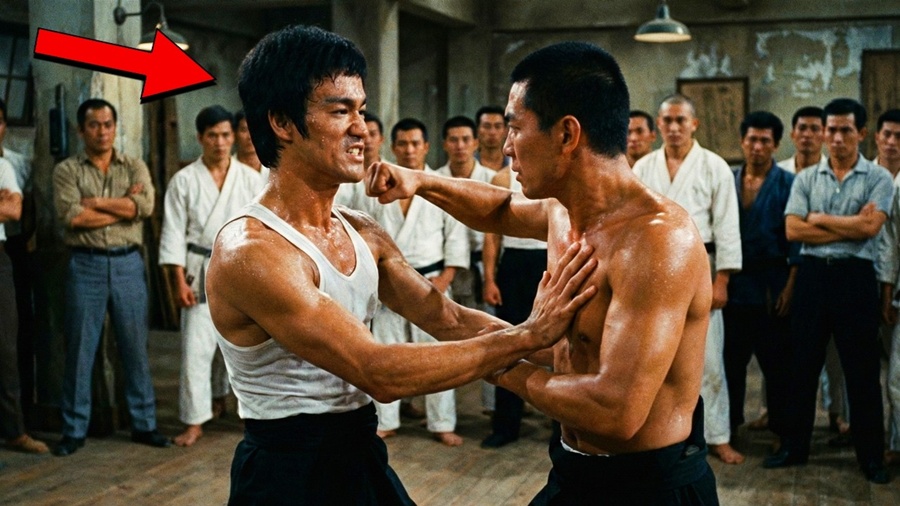
Bruce Lee’s DEADLIEST Fight EVER – Only 10 People Witnessed It
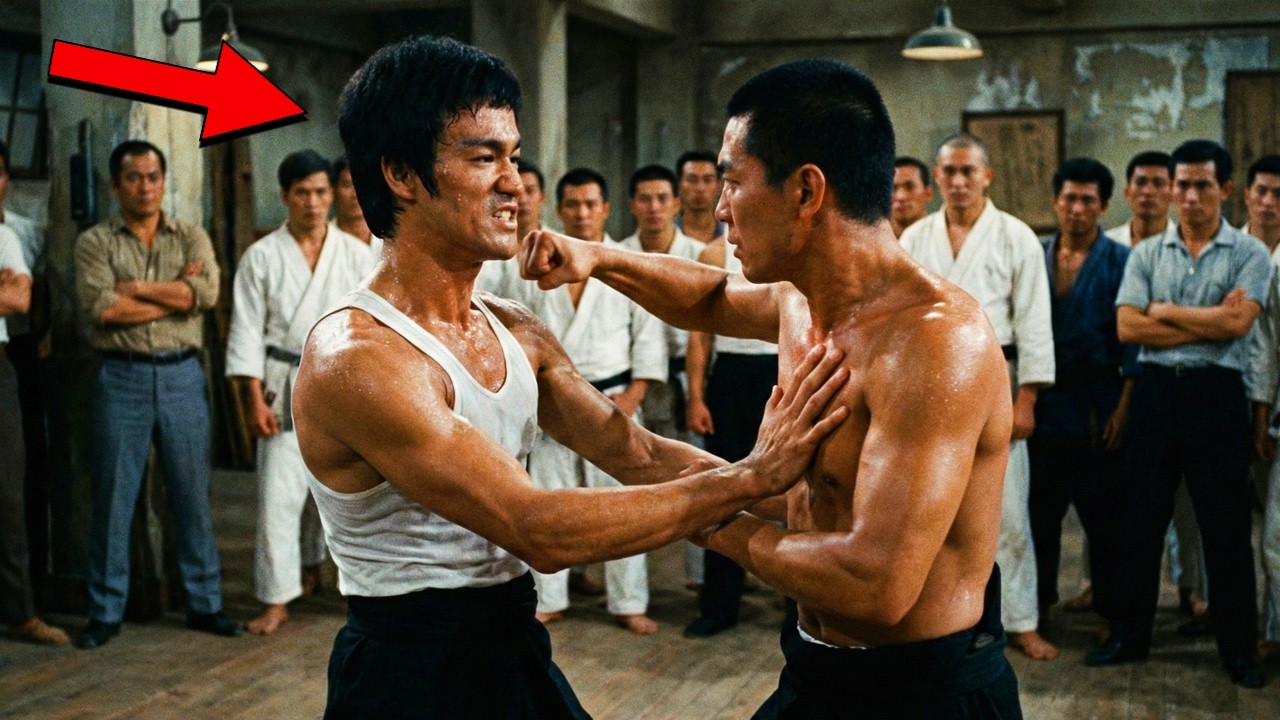
Tanaka’s Karate dojo in Little Tokyo had the feel of a place that had earned its age. Hardwood floors worn smooth by decades of training, the faint smell of sweat and incense. Photographs of masters on the walls, Japanese calligraphy, the kind of order that comes from long tradition. This was October 1967 and Bruce Lee had walked in carrying a small bag dressed in jeans and a t-shirt there to train with a friend. Nod.
The friend was James, a Japanese American fighter Bruce knew from the tournament circuit. They’d crossed paths at competitions, exchanged techniques, trained together informally. James practiced karate. Bruce had come up through Wing Chun and was developing his own system. Both had benefited from the exchange.
But that day, the dojo was more crowded than usual. Around 10 students, all in traditional white gis, black belts. When Bruce entered, training stopped. James moved toward him quickly on voice low. Bruce, maybe today isn’t good. Sensei is in a mood. He’s been talking about Chinese martial arts all week, saying they’re inferior. I tried to tell him about you, but he doesn’t want to hear it. It’s okay.
I can come back another time. Too late. James nodded toward the back of the dojo. He saw you come in. An older Japanese man walked forward around 55. Short but powerfully built, moving with the controlled precision of someone who had been training for four decades. This was Sensei Tanaka, owner of the Dojo 8th degree black belt, traditional to his core.
He had come to America from Japan in the 50s and brought authentic karate with him. Tanaka stopped 10 ft away and looked Bruce over. The street clothes, the casual posture, the absence of any bow upon entering. In traditional Japanese culture, you bow when you enter a dojo. You show respect. Bruce hadn’t done that, hadn’t thought to.
But to Tanaka, that omission was a statement. You are Bruce Lee, not a question. Yes, sir. I’m here to train with James. Train what? Just working out, exchanging techniques. Tanaka’s expression hardened. You teach Chinese martial arts? I teach martial arts. Yes, Wing Chun, among other things. Wing Chun is not true martial arts. It is handwaving.
No power, no structure, no discipline. The students had stopped pretending to train. They formed a loose circle watching. Wing Chun has discipline and structure. Bruce said, just different from karate. Different means inferior. Tanaka crossed his arms. Karate is tested, proven in Okinawa in Japan. Wing Chun is performance, not real combat.
With respect, that’s not accurate. Wing Chun has been tested in different contexts. Show me. Two words. The dojo went quiet. It was a direct challenge, and it left Bruce with a narrow set of options. Refusing meant conceding the point. Accepting the claim that Chinese martial arts couldn’t hold up.
The story would circulate. Bruce Lee backed down from a karate master. accepting meant confronting Tanaka in his own dojo in front of his students with real consequences either way. James stepped forward. Sensei, Bruce is my guest. Maybe we should be quiet. Tanaka didn’t look at him. His eyes stayed on Bruce. I asked him to show me.
He can show or he can leave. Bruce set down his bag. What exactly do you want me to show? Your Wing Chun against my karate. No rules, no stopping. My first person who cannot continue loses, the students murmured. This was no longer a sparring exercise. I don’t think that’s a good idea, Bruce said.
Of course you don’t, because you know you will lose. No, because someone could get seriously hurt. What’s the point of that? Tanaka stepped closer. The point is respect. You walked into my dojo without bowing, without asking permission. In traditional culture, that is an insult. So now we test. We see if your confidence is backed by skill.
Bruce had walked in without bowing out of habit, not intent. He’d moved between schools his whole life, some traditional, some not, and formality hadn’t been on his mind. But to Tanaka, that casualness read as dismissiveness. “I apologize,” Bruce said. “I should have bowed. That was careless. Can we start over?” “Too late.
You want to train here? You prove you deserve to. You beat me. You can train whenever you want. I beat you. You never come back. And you tell everyone that Japanese karate is superior to Chinese kung fu.” Bruce looked at James. James had nothing to offer. He was caught between his teacher and his friend, between institutional loyalty and fairness with no clean move available.
“Okay,” Bruce said finally. “But we set limits. No strikes to the throat, no eye gouges, no groin shots. We’re testing skill, not trying to injure each other.” “Agreed.” Tanaka removed his GI top. Underneath a white t-shirt, a lean, muscular, decades of conditioning visible in the way he moved.
He walked to the center of the dojo. “Come,” Bruce moved to the center. The students formed a circle, a boundary, a ring. James tried once more. “Sensei, [snorts] please. This isn’t necessary. Move.” James stepped back. The two men faced each other 6 feet apart. Tanaka settled into a traditional karate stance. Deep, grounded, left foot forward, right fist chambered, left hand extended.
40 years of muscle memory. what to Bruce stood naturally, no formal stance, balanced, relaxed, hands loose. To Tanaka’s eye, it looked like disregard for the moment. Begin. Neither moved immediately. Both read the space. The dojo was quiet, just breathing. The faint creek of old wood. Tanaka moved first.
A front kick, classical karate, aimed at Bruce’s midsection. Good technique, powerful, snapping. Bruce’s body shifted, minimal movement, and the kick passed wide. Before Tanaka’s foot touched the floor, Bruce was inside his guard close range where karate’s longer strikes lose leverage. An open palm came up and touched Tanaka’s chest.
Light, exploratory, Tanaka absorbed it. His body had been conditioned to take impact and fired back with an elbow, sharp and fast, aimed at Bruce’s head. Bruce ducked under it, spun out, and reset. Both men breathing normally, both analyzing. That exchange had been informative. Tanaka had learned Bruce was genuinely fast. Sh.
Bruce had learned Tanaka was conditioned and wouldn’t go down easily. Tanaka attacked again, a straight punch combination, right, left, right, chambering and snapping with full karate technique. Bruce slipped the first two. The third caught his shoulder, glancing but real. He countered with chain punching. Wing Chun’s rapid centerline strikes.
Tanaka blocked with his forearms. Hard blocks. The arms conditioned like wood, but the punches kept coming. 5 6 7 One broke through and caught Tanaka on the cheek, snapping his head to the side. First clean contact. Tanaka’s expression shifted. He’d been hit in his own dojo by a Chinese martial artist in front of his students. He closed distance aggressively, throwing a full power roundhouse kick at Bruce’s ribs, the kind meant to end a fight.
Bruce stepped inside the ark of it, too close for it to land with force, and wrapped Tanaka’s leg with one arm. His other hand struck the standing knee. Precise. E controlled. Tanaka’s balance gave out. He went down hard, the impact echoing off the hardwood floor. The students went still. Their teacher was on the ground.
Tanaka rolled and came up to one knee quickly, fast for his age. His face was flushed. It wasn’t exertion. It was emotion. You fight dirty, he said. Trapping that is not honorable. You said no rules. Trapping is a technique, a legitimate one. In kung fu, maybe. Karate is direct, honest. it. We don’t use tricks. It’s strategy.
Tanaka stood and tested the knee. It hurt, but it held. Nothing broken. He could continue. And he attacked again differently this time. More cautious, more measured. Bruce had proven something. They exchanged more punches, checks, counters. Bruce landed two clean body shots that drove air from Tanaka’s lungs. Tanaka backed off, creating distance, changing approach.
He stopped attacking and started defending instead. E forcing Bruce to come forward and take risks. It was a calculated shift. 40 years of experience being put to use. Bruce recognized it and didn’t take the bait. He stayed patient, waiting for genuine openings. Tanaka fainted, stepped in as if to punch and threw a low kick to Bruce’s lead leg.
Shinto-sh full force. Bruce’s leg buckled. The pain was sharp and immediate. Tanaka pressed forward, throwing a powerful punch at Bruce’s head. This was the moment, the finishing blow. The confirmation of what he’d believed walking into the fight. But Bruce moved despite the leg. He dropped under the punch and swept both of Tanaka’s legs.
Tanaka landed flat on his back, the impact knocking the wind from him. Bruce stepped back. “Enough,” he said. “You’ve proven karate is strong. I’ve proven Wing Chun works. We’re both hurt. Let’s stop before someone gets seriously injured.” Tanaka lay on the floor, breathing hard, not from exertion alone. Everything he had walked in certain of was now on the ground with him. He sat up slowly.
You are skilled, he said. Thank you. I was wrong about Wing Chun, about Chinese martial arts, about you. You weren’t entirely wrong. Karate is effective. You’re very skilled. In different circumstances, the outcome could have been different. No. Tanaka shook his head. You are better, faster, more adaptable. I believe traditional training was sufficient.
That style mattered most. You showed me otherwise. Bruce extended his hand. Tanaka looked at it, then took it. Bruce pulled him to his feet. The 10 students had gone quiet. They had watched their teacher lose, watched assumptions they’d been trained to hold get dismantled in a single exchange.
A younger student spoke up. Sensei, what does this mean? Is karate not effective? Tanaka was quiet for a moment. Karate is effective, but it is not the only effective art. I was wrong to teach you otherwise. There is skill in many styles, wisdom in many traditions. Today, I was taught humility. You should all take something from that.
James brought towels and water. Both men drank. The adrenaline was receding and what remained was the reality of what had happened. Two serious fighters genuinely hurt sitting together on the edge of the dojo floor. Your leg, Tanaka said. I hit hard. You should ice it. I will. Your back, too. That fall was rough. I’m old. I will feel this for weeks.
They sat for a while. Not friends, exactly, but no longer adversaries. Why did you challenge me? Bruce asked. Was it really about style? Tanaka thought about it partially but also pride. Fear. I have been teaching for 30 years, building this dojo, building a reputation. Then I hear about a young Chinese man teaching martial arts, gaining students, gaining attention.
I felt threatened. Felt like my way of life was being challenged. I wasn’t trying to challenge anyone, just teaching what I know. I understand that now. But in my mind, Chinese martial arts were old-fashioned, ineffective. Japanese arts were superior. That belief made me feel secure, stable. You threatened that stability by existing.
By existing and being skilled. Yes, Bruce understood it. He’d felt versions of the same thing. The protectiveness around tradition. [snorts] The need to defend an identity built around a method. It was human and it was limiting. What now? Bruce asked. Now I learn. I’ve spent 40 years believing I had arrived somewhere.
Today showed me I had not. That is painful but also freeing. If I don’t know everything, I can keep learning. You want to train together, exchange techniques? Tanaka offered a small, tired smile. Yes, you teach me Wing Chun. I teach you karate. We both become better. They shook hands again. And it was different this time. Not closing a conflict, but opening something.
The students returned to training quieter than before. Some were energized by the implication. New techniques, new possibilities, others were unsettled. If sensei could be wrong, what else was uncertain? James approached Bruce as he was gathering his bag. You okay? Leg hurts. I’ll be all right. You? I’m fine. I just I didn’t think Sensei would actually fight you.
Thought he’d make his point and that would be it. He had to know. The doubt would have stayed with him otherwise. Better to settle it honestly. Is that why you accepted to give him that partially? Also because refusing would have meant accepting his claim that Chinese martial arts are inferior. I couldn’t leave that standing.
You answered it definitively. Bruce left the dojo limping. His leg was already swelling. He sat in his car without starting it, just breathing, thinking through what had just happened. Tanaka had been skilled, powerful, experienced. A different angle on that roundhouse kick could have cracked ribs. That last punch, had it landed clean, could have done real damage.
The fall could have gone worse. It didn’t, but that wasn’t guaranteed. Both men had pulled back from maximum force. Both had recognized in the middle of it that proving a point wasn’t worth a permanent injury. That restraint was its own form of judgment. He drove home slowly. The leg made it hard to work the pedals.
Linda was there when he arrived. One look at him limping and she came across the room. What happened? Sparring. It got a little rough. A little rough? Bruce, you can barely walk. She got him to the couch, found ice, elevated the leg. Then she sat beside him. What really happened? He told her. The challenge, the fight, the outcome, the conversation afterward.
You could have been hurt much worse, she said. Um, what if his students had gotten involved? They wouldn’t. There were rules. unspoken but understood. It was a test, not a street fight. Still, these confrontations, one of them is going to go wrong. I know, but what’s the alternative? Refuse every challenge. Let Chinese arts be dismissed without response? The next generation of martial artists is going to encounter these attitudes. I can’t just let them stand.
Linda was quiet. She understood it. She didn’t like it. Thus, but she understood it. The story spread through Los Angeles martial arts circles over the following month slowly through conversation. The way these things moved. 10 people had been there and they talked. Details shifted as they always do.
Some versions had Bruce knocking Tanaka unconscious. Some had Tanaka asking Bruce to become his student. Some had the fight lasting 30 minutes, but the core held. Bruce Lee had gone into a karate dojo, been challenged by its master, and walked out having answered that challenge. Both men were skilled. Both walked away.
Both came out of it with something they hadn’t walked in with. Tanaka kept his word. He began training with Bruce, studying Wing Chun principles, learning to adapt. His karate changed, became more fluid, less rigid. Some students embraced the shift. Others left for more traditional instruction. James continued working with both of them and eventually opened his own school, combining karate and Wing Chun, while teaching students to draw from multiple traditions years before that approach had a name.
Bruce’s leg took 3 weeks to heal. A bone bruise, not broken, but damaged. He limped for a month. It stayed with him as a reminder that skill improves your odds. It doesn’t eliminate risk. He became more selective about which challenges he accepted. The certainty that comes with youth was beginning to give way to something more considered.
Years later, after Bruce had become famous, is he a journalist asked him about underground fights, about the rumors about a dojo in Los Angeles. Did it happen? The journalist asked. Bruce was quiet for a moment. I’ve been in situations where skills were tested seriously, where outcomes mattered, but I don’t discuss specific incidents.
Why not? Because they involve other people, people with their own dignity, their own versions of what happened. Making those moments public turns them into something else. Turns serious testing into entertainment. I’m not willing to do that. The journalist pressed. Bruce didn’t elaborate. The 10 witnesses kept to the same standard.
What happened in the dojo stayed there. It was a matter of respect and of understanding that some moments aren’t meant for wider consumption. Tanaka never spoke about it publicly. In private with students he trusted. He returned to it. About pride. Uh about being brought to the floor in his own school. About learning that style is not the same as skill.
About the man who had beaten him and then stepped back and offered a hand. Bruce Lee was the most skilled fighter I ever faced, he would say. Not because he beat me, because of how he beat me. He could have broken bones. He could have humiliated me completely in front of my students. He chose not to. On that choice, demonstrated more mastery than any technique he showed.
The dojo on that October day in 1967, 10 witnesses, two fighters, both damaged, both changed. Bruce had shown that Wing Chun worked under real pressure. Tanaka had been shown something about the limits of certainty and what it looks like to grow past it. A bridge had been built between styles, between traditions, between ways of understanding what martial arts are actually for.
The techniques weren’t what mattered. The lesson was that growth requires honesty. That respect can be built through honest testing. That the most consequential fights are not always the most violent ones. Sometimes what changes is not bone or tissue, but assumption, certainty, the closed architecture of a fixed mind. Those are the things that died in Tanaka’s dojo that day.
and what replaced them.