Bruce Lee CORNERED By 3 Gangsters “Give Us All Your Money” – The Rest Was Erased From History
Bruce Lee CORNERED By 3 Gangsters “Give Us All Your Money” – The Rest Was Erased From History
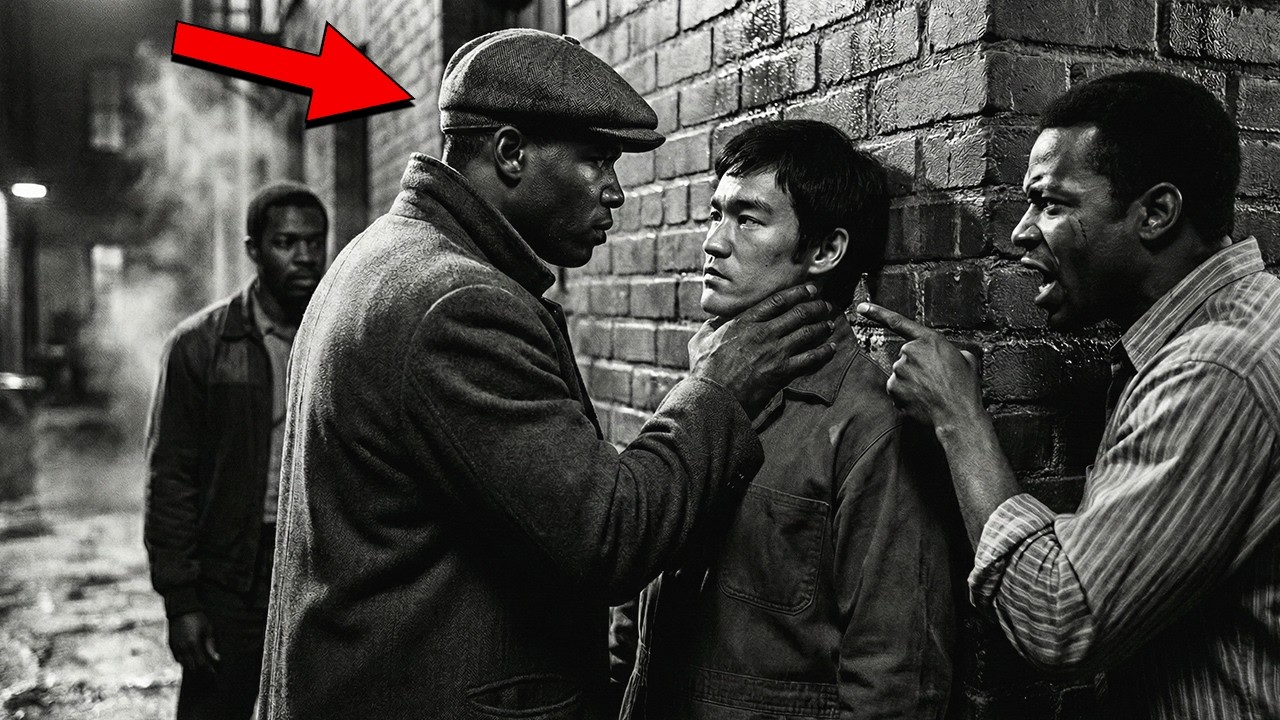
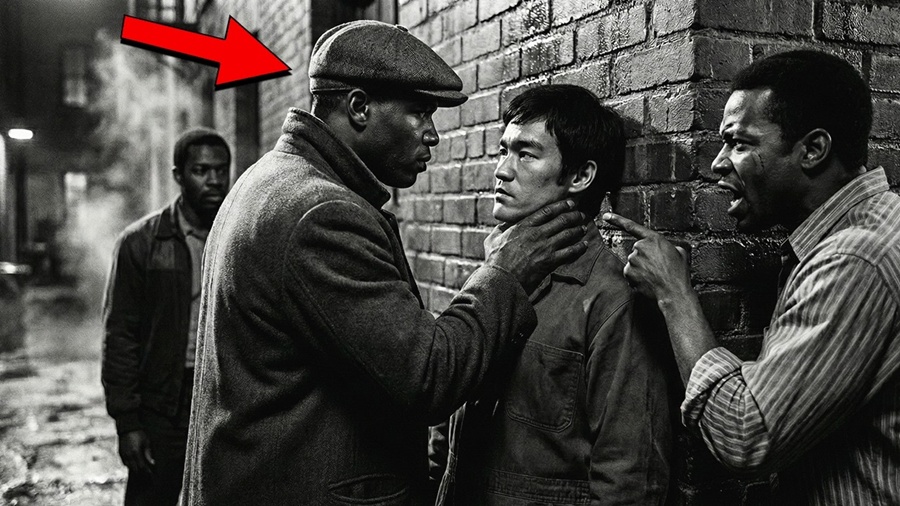
The street light flickers on, off, on again. It throws strange shadows across the sidewalk. Bruce Lee walks alone down Spring Street in downtown Los Angeles. It’s after midnight. February 1971. A cold night. Fog drifts in from somewhere and wraps around the street. It makes everything look fake, like a movie set.
Soft, unreal. Bruce is walking home from his school. It was a late class. Only advanced students tonight. They trained until 11:30. Then Bruce locked the doors, cleaned up, put the gear away. Same routine as always. Now he’s walking eight blocks to his car. Parking was cheaper a few streets away, so he left it there.
He didn’t really think about the walk back. Downtown LA after midnight isn’t safe. Everyone knows that the daytime crowd is gone. Office workers, store owners, regular people. What’s left is different. Homeless men sleeping in doorways, drunks wandering between bars, women working certain corners, and other people. Dangerous people.
People who see empty streets and a person walking alone and see a chance. Bruce isn’t worried. Maybe he should be, but he isn’t. He’s walked these streets hundreds of times. He knows which blocks to avoid. He knows which alleys mean trouble. He knows how to carry himself, how to stay alert, how to look confident.
Most predators look for easy targets. Bruce doesn’t look easy. He’s wearing plain clothes, black jeans, a dark jacket. Nothing flashy, nothing expensive. He blends in. That’s the idea. Don’t stand out. Don’t pull attention. Just walk with purpose. Eyes forward, aware, but not nervous. The street is quiet. A few cars go by. Headlights slicing through the fog, but mostly it’s empty.
Most shops are closed. Metal gates pulled down. Some walls are covered in graffiti, gang tags, marks that say this block belongs to someone. People who live here know who. Bruce doesn’t. He doesn’t know the streets like that. He doesn’t know whose territory is whose. He passes a liquor store still open, a buzzing neon sign in the window.
Two guys stand outside drinking from paper bags. They watch Bruce walk past. They don’t say anything. They just watch him, sizing him up, deciding if he’s worth it. Bruce doesn’t look at them, but he doesn’t look away either. He keeps walking. Same steady pace, not fast, not slow. Two blocks left, almost at his car. The fog is thicker now, harder to see.
The street lights glow like soft circles in the mist. Anything farther than 10 ft looks blurry. Bruce’s footsteps echo on the empty sidewalk. Tap untap. Tap even rhythm. He’s thinking about class, about which students are improving, about what he wants to teach next week. He doesn’t see them until it’s too late.
Three guys step out of an alley right in front of him, blocking the sidewalk. They seem to come out of nowhere. Or maybe they were waiting, watching, timing it. Bruce stops. Instant reaction. Something in the way. His mind kicks in. Three men, all bigger than him, all young, early 20s maybe, all wearing similar clothes.
Dark hoodies, loose jeans, street clothes. The guy in the middle speaks. Yo, where you going? Bruce looks fast. The middle guy is the leader. Taller, more relaxed, more confident. The other two stand slightly back. Backup muscle. It’s a setup. They’ve done this before. This isn’t new to them.
Just walk into my car, Bruce says. His voice is calm. Not challenging, not scared. Don’t make it worse if you don’t have to. Your car? The guy says, that’s nice. You got money for a car? He steps closer. Now he’s about 6 feet away. Close enough to grab him. Close enough to strike. That means you got money in your pocket, too.
I don’t want any trouble. Nobody wants trouble, the guy says. But trouble finds people anyway. He smiles. Not friendly. A hunting smile. Here’s how this goes. You give us what you got. Wallet, watch. Whatever’s in your pockets. You do that. You walk away. Nobody gets hurt. The two other guys move. One steps to the left.
One steps to the right. They box Bruce in. Cut off the sidewalk. Cut off his escape. Smooth. Practiced. They know exactly where to stand. They’ve done this dance before. Bruce’s mind is moving fast. Choices. Risks. What happens next? And he could run, but they’re younger, probably faster. And if they catch him, they won’t be calm anymore. It gets worse.
He could give them what he has. Maybe $20, a few cards. His watch is cheap. Five bucks from a swap meet. He wouldn’t lose much money. But giving in has a cause, too. It makes people like this feel stronger. It tells them they can do it again to someone else. Someone weaker. Someone who might get hurt badly. Someone who might not survive.
I really don’t want trouble, Bruce says again. Just let me pass. We can forget this happened. The leader laughs. Forget this, man. You don’t get what’s going on. He reaches into his hoodie, pulls something out. Metal catches the street light. A knife. Not big. Maybe a 4-in blade, but sharp. More than enough. Last chance. The leader says, “You give us everything or we take it. Your choice how this ends.
” The guy on the right pulls something from his jacket. A metal pipe about a foot long, heavy, made for breaking bones, made for hurting people. The guy on the left doesn’t show anything, but his hands stay in his pocket. He’s probably holding something, too. Probably armed. Three armed men. Bruce is alone, and he has nothing.
Most people would give in. They would hand over the wallet, take the loss, and hope it ends there. Live to see tomorrow. Smart survival instinct. Pride isn’t worth dying for. But Bruce isn’t most people. I’m going to give you the same chance you gave me, Bruce says. His voice changes, gets quieter, calmer, more dangerous. Walk away now.
Forget this happened. Nobody gets hurt. The three guys look at each other, confused. Is this little Chinese dude serious? Is he really trying to threaten them? They got weapons. They got numbers. They got size. What’s he got? The leader’s face hardens. You stupid or something? You see this? He waves the knife.
You see them? Points at his boys. It’s three of us, one of you. Do the math. I did the math. That’s why I’m giving you a chance to leave. Man, I’m going to enjoy this. The leader steps forward, closes distance. Now he’s 4t away. Knife held low, ready to strike, ready to cut. Last [ __ ] chance. Wallet now. Bruce doesn’t move.
Doesn’t reach for his wallet. Doesn’t raise his hands. just stands there, weight balanced, body relaxed, breathing normal. To the untrained eye, he looks unprepared, looks vulnerable, looks like an easy target. The leader lunges, quick, experienced. Knife coming up toward Bruce’s stomach. Meant to gut, meant to kill. This isn’t a robbery anymore.
This is assault. Murder maybe. Bruce moves. His body shifts. Minimal movement. Just enough. The knife passes by his stomach, misses by inches. In the same motion, Bruce’s hand comes up, grabs the leader’s wrist. The wrist holding the knife, not a gentle grab, a controlling grab. Fingers like steel cables, locking, immobilizing. Bruce twists.
Specific angle, specific pressure. The leader’s wrist bends wrong. Pain shoots up his arm. Nerve pain. The kind that makes your hand go numb. The knife falls. Clatters on concrete. Gone. Bruce doesn’t stop. His other hand strikes. Palm to the leader’s chest. Not hard. Not yet. Just placement. just touching.
Then his whole body shifts. That thing he can do. That fa jing thing. Explosive power from zero distance. The leader’s eyes go wide. His chest receives force it wasn’t prepared for. His feet leave the ground. He flies backward. 6 feet maybe. Hits the alley wall hard. Slides down. Sits. Can’t breathe. Can’t move.
Out of the fight. 2 seconds. Maybe three. That’s how long it took. The knife on the ground. The leader against the wall. 2 seconds. That changed everything. The guy with the pipe reacts, swings wild, angry, scared. The pipe comes at Bruce’s head. Meant to crush, meant to kill. Full power behind it. Bruce ducks. Simple.
The pipe swings through empty air. Whoosh. The sound of violence missing its target while the guy is extended off balance. Bruce moves in close range inside the pipe’s arc where it can’t hurt him. His elbow strikes up into the guy’s chin. Sharp, precise. The guy’s head snaps back. His eyes roll. Consciousness leaves. His body goes limp.
The pipe drops from his hand. Clangs on concrete. He falls. Collapses down. Not dead. Just out. Brain temporarily offline from the impact. 5 seconds total now. Two guys down. One left. The third guy, the one with his hands in his pockets, pulls out his weapon, gun, small revolver, shaky hands, fear in his eyes. This isn’t going how it was supposed to.
This was supposed to be easy. Rob some small Asian guy. Take his money. Move on. Nobody was supposed to fight back. Nobody was supposed to win. Don’t move. The guy’s voice cracks, scared, desperate. I’ll shoot. I swear I’ll shoot. Bruce stops, raises his hand slightly, non-threatening, calm. You don’t want to do that. Shut up.
Just shut up. The gun is shaking. Finger on trigger. Dangerous. Not because the guy is skilled. Because he’s panicked. Panicked people make mistakes. Pull triggers accidentally. Kill when they meant to threaten. Bruce stays calm. Think about what happens if you pull that trigger. The noise brings police. Gunshots in downtown. They respond fast.
You’ll be caught. Caught with a gun. Caught with attempted robbery. Caught with attempted murder. That’s life in prison. Is my wallet worth life in prison? I said, “Shut up.” But doubt is creeping in. The guy’s eyes dart to his friends. One against the wall gasping for air. One on the ground unconscious. This went wrong. This went so wrong.
Or Bruce continues, voice still calm. You put the gun down. You help your friends. You leave. I won’t call the police. I won’t identify you. You get to go home tonight. Sleep in your own bed. Wake up tomorrow free. Your choice. The gun waivers, shakes more. The guy’s fighting himself. Pride versus survival.
Ego versus intelligence. Does he shoot and prove he’s hard? Or does he run and live another day? Your friends need help. Bruce says that one’s not breathing right. He needs a hospital. You going to let him die to save face? That worth it to you? The guy looks at the leader. Really looks.
The leader is clutching his chest, wheezing, making horrible sounds. Something’s wrong. Something’s really wrong. Maybe broken ribs, maybe worse. [ __ ] this. The guy lowers the gun, shoves it back in his hoodie pocket. This ain’t worth it. He goes to the leader, helps him up. The leader can barely stand, leaning heavy on his friend, they start walking away, stumbling, really heading toward the alley they came from.
Hey, Bruce calls out. They freeze. Turn. Eva, expecting what? Threats? Mockery? Take your other friend, too. Don’t leave him here. The conscious guy goes back, grabs the unconscious one, pulls him up, slings him over his shoulder. Firemen carry heavy, difficult, but he manages. Then they disappear into the alley. Shadows swallowing them. Gone.
Bruce stands alone on the empty street. Fog swirling around him. The knife is still on the ground. Evidence. He picks it up, folds it, puts it in his pocket. The pipe, too. He’ll dispose of them later, away from here. No point leaving weapons on the street. His heart is pounding now. Adrenaline wearing off. Shakes starting.
This is normal, natural after effect of extreme stress. His hands tremble. He takes deep breaths. In through nose, out through mouth, centering himself, calming down. He walks to his car. Two blocks seems longer now. Every shadow looks threatening. Every sound makes him jump. Paranoia, also normal, also natural.
He reaches his car, unlocks it, gets in, locks the doors immediately, sits there for a minute, hands on steering wheel, not driving yet, just breathing, processing. What just happened could have gone so many ways, wrong ways, fatal ways. If that gun had gone off, if the knife had connected, if he’d slipped, if he’d been slower, if they’d been better trained, if if if endless possibilities, most of them end badly. But they didn’t. He’s alive.
They’re alive. Nobody died tonight. That’s the important part. That’s what matters. Bruce starts the car, drives home slowly, carefully, obeying every traffic law. The last thing he needs is to get pulled over. Cop finds a knife and pipe in his car, starts asking questions. Gets complicated fast. Better to just drive normally, get home safely.
Forget this happened. Linda is asleep when he gets home. He doesn’t wake her. Doesn’t tell her. What’s the point? She’d worry. Would want him to stop teaching late classes, stop walking alone, be more careful. He doesn’t want that conversation. He goes to the bathroom, looks in the mirror, no marks, no bruises, no blood, like nothing happened, but his shirt is soaked with sweat.
His hands are still shaking slightly. His chest is tight. Stress, fear, adrenaline after effects. He takes a shower, hot water, washing away the night, washing away the fear, washing away the whatifs. The water runs clear. No blood, no evidence. Just another night, just another close call. Just another reminder that the world is dangerous and skill matters and training saves lives.
In bed, he can’t sleep and keeps replaying it. The knife coming at him, the pipe swinging, the gun pointing. Each moment a possible death, each decision a possible mistake. But the decisions were right, the training worked, the techniques applied, the philosophy held. Don’t engage unless necessary. Deescalate when possible. But when violence is inevitable, end it quickly, decisively, completely.
Don’t give opponents time to adapt. Don’t give them chances to escalate. Control the situation. Absolutely. That’s what he did. That’s what worked. Three armed men, all bigger, all aggressive, all willing to hurt him. And he neutralized them without serious injury, without permanent damage, just enough force to end the threat. No more.
The next day, Bruce goes to his school. normal routine like nothing happened. But he’s different, quieter, more thoughtful. The students notice but don’t ask. Some things are private. Some experiences can’t be shared. During class, Bruce teaches. But the lesson is different. More serious, more practical, less theory, more reality.
How many of you have been in real fights? Bruce asks. Not sparring, not competition. Real fights where someone actually wanted to hurt you. A few hands go up. Not many. Most students train for fitness, for fun, for the art, not for survival, not for real violence. Real fights are different, Bruce says. Everything you know gets tested.
Everything you trained, everything you think you understand, and most of it falls apart under pressure, under fear, under adrenaline. He demonstrates techniques, but frames them differently. This isn’t for points. This is for going home. This is for surviving when someone wants to hurt you. When someone has a weapon, when you’re outnumbered, when rules don’t exist, the students train harder, more intensity, they feel the shift, feel that something changed, something happened to Bruce, something real, something that made theory become
practice. Bruce doesn’t tell them what happened, doesn’t share details. That story stays private, stays locked, becomes one of those things that people whisper about. Did you hear Bruce got into a street fight? Did you hear he took on three guys with weapons? Did you hear he won? Rumors spread, details change, get exaggerated.
Some versions have him fighting five guys. Some say they had guns plural. Some claim he killed someone. The truth gets buried under layers of mythology. But the truth is simpler. Three men tried to rob him. They were armed. They were bigger. They had numbers. And Bruce neutralized them using skill, using understanding, using techniques he’d trained for years.
No magic, no mysticism, just physics and anatomy and training and discipline. The three men never report it. Can’t. What are they going to say? We tried to rob someone and he beat us up. That’s admitting to a crime. That’s putting themselves at risk. Better to stay quiet. Better to take the loss. Better to remember and learn and never try that again.
One of them, the leader, has broken ribs. Goes to an emergency room 2 days later. Can barely breathe. Doctor asks what happened. Fell downstairs. He lies. Doctor doesn’t believe him, but doesn’t press. Treats the ribs. Wraps them. prescribes pain medication, sends him home. The leader thinks about that night constantly, how fast it happened, how helpless he felt, how completely he was dominated.
He’s been in fights, lots of fights, won most of them. Size and aggression usually win. But not that night. That night, something different happened. Someone who understood violence better than he did, showed him what real fighting looks like. He stops robbing people, stops carrying a knife, gets a job, warehouse work, loading trucks, honest work, hard work, but safe.
Better than the alternative, better than running into someone else like that Chinese guy, someone who knows things he doesn’t, someone who can end fights before they really start. The other two never talk about it. Too embarrassing, too shameful. They got destroyed by one small guy. Their whole identity was built on being tough, being dangerous, being predators.
That night proved they weren’t. proved they were just playing at violence. That when real skill showed up, they were children, helpless, outmatched completely. They drift apart, stop hanging out. Each reminder of the other is a reminder of that night, of failure, of fear, of being less than they thought they were. Better to forget, better to move on, better to pretend it never happened, but it did happen.
In an alley off Spring Street, February 1971, sometime after midnight, three armed men cornered one unarmed man, tried to rob him, tried to hurt him, and got taught a lesson about violence, about real violence, about what happens when predators meet someone more dangerous than they are. No police report exists, no hospital records beyond the one for broken ribs, no witnesses except the four involved, no documentation, no evidence, no official account.
The story was erased from history or tried to be. But stories like that don’t die. They survive in whispers, in rumors, in the questions students ask their teachers, in the legends that build around masters. Did Bruce Lee really fight three armed men? Did he really win? Is it true or just myth? The answer depends on who you ask. The three men would say it’s true.
Would confirm every detail, but they’re not talking. Not ever. That story stays buried, stays private, stays locked in memory and trauma and shame. Bruce never talks about it either. Not publicly, not in interviews, not in classes. Some things are private. Some lessons are personal. Some experiences are meant to teach you, not be taught to others.
But late at night, when students ask about real fighting, about real violence, about what to do when confronted by multiple attackers with weapons, Bruce’s answer is different than other teachers. You avoid it if possible, he says. You run if you can. You deescalate if they let you.
But if violence is inevitable, you don’t hesitate. You don’t hold back. You use everything you know, everything you’ve trained, everything you understand about anatomy and physics and psychology, you end it completely, quickly, decisively, because hesitation gets you killed. Have you ever had to do that? Students ask for real? Bruce is quiet for a moment, remembering that fog, that street, those three men, that knife, that pipe, that gun, those seconds where everything could have gone wrong.
Once, he says finally, I’ve had to do it once. That’s enough. That’s more than enough. The students want details, want the story, want to know what happened, what it felt like, what he did, how he survived. But Bruce doesn’t elaborate, doesn’t share, just says, “Train like your life depends on it because someday it might. And when that day comes, theory doesn’t matter, technique doesn’t matter.
What matters is whether your body remembers, whether your training holds, whether you can execute under pressure. That’s all that saves you. Years later, after Bruce has died too young, after his legend has grown, after his films have made him immortal, researchers dig through his life, looking for stories, looking for truth, looking for the real Bruce Lee behind the legend.
They find gaps, unexplained periods, nights unaccounted for. One such gap is February 1971. No schedule, no filming, no documented activities for several days around the middle of the month. What was he doing? Where was he? What happened? Some researchers hear rumors, stories passed down from students about a fight, about three men, about weapons, about a street corner in downtown LA.
They investigate, look for police reports, hospital records, newspaper articles, find nothing. No evidence means it didn’t happen. That’s the conclusion. Just another myth, another legend, another story that got attached to Bruce Lee’s name without substance. But the absence of evidence isn’t evidence of absence. Some things happen without documentation, without records, without witnesses willing to talk.
They happen in shadows, in forgotten corners, in moments that pass unremarked and unremembered by everyone except those involved. February 1971, Spring Street, after midnight. Fog rolling through empty streets. Three men blocking a sidewalk. One man walking alone. A confrontation, a choice. V a moment where violence became inevitable and skill became survival. It happened.
Everyone involved knows it happened. The knife on the ground proved it. The broken ribs proved it. The unconscious body proved it. The shaking hands and sleepless night proved it. The changed teaching approach proved it. But proof and documentation are different things. Proof exists in memory, in consequence, in lessons learned and changes made.
documentation requires witnesses, requires reports, requires someone willing to tell the official story. Nobody told the official story. So officially, it didn’t happen. Officially, Bruce Lee never fought three armed men in a downtown alley. Officially, that night doesn’t exist. But unofficially, in whispers and rumors and stories passed from teacher to student.
In the nightmares of three men who learned that violence has levels they didn’t understand. In the quiet confidence of a man who tested his skills under real pressure and found them sufficient. Unofficially, it’s one of the most important moments in Bruce Lee’s life. The moment theory became reality. The moment training became survival.
The moment he proved to himself that everything he taught actually worked when it mattered most. That’s why the story matters. Not because it’s spectacular. Not because it makes Bruce look good. Because it’s real. Because it happened. Because violence isn’t choreography, isn’t performance, isn’t art. Violence is survival.
And skill is what determines who survives and who doesn’t. Three gangsters cornered Bruce Lee, demanded his money, threatened his life. What happened next was erased from history on no records, no reports, no official acknowledgement. But it happened in an alley, in the fog, in the space between life and death where training matters most.
It happened exactly as described, maybe even more brutally than the whispers suggest. Because the whispers focus on victory, on Bruce winning, on the spectacular aspects. What they miss is the fear, the adrenaline, the moment the knife came at his stomach and death was inches away. The moment the pipe swung at his head and one miscalculation meant brain damage.
The moment the gun pointed at his chest and someone else’s fear could end his life. Those moments don’t make good stories. Those moments are terrifying, raw, real. Those moments are what training prepares you for, but hope you never experience. Bruce experienced them, survived them, learned from them, and became more cautious, more aware, more respectful of violence and what it actually means to fight for your life.
That caution shows in his later teaching, in his films, in his philosophy. He stopped being theoretical, stopped teaching techniques for their own sake. Started teaching survival, started teaching reality, started preparing students for the moment when theory ends and survival begins. All because of one night, one confrontation, one moment when three predators chose the wrong victim.
And learned too late that some prey are more dangerous than predators. That size doesn’t guarantee victory. that weapons don’t guarantee success. That the most dangerous person in any fight is the one who truly understands what they’re doing. Bruce understood, had spent his life understanding.
That night proved it to himself, to three men who would never forget, to the ghost of history that recorded nothing but remembers everything. The rest was erased from history. But history isn’t just what gets recorded. History is also what gets remembered, what gets whispered, what gets passed down through generations of students who wonder if their teacher really faced death and won. He did.
He faced it. He won. Not through luck, not through accident, through skill, through preparation, through decades of training compressed into seconds of action. That’s the real story. That’s what matters. That’s what got erased but shouldn’t have been. Because that story teaches the most important lesson of all.
Train seriously because violence is real and skill matters. And someday your life might depend on whether your body remembers what your mind learned. Bruce’s body remembered. And that’s why he lived to tell the story. Even if he never told it, even if it got erased, even if officially it never happened. Unofficially, it’s the most important fight he ever won because he won it alone in the dark against odds with everything at stake and walked away alive. That’s mastery. Real mastery.
Not the kind that wins trophies, the kind that saves lives, starting with your