A Street Robber Tried to Rob John Gotti… Then Gotti Started Laughing
A Street Robber Tried to Rob John Gotti… Then Gotti Started Laughing
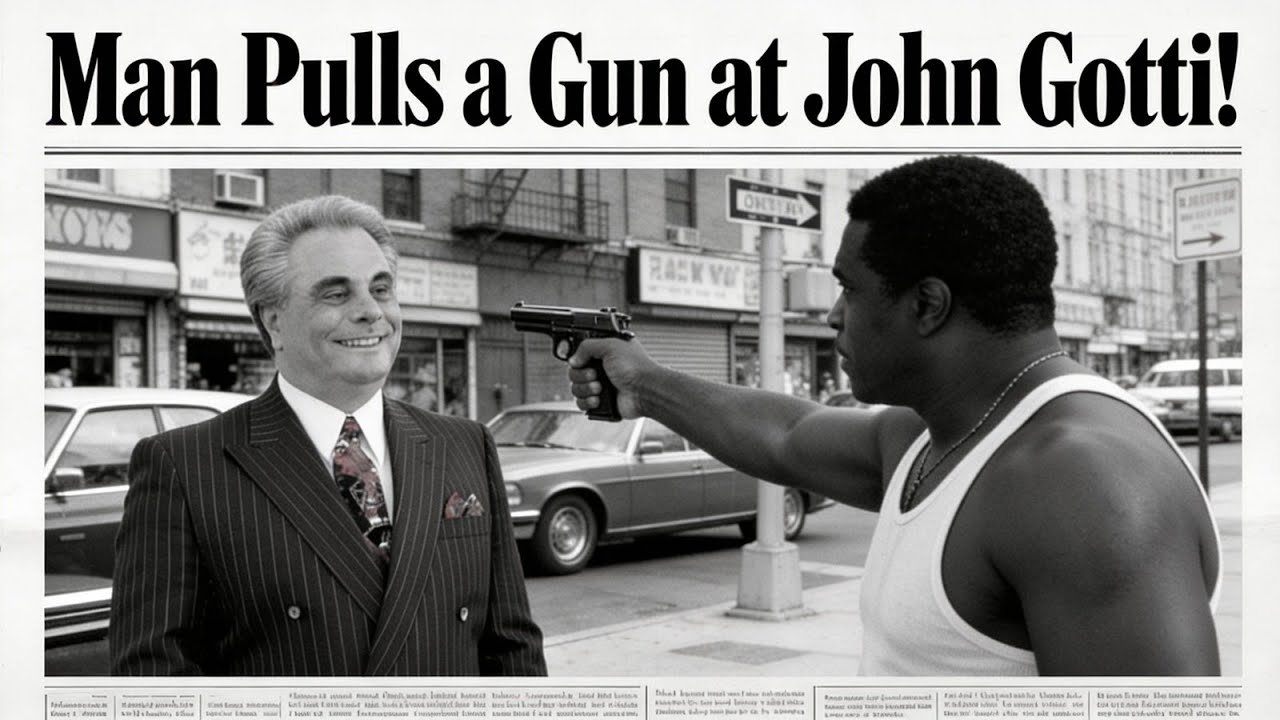
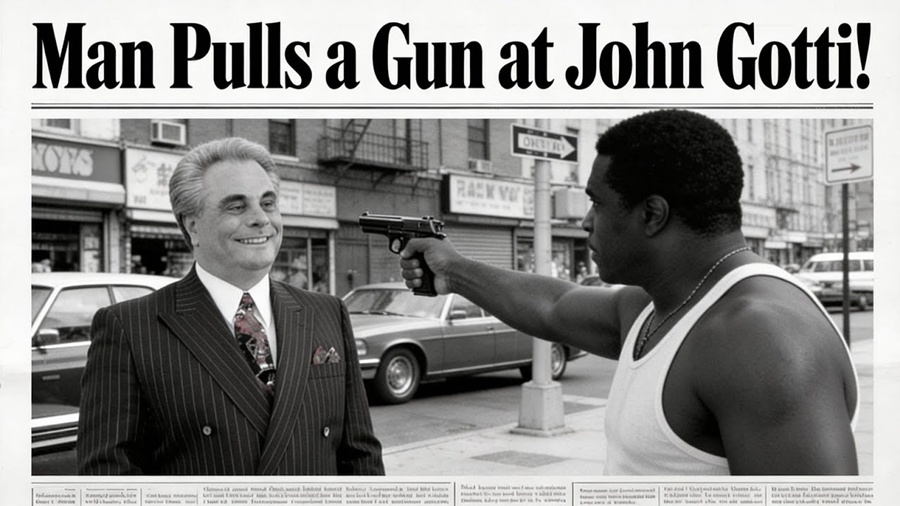
There’s a moment when confidence becomes stupidity for a 23-year-old street robber named Marcus Quick Henderson. That moment came at 9:47 p.m. on October 12th, 1985 outside Reene’s nightclub in Manhattan when he pointed a firearm at John Gotti and demanded his Rolex and John Gotti smiled instead of complying.
What happened in the next 3 minutes would become legend on both sides of New York’s criminal world. A lesson about the difference between street crime and organized crime, between desperation and power, between thinking you’re dangerous and meeting someone who actually is. Or at least that’s how the story was later told.
Reines sat on Park Avenue in Midtown Manhattan, an upscale establishment where wealthy people spent money to be seen spending money, where celebrities mixed with business executives, where the entrance was guarded and the clientele was carefully curated to maintain atmosphere of exclusivity. October 12th, 1984 was a Saturday evening.
The kind of night when Reines was packed with people who’d paid significant amounts to get past the velvet rope to sit at tables that cost more than most people’s weekly salary to be part of the scene that defined Manhattan’s social hierarchy. John Gotti was 45 years old that October, recently elevated to captain in the Gambino crime family, building the reputation that would eventually make him the most publicly recognized mob figure in America.
Known for his expensive suits, his confidence, his willingness to be visible when other mob leaders preferred shadows. That evening, Gotti was wearing a customtailored suit that probably cost $3,000. His watch was a Rolex Presidential, gold, distinctive, worth approximately $15,000. His shoes were Italian leather.
His presence announced success, power, the kind of wealth that came from decades of operations that generated millions. Gotti had spent the evening inside Reines with several associates, conducting business that looked like socializing, maintaining relationships that made his operations functional, being seen in ways that reinforced his growing reputation.
Around 9:45 p.m., Gotti decided to leave. He said goodbyes to the people who mattered, made promises to connect later, walked toward the exit with the casual confidence of someone who owned whatever space he occupied. His car, a black Cadillac, was parked in the lot adjacent to the club. His bodyguard, Anthony Tony Moscetiello, walked slightly ahead, checking the area before Gotti fully exposed himself to the street.
This was standard procedure, not paranoia, just practical awareness that being visible made you vulnerable to people who might want to test whether your power was real or just reputation. Gotti stepped out of Reene’s entrance into the cool October evening air and Marcus Quick Henderson had made the worst decision of his life.
Marcus Henderson was 23 years old in October 1985. Originally from Harlem, he’d spent his entire life in street level operations, smalltime dealing, occasional robberies, whatever generated money when legitimate work wouldn’t provide enough to survive. Henderson wasn’t particularly successful at crime. Wasn’t connected to any significant organization.
Wasn’t respected by anyone important. Just another young guy trying to make it in environments where making it meant taking risks that more experienced people understood were stupid. But Henderson had confidence that exceeded his actual capability. He’d successfully robbed several people over the previous months, mostly other street level operators.
People who wouldn’t report incidents to police because they were conducting their own illegal activities. He’d taken jewelry, cash, whatever they were carrying. Nobody had fought sack effectively. Nobody had made him pay for his choices. This success, such as it was, had convinced Henderson that he was good at what he did, that he could identify targets and extract value from them through intimidation and threat of violence, that he understood how criminal hierarchy worked.
He was wrong about all of that. But he didn’t know he was wrong until it was too late. That Saturday evening, Henderson was in Midtown looking for opportunities. He’d positioned himself near Reines specifically because he understood that people leaving expensive clubs carried expensive items. That they’d been drinking would be less alert, would be easier targets than people in different circumstances.
When Henderson saw John Gotti exit Reines and walk toward the parking lot, he saw well-dressed man, expensive watch, probably carrying significant cash, potentially impaired by alcohol, seemingly alone, except for one other person. What Henderson didn’t see, didn’t know to look for, didn’t understand the significance of was who John Gotti actually was and what approaching him would mean.
Henderson made his move. Henderson walked quickly toward Gotti. As Gotti moved through the parking lot toward his Cadillac, Tony Moscetiello noticed Henderson immediately. His training and experience made him alert to anyone approaching Gotti with purpose, but didn’t immediately move to intercept because people often approached Gotti in public to talk, to request favors, to pay respects.
Henderson closed the the distance to approximately 10 ft, reached into his jacket, withdrew a firearm, a 38 revolver he’d acquired through channels that didn’t require documentation or background checks. “Don’t move,” Henderson said, his voice carrying the forced aggression of someone trying to sound more dangerous than they actually felt.
I want your money, your watch, your wallet, everything valuable right now. Don’t make me repeat myself. Tony Moscatiello immediately moved to position himself between Henderson and Gotti. His hand went to his own waistband where his own weapon was accessible. His body language shifted to readiness, but Gotti raised his hand slightly, signaling Tony to wait to not immediately escalate this situation to exchange of gunfire that would create problems neither of them needed.
Hagatti looked at Henderson, looked at the firearm Henderson was pointing at him, looked at Henderson’s face, his body language, his obvious nervousness despite his aggressive words. And John Gotti smiled. Not a nervous smile, not an uncertain smile, a genuine smile of amusement, like he just heard a joke that was funny.
precisely because it was so absurd. Then Gotti laughed out loud. A short laugh of genuine entertainment. Henderson was confused. This wasn’t how people responded when you pointed firearms at them. People were supposed to be frightened, compliant, eager to give you what you demanded to make the threat go away. They weren’t supposed to smile and laugh like you were performing comedy routine.
Henderson tightened his grip on the firearm. You think this is funny? You think I won’t use this? Give me your watch now. Gotti stopped laughing but kept smiling. Kid, you have no idea what you just did. No idea who you’re pointing that at. No idea what’s about to happen to you. I know exactly what I’m doing, Henderson said, though his voice carried less certainty now.
I’m taking your expensive watch and your wallet. And you’re going to give them to me because I’m holding a firearm and you’re not? Oh, I could get a firearm very quickly, Gotti said casually. Tony there has one. Several of my other associates are probably watching this conversation from inside the club, but that’s not really the relevant point here.
Henderson glanced around nervously. Were there other people watching? Was this some kind of trap? Why was this man so calm when he should be terrified? The relevant point, Gotti continued, his voice still completely relaxed despite the weapon pointed at him, is that you made a mistake, a big mistake. The kind of mistake people remember for a long time if they survive it, which isn’t always guaranteed.
Stop talking, Henderson ordered. Just give me your watch. Sure, I’ll give you my watch, Gotti said. But first, let me ask you something. Do you know who I am? I don’t care who you are. You’re just some rich guy who’s about to give me his expensive watch. My name is John Gotti. Does that name mean anything to you? Henderson hesitated.
The name sounded familiar. He’d heard it somewhere, connected to something, but he couldn’t place it exactly. Couldn’t remember why it mattered. I don’t care what your name is, Henderson said finally. I care about your watch. Gotti’s smile widened. Kid, you’re about to get an education free of charge. Consider it my contribution to your personal development.
What are you talking about? I’m talking about the difference between street crime and organized crime. The difference between robbing people who can’t fight back and trying to rob people who can. the difference between being dangerous and meeting someone who actually is. Gotti turned slightly toward Tony Musketiello. Tony, our young friend here, wants my watch.
What do you think we should do about that? Tony, who’d been standing perfectly still while this conversation played out, responded in voice that carried no emotion. Whatever you think is appropriate, John. I think Gotti said, turning back to Henderson, that we should teach him a lesson he’ll remember. Something that makes sure he never makes this particular mistake again.
something that hurts enough to be educational, but not so much that he can’t walk away and tell other people what happens when you point weapons at made men. Henderson was starting to understand that this situation wasn’t developing the way robberies were supposed to develop. The man he was pointing a firearm at wasn’t frightened.
The man’s associate wasn’t backing down. And something about the whole interaction suggested Henderson had badly miscalculated something important. Last chance, Henderson said, trying to reassert control. Give me the watch or or what? Gotti interrupted. You’re going to shoot me here outside a club where hundreds of people are inside, where security cameras are recording, where police will arrive within minutes.
You’re going to commit a situation that will ruin your entire life over a watch. Henderson hadn’t thought about cameras, hadn’t thought about police, hadn’t thought beyond the immediate goal of getting the expensive watch and leaving quickly. Besides, Gotti continued, even if you shot me, which I don’t think you’re actually going to do because you’re not that stupid.
What do you think happens next? You think Tony there just lets you walk away? You think my other associates who are definitely watching this don’t follow you? You think there’s anywhere in New York you could hide where someone wouldn’t find you and make you regret tonight? Henderson’s hand was starting to shake slightly.
This had seemed so simple, so 3 minutes ago. Now it felt complicated in ways he didn’t fully understand, but that terrified him. Tell you what, Gotti said, his voice almost friendly. Now, I’m going to do you a favor. I’m going to let you walk away from this with just a minor lesson instead of the major lesson you probably deserve. But you need to lower that firearm first.
and you need to apologize for wasting my time and disrespecting me. Can you do that? Henderson wanted to lower the firearm. Wanted to apologize. Wanted to be anywhere except here having this conversation. But his pride wouldn’t let him back down completely. wouldn’t let him acknowledge that he’d made mistake.
I’m not apologizing. You’re going to That’s when Tony Moscatiello moved. Tony moved faster than Henderson could process. One moment he was standing 3 ft away. The next moment he was inside Henderson’s reach, his hand gripping Henderson’s wrist, forcing the firearm to point at the ground instead of at Gotti.
Henderson tried to pull the trigger. Tony’s grip on his wrist made that impossible. The firearm clattered to the pavement as Tony twisted Henderson’s arm in ways that arms weren’t meant to twist. Henderson tried to fight back, threw a wild punch with his free hand. Tony avoided it easily, used Henderson’s momentum to throw him off balance, to spin him around so that Henderson’s back was to Tony’s front.
Then Tony delivered the lesson Gotti had promised. Tony’s fist caught Henderson on the left side of his jaw with force that was calculated. Hard enough to hurt significantly, not hard enough to cause permanent damage beyond what Gotti had authorized. The punch snapped Henderson’s head sideways. Henderson felt something in his mouth come loose. A tooth.
His left lateral insizer dislodged completely from the impact fell from his mouth onto the pavement where it landed next to the firearm he’d been holding 3 seconds earlier. Henderson dropped to his knees. His jaw felt like it had been hit with a hammer. His mouth was filling with the taste of copper.
His missing tooth left a gap that his tongue immediately found and couldn’t stop probing. Tony released him, stepped back, picked up the firearm from the pavement, checked to make sure it was loaded. It was six rounds. Then emptied the chambers, letting the bullets fall to the ground one by one. Gotti walked over to where Henderson was kneeling, looked down at him with expression that mixed amusement and something almost like sympathy.
“You lost a tooth,” Gotti observed. “That’s unfortunate, but it could have been much worse. Could have lost all your teeth. Could have lost consciousness. Could have ended up in the hospital for weeks or worse. much worse. Henderson spit fluid onto the pavement, watched it mix with the tooth that was lying there, felt the gap where the tooth had been.
“Here’s what you’re going to do,” Gotti said, his voice calm and instructional. “You’re going to leave here. You’re going to go home. You’re going to remember tonight. Every time you look in the mirror and see that gap in your mouth, you’re going to remember that you pointed a weapon at John Gotti and lived to regret it instead of not living at all.
And you’re going to tell everyone you know what happened. Not because I’m ordering you to, but because I know you won’t be able to help yourself. You’ll need to explain that missing tooth somehow. Gotti reached into his jacket pocket. Withdrew his wallet. Removed a $100 bill, held it out toward Henderson. Take this. Get that tooth fixed.
Find a dentist who will do the work without asking too many questions about how you lost it. Consider it my contribution to your dental care. Henderson looked at the money, looked at Gotti, didn’t understand why this was happening, why the man he’d tried to rob was giving him money for dental work. I don’t want your money, Henderson said through his damaged mouth.
I’m not giving you a choice, Gotti said. Take the money, get the tooth fixed, and remember this lesson every time you think about pointing weapons at people you don’t know. Because next time, if there is a next time, you might not meet someone as generous as me. You might meet someone who responds differently to disrespect.
Gotti dropped the $100 bill on the ground next to Henderson’s lost tooth. Then Gotti turned to Tony. We’re done here. Let’s go. They walked to the Cadillac, got in, drove away, left Henderson kneeling on the pavement with his missing tooth, his empty firearm, and his shattered understanding of how criminal hierarchy actually worked.
Henderson sat on that pavement for perhaps 5 minutes after Gotti left, trying to process what had just happened, trying to understand how a simple robbery had turned into humiliating lesson that left him with permanent gap in his mouth and $100 bill he hadn’t wanted but desperately needed. Eventually, Henderson picked up the $100 bill, picked up his tooth, though he knew it couldn’t be reattached after lying on pavement, picked up the empty firearm and the scattered rounds, left the parking lot before security or
police arrived to ask questions he didn’t want to answer. Henderson spent the next week researching who John Gotti was. What he learned terrified him retroactively. Captain in the Gambino crime family connected to operations that generated millions annually. Someone who commanded respect and authority that made Henderson’s street level activities look like child’s games.
Henderson had pointed a weapon at someone who could have had him eliminated with single phone call. Who could have made him disappear completely? Who could have delivered lessons far more severe than missing tooth? The realization of how close Henderson had come to consequences worse than he could imagine kept him awake for nights afterward.
Henderson did use the $100 to get dental work, a temporary fix from a dentist who operated in neighborhoods where people needed medical care without official documentation. The permanent gap remained visible whenever Henderson spoke or smiled, a constant reminder of October 12th, 1985. Henderson never attempted another robbery, never pointed a weapon at anyone again, found legitimate work doing manual labor for construction companies, date away from criminal operations completely.
When people asked about his missing tooth, Henderson would claim dental accident, sports injury, various explanations that didn’t involve admitting he’d tried to rob John Gotti and had learned expensive lesson as a result. But people who knew Henderson from his street operations knew the real story. or at least they knew versions of it told and retold, embellished and modified, but always conveying the core truth that Henderson had made catastrophic mistake and had been extraordinarily lucky to survive it with only a missing
tooth as consequence. Years later, people who’d been with uh Gotti that evening asked him about the Henderson incident, why he’d laughed instead of being angry, why he’d given Henderson money instead of delivering more severe punishment, why he’d let Henderson walk away at all. Gotti’s explanation revealed his thinking about power, respect, and when violence was necessary versus when it was wasteful.
The kid didn’t know who I was, didn’t know what he was doing. He saw expensive suit and expensive watch and thought that made me vulnerable target. He made mistake out of ignorance, not out of deliberate disrespect. If I’d had Tony seriously hurt him or worse, what would that accomplish? Kid was nobody. Wasn’t connected to any organization that mattered.
wasn’t challenging my authority because he didn’t even know I had authority to challenge. Delivering severe consequences to someone that ignorant would have been wasteful, would have made me look like someone who overreacts to minor situations. But I couldn’t let it go completely either.
Couldn’t let someone point a weapon at me without consequences. That would look weak. would encourage other people to think they could challenge me. So, we delivered measured response enough to hurt, enough to be memorable, enough to be educational, but not so much that it created problems I didn’t need. Missing tooth is permanent reminder.
Every time Henderson looks in mirror, he remembers what happened. Every time someone asks about it, he has to decide whether to tell truth or lie. Either way, he’s reminded. And I gave him money because it sent a different message that I’m not just capable of violence, but also capable of generosity. that I make distinctions between people who deserve severe punishment and people who just need education.
That I’m powerful enough that I can respond to disrespect with both punishment and charity. That confusion, that combination of fear and gratitude, that’s more effective than just fear alone. Henderson will remember me not just as person who had him hurt, but as person who also gave him money to fix the damage.
That complexity makes the lessons stick better than simple violence would. This explanation showed that Gotti thought strategically about when and how to respond to challenges, that he distinguished between situations requiring severe consequences and situations where measured responses were more effective. that he understood power wasn’t just about capacity for violence, but about judgment regarding when violence was necessary and when it was wasteful.
The Henderson incident became one of the classic John Gotti stories, not because it was his most important operation or his most significant achievement, but because it captured something essential about how he thought and operated. The story spread through multiple communities. In Italian neighborhoods, people told it as example of Gotti’s confidence and his understanding of when to be merciful.
Gotti laughed at the gun because he knew he was protected. Well, the kid money because he could afford to be generous. That’s real power. In black neighborhoods, people told it as warning about understanding who you’re dealing with before making moves. Henderson tried to rob someone way above his level. Lucky he only lost a tooth.
Could have lost everything. In police circles, investigators discussed it as example of Gotti’s growing boldness and public visibility. Most mob guys would have been furious about being confronted. Gotti laughed about it. That tells you something about how confident he’d become. The number became important in retellings.
Three minutes. That’s how long it took for Henderson to go from thinking he was robbing someone to losing a tooth and getting money from his victim. 3 minutes to learn the most important lesson of his life. Some versions of the story claimed Gotti had known Henderson was approaching and had set up the whole situation to demonstrate his power.
Others claimed Gotti had let Henderson keep the firearm as additional insult. Still others claimed Tony had hit Henderson multiple times, not just once. But the core elements remained consistent. Henderson approached Gotti at gunpoint. Gotti laughed. 3 minutes later, Henderson had a missing tooth and a $100 bill. And Henderson never tried anything like that again.
The Henderson incident taught lesson that extended beyond just that specific situation. That kurimal hierarchy was real and had to be understood before you operated within it. Street level criminals like Henderson operated in world of immediate transactions. You identified target, extracted value, moved on. Success was measured in immediate gains.
Money taken, goods stolen, whatever you walked away with. Organized crime operated differently. Power came from networks, relationships, long-term operations that generated consistent revenue. Respect was earned through decades of maintaining it. Authority was enforced through capacity for violence, but also through strategic thinking about when violence was necessary and when other responses were more effective.
Henderson had confused the two worlds. Had thought that pointing a firearm at well-dressed man was same as pointing firearm at other street level operators had believed that immediate power weapon in hand was equivalent to institutional power. decades of operations and relationships. He’d learned otherwise painfully permanently.
That lesson benefited other young criminals who heard the story. Some of them understood the message that before you challenge someone, you need to understand who they are, what they represent, what resources they can deploy. If you miscalculate that immediate power is temporary while institutional power is permanent.
Others didn’t learn, made similar mistakes, faced similar or worse consequences. But everyone heard the story. Everyone knew about Henderson and his missing tooth. Everyone understood that John Gotti was someone you didn’t challenge without understanding the full implications that challenge. The Henderson incident was just one of many stories that built John Gotti’s public reputation during the 1980s.
He was different from previous mob leaders who preferred invisibility. Gotti was visible, public, confident in ways that attracted attention from media, from law enforcement, from people who wanted to understand how organized crime actually operated. Stories like the Henderson incident contributed to that legend.
Gotti as someone so confident in his power that he could laugh when threatened, so secure in his position that he could show generosity to people who’d tried to harm him, so understanding of hierarchy that he could deliver measured lessons rather than excessive violence. Whether these stories made Gotti more effective or ultimately contributed to his downfall is debatable.
His visibility attracted law enforcement attention that eventually resulted in his conviction and life sentence. His confidence may have made him careless about evidence and testimony. But in October 1985 when Marcus Henderson approached him outside Reines Gotti was at the height of his power and his confidence was someone who believed correctly at that moment that he was untouchable by street level criminals like Henderson and perhaps by law enforcement as well.
That confidence showed in how he handled the confrontation, laughed instead of being frightened, educated instead of just punishing, demonstrated that real power wasn’t about immediate violence, but about understanding when violence was necessary and when other responses were more effective. What happened outside Reene’s nightclub on October 12th, 1985 lasted approximately 3 minutes from when Marcus Henderson approached John Gotti to when Henderson was on his knees with a missing tooth.
Those three minutes taught lessons that lasted much longer. Henderson learned that criminal hierarchy was real and had to be understood before you operated within it. that pointing weapons at people at created consequences that extended far beyond immediate moment. That some mistakes you survived but never fully recovered from.
Other street criminals learned that some targets were beyond their capabilities. that well-dressed men outside expensive clubs might be connected to organizations that could deliver consequences far more severe than missing teeth. That understanding who you’re dealing with matters more than just identifying valuable possessions.
John Gotti demonstrated that power came from confidence as much as from capacity for violence. that laughing at threats could be more effect than responding with immediate aggression. That measured lessons created better results than excessive punishment. That generosity could be as intimidating as brutality when delivered by someone with genuine power.
And everyone who heard the story, whether immediately afterward or in years that followed, understood something fundamental about how criminal hierarchy actually worked. In new Abdi, York during the 1980s, Marcus Henderson tried to rob John Gotti at gunpoint outside Reene’s nightclub. 3 minutes later, Henderson had a missing tooth, a $100 bill, and understanding that he just pointed a weapon at someone so far above his level that his survival was mercy rather than expected outcome.
The tooth never grew back. The lesson never faded. And the story became legend that people told for decades about the night a street robber learned the difference between thinking you’re dangerous and meeting someone who actually is. That was October 12th, 1985. Three minutes that taught Marcus Henderson why you never point weapons at made men.
Why understanding hierarchy matters more than immediate power and why John Gotti could laugh at threats that would have terrified people who didn’t understand that real power comes from networks and relationships rather than from firearms and temporary advantages.